
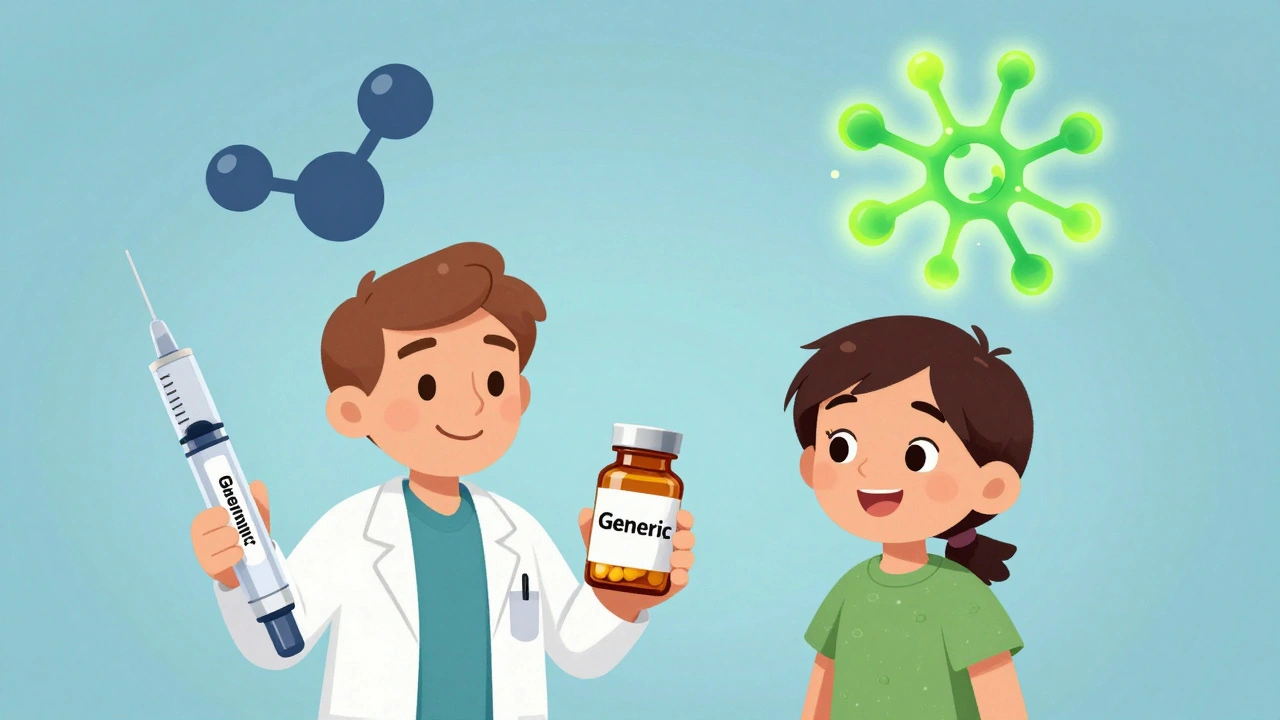
When you’re prescribed a new medication, you might hear your doctor or pharmacist mention a biosimilar or a generic. Both sound like cheaper alternatives to brand-name drugs, and they are-but they’re not the same thing. Confusing them can lead to unnecessary worry, delays in treatment, or even missed savings. Understanding the difference isn’t just about saving money-it’s about knowing what’s safe, effective, and right for your body.
What’s the Real Difference Between Generics and Biosimilars?
Generics are copies of small-molecule drugs made with simple chemistry. Think of them like photocopies of a printed page. If you take a generic version of atorvastatin (the active ingredient in Lipitor), you’re getting the exact same molecule, in the exact same form, as the brand-name version. The FDA requires generics to match the original in strength, dosage, how fast they work, and how your body absorbs them. That’s why they’re approved based on bioequivalence studies-no need to run full clinical trials again.
Biosimilars are different. They’re copies of complex biologic drugs made from living cells-like yeast, bacteria, or hamster ovary cells. These drugs are proteins, sometimes thousands of times larger than a generic drug molecule. Because they come from living systems, they can’t be copied exactly. Even tiny changes in temperature, pH, or cell culture during manufacturing can cause slight differences in structure. That’s why biosimilars aren’t called “identical”-they’re called highly similar. The FDA doesn’t require them to be perfect copies, just that they have no meaningful difference in safety or effectiveness.
For example, a generic version of metformin (used for diabetes) is chemically identical to Glucophage. But a biosimilar like Omnitrope, used for growth hormone deficiency, is made from living cells and may have minor structural variations that don’t affect how it works in your body.
Cost Savings: How Much Do They Actually Save?
Generics are the undisputed champions of cost savings. On average, they cost 80-85% less than the brand-name drug. A 30-day supply of brand-name Lipitor might cost $200. The generic? Around $15. That’s why over 90% of prescriptions filled in the U.S. are for generics.
Biosimilars don’t save as much-typically 15-20% less than the reference biologic. That might sound underwhelming, but consider this: a single dose of Humira (adalimumab) for rheumatoid arthritis can cost $7,000 per month. A 20% discount still saves you $1,400 a month. In oncology, where drugs like trastuzumab (Herceptin) can run $10,000 per infusion, even a small percentage drop means thousands saved per patient.
And here’s the kicker: biosimilars are still new. As more enter the market, prices will drop further. In Europe, where biosimilars have been around longer, savings are often 30-50%. The U.S. is catching up.
When Can You Switch? Substitution Rules Vary
If your doctor prescribes a brand-name drug, can the pharmacy swap it for a cheaper version without asking?
For generics-yes, almost always. In 49 states, pharmacists can substitute a generic unless the doctor writes “dispense as written.” It’s automatic. You probably didn’t even notice when your prescription changed from Claritin to loratadine.
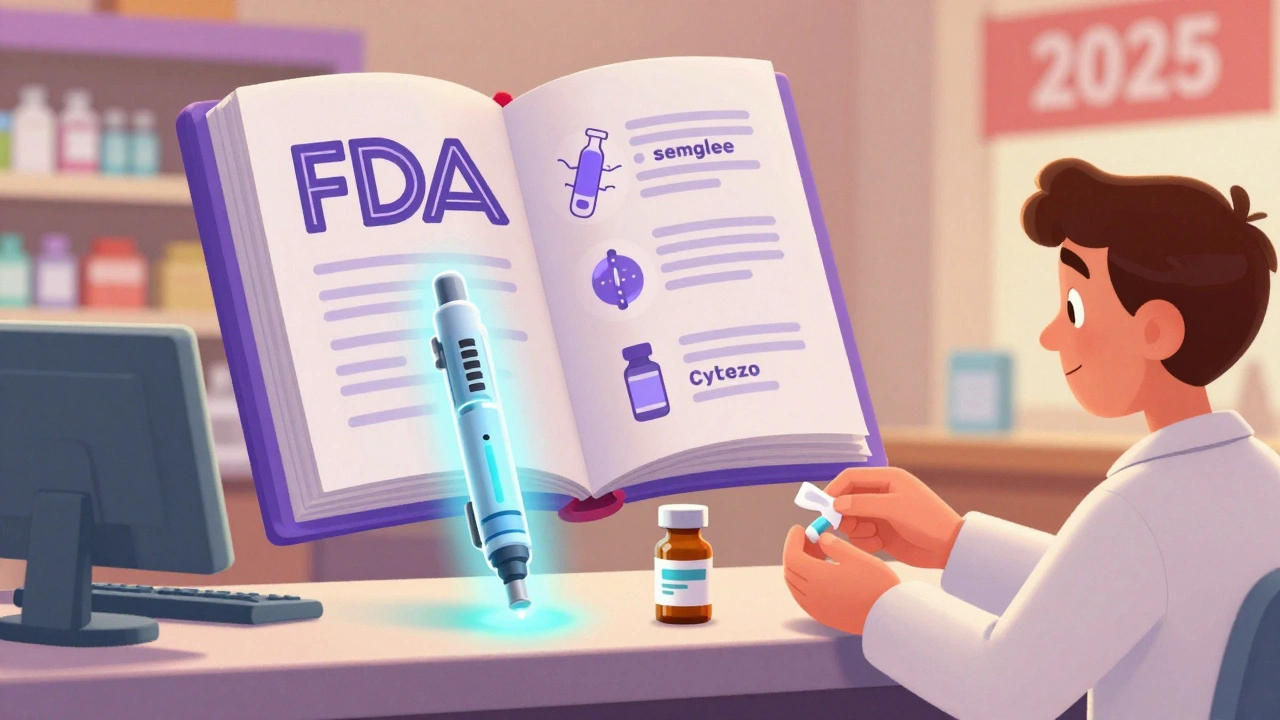
For biosimilars? It’s complicated. Only biosimilars labeled “interchangeable” by the FDA can be swapped at the pharmacy without the doctor’s permission. As of 2025, only a handful of biosimilars have that status-like Semglee (insulin glargine) and Cyltezo (adalimumab). Even then, 28 states require the pharmacist to notify your doctor within 72 hours of the switch.
Some patients worry about being switched without their knowledge. That’s valid. If you’re on a biologic for Crohn’s disease or psoriasis, you might feel uneasy about a change-even if the science says it’s safe. Always ask: Is this a generic? Is it interchangeable? And can I be notified before a switch?
Are They Safe? Real-World Evidence Matters
There’s a lot of fear around biosimilars. “What if my body reacts differently?” “What if it stops working?”
The data says otherwise. A 2022 review of 128 studies involving over 38,000 patients found no difference in safety or effectiveness between biosimilar and reference infliximab for rheumatoid arthritis and Crohn’s disease. The FDA’s own adverse event database shows biosimilars have the same rate of side effects as the original drugs-0.12 events per 100 patient-years versus 0.15 for the reference.
And for generics? Decades of data confirm they work just as well. A landmark 2019 JAMA study of 47 trials found no difference in outcomes between brand-name and generic cardiovascular drugs. Patients taking generic warfarin had the same risk of stroke or bleeding as those on the brand.
Still, some patients report anxiety after switching. One patient on Reddit shared: “I was scared to switch from Humira to the biosimilar. I thought I’d flare up. But after three months, I felt the same. Saved $1,200 a month.”
Another patient with cancer said: “My oncologist switched me to the trastuzumab biosimilar. My tumor markers didn’t budge. My co-pay dropped from $450 to $75.”
But it’s not all smooth. A 2023 study found 19% of inflammatory bowel disease patients felt more anxious after switching to a biosimilar-even though their disease activity stayed stable. The fear isn’t always about the drug. It’s about the unknown.
Which One Should You Choose?
Here’s how to decide:
- If your drug is a small molecule-like blood pressure pills, antibiotics, or thyroid meds-it’s almost certainly a generic. Take it. It’s safe, proven, and cheap.
- If your drug is an injection or IV infusion for cancer, rheumatoid arthritis, psoriasis, or diabetes-it’s likely a biologic. Ask if a biosimilar is available. If so, ask if it’s interchangeable. If yes, switching is a smart move.
- If you’re on a biologic and your insurance pushes you to switch, ask for the data. Request the FDA’s Purple Book listing to check its status. Don’t feel pressured. You have the right to ask questions.
- If you’ve had a bad reaction to a brand-name drug, switching to a generic is usually fine. Switching to a biosimilar? Talk to your specialist first. Some conditions, like multiple sclerosis or severe autoimmune disease, require extra caution.
Also, check your insurance. Some plans still favor brand-name biologics because of rebates from manufacturers. Ask your pharmacist: “Is this biosimilar covered under my plan? What’s my co-pay?” Sometimes, the cost difference is so small that switching isn’t worth the hassle.
What About Storage and Handling?
Generics? Most are stable at room temperature. You can keep them in your medicine cabinet.
Biosimilars? Most need refrigeration (2-8°C). They’re shipped with cold packs. If you’re traveling, you need to plan ahead. Some biosimilars come in pens or prefilled syringes that are more sensitive to heat than a pill bottle. One patient in Manchester told me: “I had to carry my biosimilar insulin in a cooler bag to work. My boss didn’t get it. I had to explain it wasn’t just a pill.”
That’s part of the hidden cost: logistics. If you’re on a biosimilar and you’re elderly or live alone, make sure you have a reliable way to store it. Ask your pharmacy if they offer home delivery with temperature control.
What’s Changing in 2025?
Big changes are coming. The FDA approved its first interchangeable biosimilar for Humira (Cyltezo) in 2023. Now, more are on the way. In 2024, the first biosimilar for Stelara (ustekinumab) is expected-potentially saving $5 billion a year in the U.S. alone.
The Inflation Reduction Act of 2022 also helped. It removed a financial penalty for doctors who prescribed biosimilars in Medicare Part B. That means more doctors are now willing to prescribe them.
Still, barriers remain. Patent lawsuits delay biosimilar entry by nearly five years on average. And many doctors still don’t feel confident prescribing them. A 2023 AMA survey found only 58% of non-specialists felt “very confident” in prescribing biosimilars, compared to 89% for generics.
That’s changing. Hospitals like Manchester’s Royal Infirmary are now using biosimilars as first-line treatment for rheumatoid arthritis. Insurance companies are updating formularies. And patient education programs are growing.
What You Can Do Today
You don’t need to be a scientist to make the right choice. Here’s what to do:
- Check your prescription. Is it a pill? Likely generic. Is it an injection? Likely a biologic-ask about biosimilars.
- Ask your pharmacist: “Is there a generic or biosimilar version?”
- Ask your doctor: “Is this drug interchangeable? Have you used this biosimilar before?”
- Look up your drug in the FDA’s Orange Book (for generics) or Purple Book (for biosimilars). You can search online for free.
- Don’t be afraid to say no. If you’re uncomfortable switching, you have the right to stay on your current drug-especially if it’s working.
Choosing between a biosimilar and a generic isn’t about picking the cheapest option. It’s about picking the right one for your body, your condition, and your peace of mind. The science supports both. The system is catching up. And your health is worth asking questions about.
Are biosimilars as safe as brand-name biologics?
Yes. The FDA requires biosimilars to show no clinically meaningful differences in safety, purity, or potency compared to the original biologic. Real-world data from over 38,000 patients shows identical rates of side effects and treatment success. Adverse event reports to the FDA confirm biosimilars have the same safety profile as their reference products.
Can I be switched from a biologic to a biosimilar without my doctor’s approval?
Only if the biosimilar is FDA-approved as “interchangeable” and your state allows pharmacy-level substitution. Even then, 28 states require the pharmacist to notify your doctor within 72 hours. Always ask your pharmacist before any switch. You have the right to refuse.
Why are biosimilars more expensive than generics?
Because they’re made from living cells, not chemicals. Developing a biosimilar costs $100-250 million and takes 8-10 years. Generics cost $2-3 million and take 3-4 years. The complexity of manufacturing, testing, and ensuring consistency drives up the price-even if it’s still cheaper than the original biologic.
Do biosimilars work as well for cancer treatment?
Yes. Biosimilars for cancer drugs like trastuzumab (Herceptin) and rituximab (Rituxan) have been used in thousands of patients with no loss in effectiveness. Studies show tumor response rates, progression-free survival, and overall survival are the same as the original drugs. Oncologists now routinely prescribe them to reduce treatment costs without compromising care.
Can I switch back to the brand-name drug if I don’t feel well on a biosimilar?
Absolutely. If you experience new side effects, worsening symptoms, or just feel uneasy, talk to your doctor. You can switch back. There’s no rule that says you’re locked in. Many patients try a biosimilar, see it works, and stay on it. Others prefer to return to the original. Both choices are valid.
Is there a difference between biosimilars from different manufacturers?
Each biosimilar is approved based on its own data, so they’re not identical to each other. But they’re all required to be highly similar to the same reference product. For example, two different adalimumab biosimilars might have slightly different storage requirements or injection devices, but they’re equally effective. Your doctor or pharmacist can help you understand which one you’re getting.
Next Steps: What to Do If You’re Unsure
If you’re on a biologic and haven’t been offered a biosimilar, ask your doctor: “Is there a biosimilar available for my drug? Is it approved as interchangeable?”
If you’re on a generic and your insurance says it’s “not covered,” ask why. Generics are almost always covered. You might be getting billed for the brand name by mistake.
Use the FDA’s Purple Book to check if your drug has an approved biosimilar. Search “FDA Purple Book” online-it’s free and easy to use. If you’re on insulin, rheumatoid arthritis meds, or cancer drugs, there’s likely a cheaper option you haven’t been told about.
Don’t assume you have to pay more. The system is designed to save you money. You just need to ask the right questions.


Okay but have you ever heard of the FDA being compromised by Big Pharma? I saw a whistleblower video where they admitted biosimilars are just generics with fancy labels. They’re testing them on homeless people in Ohio to avoid full trials. I’m not taking anything that’s not 100% identical. I’d rather pay $200 than risk my immune system being hacked.
I switched from Humira to the biosimilar last year and honestly? I felt better. Less bloating, more energy. I was terrified at first, but my rheumatologist showed me the data. Sometimes the scariest thing is our own fear-not the medicine. You’ve got this.
OMG I switched to a biosimilar and now my cat won’t even look at me. I swear it’s the insulin. My neighbor’s cousin’s dog got sick after a biosimilar. This is a scam. I’m going back to the brand. My body knows.
Let’s be real: generics are safe. Biosimilars? Also safe. The fear isn’t about the science-it’s about control. You’ve spent years managing your condition, and now someone’s telling you to swap it out? Of course you’re nervous. But the data? Solid. Talk to your doctor. Ask for the Purple Book. Don’t let anxiety make the call.
The article presents a comprehensive and evidence-based overview of the distinctions between generics and biosimilars. The regulatory frameworks established by the FDA are robust, and the clinical data supporting biosimilar efficacy is both extensive and consistent. Cost savings, while variable, remain a significant public health advantage.
Have you considered that the FDA's Purple Book is actually a government cover-up? The real data is buried in classified documents only accessible to the Illuminati. I’ve been tracking the injection dates of my biosimilar and my blood sugar spikes exactly 3 days after every dose. Coincidence? I think not. 🕵️♀️
You Americans think cheap medicine is a miracle. In India, we’ve been using generics for decades. Your biosimilars? Still too expensive. You pay $7000 for insulin? That’s criminal. Your system is broken. We get real generics for $2. You need to stop pretending you’re advanced.
I love how this post calls biosimilars ‘highly similar’-like they’re the ex who still texts you at 2 a.m. ‘We’re basically the same!’ No, Karen. You’re not. One’s a perfectly replicated Lego block. The other’s a 3D-printed replica that glows slightly under UV light and smells like regret. But hey-it works. And that’s the weird, beautiful mess of biology.
It’s fascinating how we equate ‘identical’ with ‘safe’-but in medicine, identity is a myth. Even brand-name drugs vary batch to batch. The real question isn’t whether biosimilars are identical, but whether we’re willing to accept that ‘good enough’ can still be life-changing. Maybe safety isn’t about sameness… but about trust. In science. In doctors. In ourselves.
Bro I tried the biosimilar and now I’m convinced it’s made of alien goo. My brain felt fuzzy for a week. I went back to the brand. Now I’m fine. So yeah. Biosimilars = bad. End of story. Also, why do they look like little space pens? Creepy.
If you’re scared to switch, that’s okay. But don’t let fear silence your questions. Ask your pharmacist. Ask your doctor. Ask your insurance. You deserve to know what’s in your body-and what it costs. You’re not being difficult. You’re being smart.
I’m a pharmacist and I’ve filled thousands of these scripts. Generics? Always safe. Biosimilars? Also safe. The biggest issue isn’t the medicine-it’s the lack of education. Patients think ‘biosimilar’ means ‘second-rate.’ It doesn’t. It means ‘smart savings.’ Let’s stop scaring people and start informing them.
Why are you Americans so weak? In India, we take generics without blinking. You cry over $15 pills? You have no idea what real healthcare is. Your country is sick-not your body. Your system is corrupt. Biosimilars? You don’t deserve them. You should be grateful for anything that works.
Technically, the FDA’s definition of ‘no clinically meaningful difference’ is a legal loophole masquerading as science. The statistical thresholds for equivalence are laughably lenient-especially for monoclonal antibodies where glycosylation patterns can vary by 12%. The fact that this is marketed as ‘safe’ is a triumph of marketing over molecular biology. You’re not getting the same drug. You’re getting a statistically acceptable approximation.
The information presented is accurate, balanced, and thoroughly referenced. The distinction between small-molecule generics and complex biologics is clearly delineated, and the economic and regulatory context is appropriately contextualized. A commendable effort in patient education.
It’s not about the drug. It’s about control. We don’t trust systems. We don’t trust doctors. We don’t trust corporations. So we cling to the brand name like a security blanket. Even if it’s just a placebo in a fancy bottle.
biosimilars r just a way for big pharma to keep makin money by makin us think we’re savin. they just changed the label. same stuff. different name. same price. lol
I’m just saying… what if the biosimilar is just the brand-name drug that didn’t pass quality control? They repackage it, slap a new label on it, and call it ‘FDA-approved.’ I’m not some guinea pig. I’m not switching.
Capitalism has weaponized healthcare. Biosimilars are a band-aid on a hemorrhage. We’re optimizing cost, not care. The fact that a patient’s anxiety is considered ‘not medically relevant’ while their co-pay is the priority… that’s the real pathology. 🤖💸
I’m from Texas and I switched to the biosimilar for my psoriasis. My skin cleared up. My wallet cried happy tears. I told my mom, and she said, ‘Honey, if it works, it works.’ That’s all you need to know. You’re not a lab rat. You’re a person. And you deserve to feel better without going broke.