
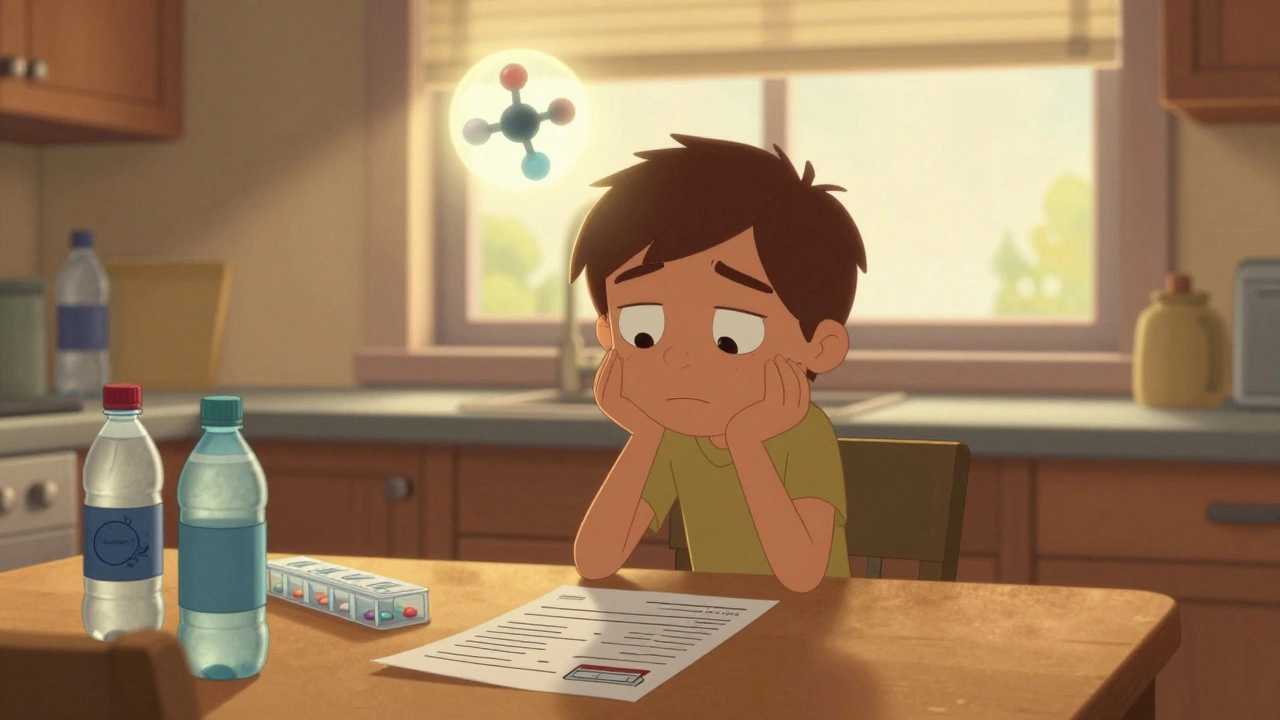
Managing bipolar disorder isn’t about finding one magic pill. It’s about balancing effectiveness with everyday life. For millions of people, mood stabilizers and antipsychotics are the backbone of treatment-but they come with real trade-offs. Many start on lithium, hoping it’ll bring calm, only to find themselves drinking gallons of water every day just to stay hydrated. Others switch to quetiapine for faster relief, then gain 20 pounds in months and feel foggy all the time. The truth? These medications work-but they don’t work the same for everyone.
What Mood Stabilizers Actually Do
Mood stabilizers like lithium, valproate, carbamazepine, and lamotrigine aren’t designed to make you feel happy. They’re meant to stop the extreme swings-manic highs and depressive lows-that define bipolar disorder. Lithium, approved by the FDA in 1970, remains the most studied. It doesn’t just calm mania; it lowers suicide risk by 80% compared to no treatment. That’s not a small benefit. For someone stuck in a cycle of suicidal thoughts, lithium can mean the difference between life and death.
But lithium isn’t simple. It requires blood tests-weekly at first, then every few months-to keep levels between 0.6 and 1.0 mmol/L. Too low? It won’t help. Too high? You risk tremors, slurred speech, even seizures. Side effects are common: 30-40% of people feel constantly thirsty, 25-50% get shaky hands, and most gain 10 to 15 pounds in the first year. Many stop taking it because of this. But those who stick with it often say the stability is worth it. One user on Reddit wrote: “I gained 15 pounds, but I haven’t had a suicidal week in three years.”
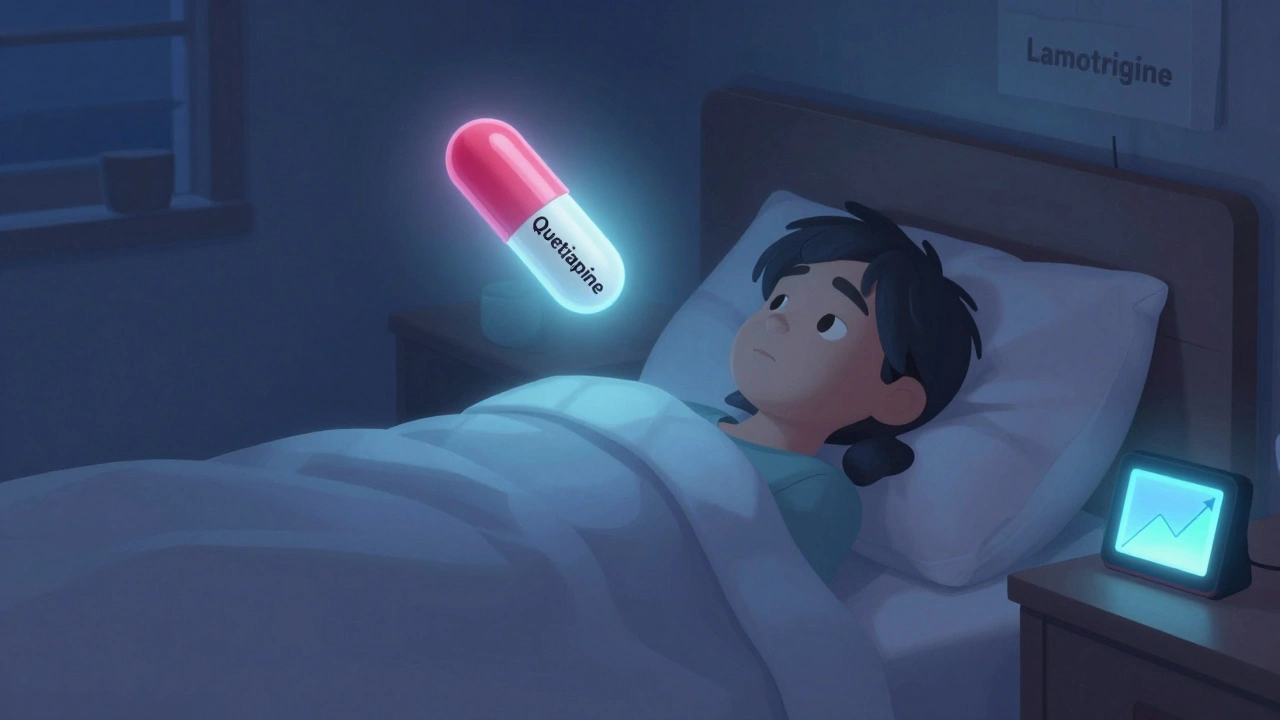
Lamotrigine is different. It’s slower to work-weeks, not days-but it’s the best option for preventing depressive episodes without weight gain. The catch? A rare but serious skin rash affects about 1 in 10 people. That’s why doctors start low and go slow with dosing. If you develop a rash, even a mild one, stop immediately and call your doctor.
Antipsychotics: Faster Relief, Heavier Costs
Antipsychotics like quetiapine, olanzapine, and aripiprazole were originally made for schizophrenia. But they’ve become go-to tools for bipolar disorder because they work fast. Quetiapine, for example, can start lifting depression in as little as 7 days. That’s faster than lithium, which often takes two weeks or more. For someone in deep despair, that speed matters.
But here’s the catch: antipsychotics change your body. Olanzapine can cause a 4.6kg weight gain in just six weeks. Quetiapine makes 60-70% of users feel sleepy. About 20-30% of people on olanzapine develop prediabetes or type 2 diabetes within a year. These aren’t rare side effects-they’re expected. That’s why doctors now check your weight, waist size, blood sugar, and cholesterol every three months if you’re on these meds.
Some newer antipsychotics like lumateperone and lurasidone were designed to avoid these problems. Lumateperone, approved in 2023, causes only 0.8kg of weight gain in six weeks-far less than quetiapine’s 3.5kg. But they’re expensive. A month of brand-name antipsychotics can cost over $1,200. Lithium? Around $4 to $40.
Combining Medications: When Two Are Better Than One
Many people need more than one drug. A mood stabilizer plus an antipsychotic can give you better control than either alone. Studies show combination therapy works in 70% of treatment-resistant cases. But it also doubles the side effects. You might get the mood stability you need-but also the weight gain, the drowsiness, the brain fog.
That’s why doctors don’t jump to combinations. They start with one, wait to see how it goes, then add another only if needed. For example, someone on lithium who still has depressive episodes might get lamotrigine added. Someone with frequent mania and insomnia might get quetiapine added at night. The goal isn’t to blanket the brain with drugs. It’s to find the smallest effective mix.
Why So Many People Stop Taking Their Meds
One in two people with bipolar disorder stop their meds within a year. Why? Side effects. A 2022 NAMI survey of 1,200 people found:
- 78% blamed weight gain
- 65% said they felt mentally sluggish
- 52% struggled with sexual dysfunction
One Reddit user said: “I took lithium and drank 3 liters of water a day. Still felt dehydrated. Switched to lamotrigine-now I can’t sleep at all.” Another wrote: “Quetiapine made me feel like a zombie. I couldn’t work. I gained 22 pounds. I quit.”
But here’s what those same people don’t always say: when they went off meds, their moods crashed. Mania returned. Depression deepened. Some ended up in the hospital. The struggle isn’t just about side effects-it’s about choosing between two kinds of suffering: the daily grind of meds, or the chaos of no treatment.
What Works in Real Life: Tips from People Who’ve Been There
People who’ve managed bipolar disorder for years share practical tricks:
- Take lithium with food to cut nausea.
- Split your dose-two smaller pills a day instead of one big one-can reduce tremors.
- Use metformin to fight weight gain from antipsychotics. It’s not a magic fix, but it helps many.
- Track your mood daily. Apps or simple journals help spot early signs of a shift.
- Don’t take NSAIDs like ibuprofen with lithium. It can spike your lithium levels to dangerous levels.
Some people use genetic testing now-like Genomind’s test-to see how their body processes meds. If you’re a slow metabolizer, standard doses can build up and cause side effects. If you’re a fast one, you might need higher doses. This isn’t available everywhere, but it’s growing.

The Big Picture: What’s Changing in Treatment
Things are shifting. In 2023, the Canadian Network for Mood and Anxiety Treatments (CANMAT) updated guidelines to recommend lurasidone and cariprazine as first-line for bipolar depression-not because they’re cheaper, but because they’re gentler on the body. Long-acting injectables like Abilify Maintena, given once a month, are helping people who forget pills.
And new drugs are coming. Ketamine derivatives, which work in hours instead of weeks, are in trials. Digital tools like reSET-BD, an app that tracks mood and reminds you to take pills, reduced relapse by 22% in studies.
But the core hasn’t changed. Lithium still reduces suicide attempts 8.6 times more than other mood stabilizers. Quetiapine still lifts depression faster than most. The challenge remains: how do you keep someone on a medication that changes their body, their energy, their sex life-when the alternative is losing control of their mind?
There’s no perfect answer. But there’s a better way: work with your doctor. Don’t quit cold turkey. Track your symptoms. Ask about alternatives. And remember: this isn’t a failure if one drug doesn’t work. It’s part of the process. The goal isn’t to feel normal. It’s to feel safe enough to live.
Can mood stabilizers cure bipolar disorder?
No, mood stabilizers don’t cure bipolar disorder. They manage symptoms by reducing the frequency and severity of manic and depressive episodes. People often need to stay on them long-term to prevent relapse. Stopping medication without medical supervision increases the risk of returning episodes, sometimes more severe than before.
Why do antipsychotics cause weight gain?
Antipsychotics like olanzapine and quetiapine affect brain chemicals that control hunger and metabolism. They increase appetite, slow down metabolism, and can make your body store more fat-even if you eat the same amount. Some also cause insulin resistance, leading to weight gain and higher diabetes risk. This isn’t about laziness or willpower-it’s a biological side effect.
Is lithium dangerous?
Lithium is safe when monitored properly. The danger comes from not checking blood levels. Levels above 1.2 mmol/L can cause toxicity, leading to confusion, vomiting, tremors, or seizures. Regular blood tests every 2-3 months after stabilization keep levels in the safe range (0.6-1.0 mmol/L). Kidney and thyroid function also need annual checks, as lithium can affect both over time.
Can I take antidepressants for bipolar depression?
Antidepressants like SSRIs can be used-but only with a mood stabilizer or antipsychotic. Alone, they carry a 10-15% risk of triggering mania or rapid cycling. Some experts avoid them entirely. Others use them cautiously in severe depression, with close monitoring. Always discuss risks with your doctor before starting one.
How long does it take for mood stabilizers to work?
It varies. Lithium and valproate can take 1-3 weeks to reduce mania. Lamotrigine for depression can take 6-12 weeks to show full effect. Antipsychotics like quetiapine often work faster-within 7-14 days. Patience is key. Rushing to change meds before they’ve had time to work can lead to unnecessary switches and more instability.
What should I do if I can’t tolerate my meds?
Don’t stop on your own. Talk to your psychiatrist. There are alternatives. If lithium causes too many side effects, lamotrigine or valproate might work better. If quetiapine makes you too sleepy, lurasidone or lumateperone may be gentler. Switching meds takes time and planning. Your doctor can help you transition safely without triggering a mood episode.
What Comes Next: Finding Your Path
If you’re on meds and struggling, you’re not alone. Side effects are common. But they’re not inevitable. Many people find a balance-sometimes after trying three or four different drugs. The key is persistence, not perfection. Keep track of how you feel. Bring your notes to appointments. Ask about newer options. Consider support groups. And remember: your goal isn’t to feel perfect. It’s to feel stable enough to live the life you want.




so lithium makes you thirsty as hell but stops you from killing yourself?? cool i guess
also why does everyone on here act like gaining 20lbs is the end of the world like we dont all just eat pizza and cry in bed anyway
it's not about fixing you. it's about keeping you alive long enough to figure out what you want. that's the real treatment.
i took lamotrigine for 8 months and it made me feel like a ghost. no highs no lows just... nothing. i cried because i missed being angry. at least anger felt real.
if you're reading this and thinking about quitting your meds... please talk to someone first. i did. i lost 11 months of my life to a manic episode that could've been avoided. you're not weak for needing help.
start low. go slow. track it. repeat.
The pharmacokinetic variability across CYP2D6 and CYP3A4 metabolizer phenotypes is a critical determinant of therapeutic efficacy and adverse event profiles, particularly with lamotrigine and quetiapine. Pharmacogenomic-guided dosing, such as that enabled by Genomind or Pillcheck, reduces plasma concentration variability by up to 62% and significantly mitigates idiosyncratic reactions including SJS/TEN risk with lamotrigine. Clinically, this represents a paradigm shift from trial-and-error to precision psychopharmacology.
i read this and i thought wow this is so true but then i remembered i live in india and my psychiatrist gave me lithium and said take it with water and dont eat bananas and that was it no blood tests no weight checks no nothing. people here dont even know what bipolar is. they think its just being moody. i had to pay for my own blood tests from my salary and i cried because i was so tired. but i did it. and now i am alive. so if you are in usa or europe and you have access to all this... you are lucky. dont waste it. take your meds. go to your appointments. track your mood. it matters.
The therapeutic efficacy of mood stabilisers and antipsychotics in the management of bipolar disorder is empirically substantiated; however, the attendant metabolic, neurocognitive, and somatic sequelae necessitate a risk-benefit analysis of considerable complexity. The preponderance of evidence suggests that discontinuation of pharmacotherapy, particularly without medical supervision, precipitates a significant elevation in relapse incidence, hospitalisation rates, and mortality risk. It is, therefore, imperative that clinicians adopt a patient-centred, longitudinal approach to pharmacological management, incorporating regular monitoring of renal, thyroid, and metabolic parameters, alongside psychoeducation and collaborative decision-making.
I’ve read this entire thing… and honestly? You’re all just… making excuses. You say ‘I gained weight’-so? You say ‘I’m tired’-so? You say ‘I can’t have sex’-so? Life isn’t a theme park. You have a brain disorder. You need treatment. If you can’t handle the side effects, maybe you’re not ready to be responsible for your own mind. Stop acting like you’re entitled to feel perfect while your brain is broken.
Lithium is dangerous. It's poison if you don't monitor it. But you know what's more dangerous? Not taking it. And yet everyone here treats it like it's some evil witch's brew. Get real.
I find it deeply concerning that this article normalizes the use of antipsychotics as first-line treatment for bipolar depression, particularly given the profound metabolic consequences and the fact that many of these agents are prescribed off-label without adequate long-term data. The pharmaceutical industry’s influence on clinical guidelines is alarming. We are medicating people into a state of sedated compliance rather than addressing root causes.
I’ve been on lithium for 12 years. I’ve lost friends because I ‘changed.’ I’ve lost jobs because I ‘couldn’t focus.’ I’ve cried in parking lots because I felt like a ghost in my own body. But I’ve also watched my daughter graduate high school. I’ve held my mother’s hand when she died. I’ve written poetry. I’ve laughed until I cried. I didn’t choose this. But I choose to stay alive. And if that means drinking water like it’s my job, then fine. I’ll drink it. I’ll take the tremors. I’ll take the weight. I’ll take the fog. Because the alternative isn’t freedom-it’s oblivion.
this post made me feel less alone. i’ve been on three different meds and each time i thought i was broken. turns out i’m just trying to survive. thank you for writing this.
I just want to say I’m proud of everyone who’s still here. Even if you’re on a bad day. Even if you forgot your pill. Even if you cried because you looked in the mirror and didn’t recognize yourself. You’re still here. And that’s a win. 💪❤️