

Clarithromycin Drug Interaction Checker
Check Your Medications
Select medications you're currently taking. This tool identifies dangerous combinations with clarithromycin.
Clarithromycin is a powerful antibiotic used to treat infections like pneumonia, bronchitis, and skin infections. But what many people don’t realize is that this drug can turn deadly when mixed with common medications. It doesn’t just cause mild side effects-it can trigger fatal reactions in people taking even routine prescriptions. If you or someone you know is on clarithromycin, knowing which drugs to avoid isn’t just helpful-it could save a life.
Why Clarithromycin Is So Dangerous With Other Drugs
Clarithromycin doesn’t just kill bacteria. It also shuts down a key enzyme in your liver called CYP3A4. This enzyme is responsible for breaking down about half of all prescription drugs. When clarithromycin blocks it, those drugs build up in your bloodstream to dangerous levels. It’s not a slow process. Toxic levels can appear within days of starting clarithromycin.Compared to other antibiotics like azithromycin, clarithromycin is far more likely to cause these interactions. Azithromycin barely touches CYP3A4, which is why doctors now prefer it for most patients. But clarithromycin? It’s a heavy hitter. One study showed it can increase the concentration of colchicine-used for gout-by more than 280%. That’s not a small bump. That’s a red alert.
The Deadliest Combo: Clarithromycin and Colchicine
If you’re taking colchicine for gout or another condition, never take clarithromycin. This combination is one of the most dangerous drug pairings in modern medicine. The FDA has documented 58 serious or fatal cases of this interaction as of 2020, and those are just the ones that were reported. Real numbers are likely much higher.Here’s what happens: colchicine builds up in your body until it poisons your muscles, kidneys, and nerves. Symptoms include severe diarrhea, vomiting, muscle pain, weakness, and confusion. In older adults-especially those with kidney problems-it can lead to organ failure and death within weeks. One case involved a 76-year-old woman with chronic gout. She took her normal colchicine dose while on clarithromycin for a chest infection. Eleven days later, she died from multi-organ failure.
The Institute for Safe Medication Practices calls this a Category A high-alert interaction. That means it’s ranked among the top 5 most dangerous drug pairings in the U.S. And it’s not rare. Between 2015 and 2020, this combo accounted for 12% of all reported fatal drug interactions in the country.
Statins: The Silent Killer
If you’re on a statin for high cholesterol, you need to be extra careful. Clarithromycin can turn common cholesterol drugs like simvastatin and lovastatin into muscle toxins. The result? Rhabdomyolysis-a condition where muscle tissue breaks down and floods your bloodstream with dangerous proteins that can crash your kidneys.One documented case involved a 68-year-old man taking simvastatin 40mg daily. After starting clarithromycin for a sinus infection, he developed severe muscle pain and dark urine within 72 hours. He ended up in intensive care needing dialysis. His creatine kinase levels-markers of muscle damage-were over 10 times the normal limit.
Atorvastatin is less risky than simvastatin, but it’s still not safe. The Mayo Clinic lists all three statins as contraindicated with clarithromycin. If you’re on any statin and your doctor prescribes clarithromycin, ask immediately if you can switch to azithromycin instead. The difference in safety is massive.

Heart Medications: A Recipe for Cardiac Arrest
Clarithromycin doesn’t just affect the liver. It also prolongs the QT interval-the time your heart takes to recharge between beats. When combined with other QT-prolonging drugs, it can trigger a deadly heart rhythm called torsades de pointes.Drugs like verapamil, diltiazem, and amlodipine-commonly used for high blood pressure-are risky when paired with clarithromycin. So are antiarrhythmics like amiodarone and quinidine. The American Heart Association warns that clarithromycin increases the risk of torsades de pointes by 2.7 times compared to antibiotics that don’t affect the heart’s rhythm.
Patients with existing heart conditions, especially those with a history of arrhythmias or low potassium levels, are at highest risk. The FDA issued a safety alert in 2018 requiring stronger warnings on clarithromycin labels about this danger. And in 2023, they added a boxed warning-the strongest type-for fatal interactions with colchicine and other drugs.
Other High-Risk Medications to Avoid
Beyond colchicine and statins, clarithromycin interacts dangerously with several other common drugs:- Digoxin (used for heart failure): Levels can spike, causing nausea, vision changes, and dangerous heart rhythms.
- Warfarin (blood thinner): Clarithromycin can make warfarin more potent, increasing bleeding risk without warning.
- Ergotamine (for migraines): Can cause severe blood vessel narrowing, leading to limb ischemia or stroke.
- Theophylline (for asthma): Builds up to toxic levels, causing seizures or heart palpitations.
- Sirolimus and tacrolimus (immunosuppressants): Used after organ transplants. Toxicity can lead to kidney failure.
The Mayo Clinic’s interaction checker currently flags 142 drug combinations as contraindicated with clarithromycin. That’s more than any other common antibiotic. The American Geriatrics Society’s Beers Criteria (2023 update) explicitly advises doctors to avoid clarithromycin in patients over 65 who are on any medication metabolized by CYP3A4.
What Should You Do Instead?
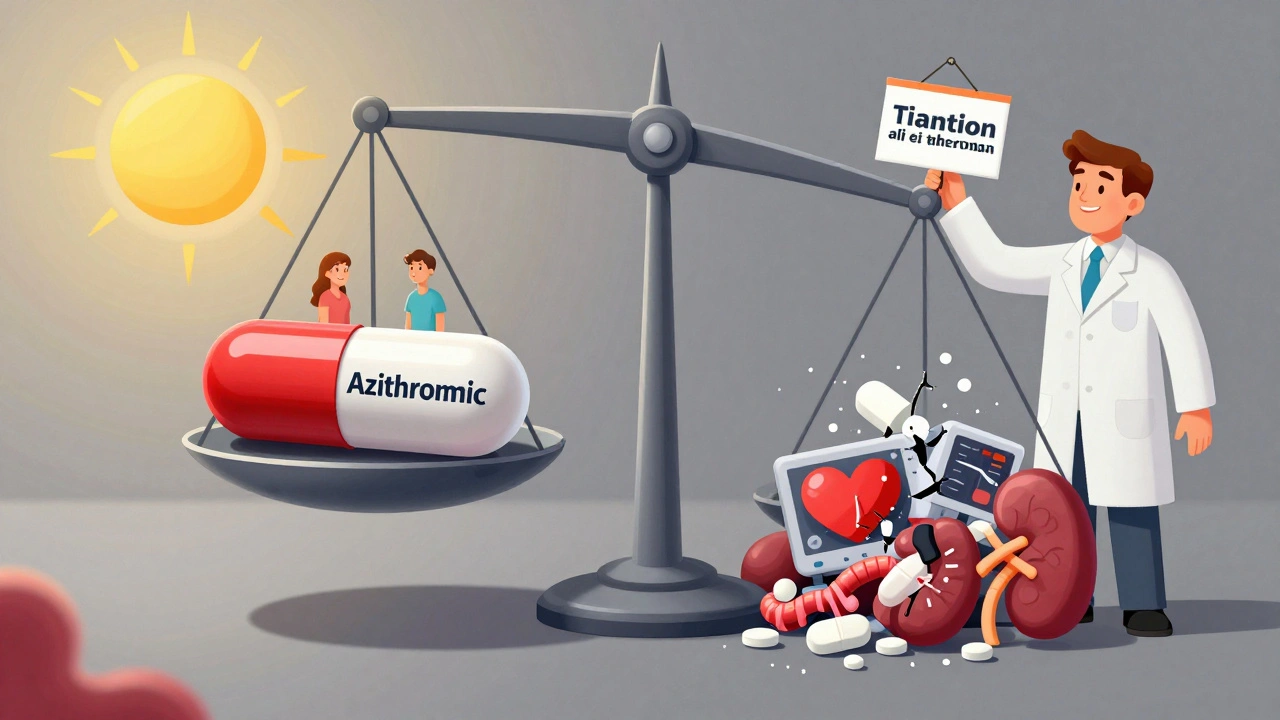
The good news? There are safer alternatives. Azithromycin is the top choice. It works just as well for most infections-pneumonia, strep throat, sinusitis-and has minimal CYP3A4 inhibition. In fact, a 2018 study found clarithromycin was 2.8 times more likely to cause serious interactions than azithromycin.Prescribers are already switching. Since 2015, clarithromycin prescriptions in the U.S. have dropped by 28%. Azithromycin now makes up 63% of all macrolide prescriptions. Why? Because doctors know the risks. One 2022 survey of 1,200 physicians found that “fewer drug interactions” was the #1 reason for choosing azithromycin over clarithromycin.
If your doctor prescribes clarithromycin, ask: “Is there a safer alternative?” If you’re over 65 or take three or more medications, the American College of Physicians recommends azithromycin as the default choice.
What to Do If You’re Already Taking Both
If you’ve already started clarithromycin while on one of these risky drugs, don’t panic-but act fast.- Stop taking the other medication immediately and call your doctor or pharmacist.
- Watch for signs of toxicity: muscle pain, weakness, dark urine, severe diarrhea, dizziness, irregular heartbeat.
- If you’re on colchicine and develop diarrhea, stop both drugs and go to the ER.
- Don’t wait for symptoms. If you’re unsure, get your blood tested for drug levels or muscle enzymes (CK).
Pharmacists are often the first line of defense. In one case from 2022, a hospital pharmacist caught a dangerous mix of clarithromycin, colchicine, and rivaroxaban before the patient even picked up the prescription. That’s the kind of safety net we need more of.
How to Protect Yourself
You can’t rely on your doctor to catch every interaction. Busy clinics miss things. Here’s what you can do:- Keep a full list of every medication you take-including supplements, OTC painkillers, and herbal products.
- Bring that list to every appointment. Don’t assume your doctor knows what you’re on.
- Ask: “Could this antibiotic interact with anything else I’m taking?”
- Use free online tools like the FDA’s Drug Interaction Checker or Medscape’s Drug Interaction Checker to double-check before filling a prescription.
- If you’re on statins, colchicine, or heart meds, insist on azithromycin unless there’s a clear medical reason not to.
Clarithromycin isn’t evil. It saves lives in specific cases-like treating Mycobacterium avium complex in immunocompromised patients. But for most common infections, its risks far outweigh its benefits. The data is clear: if you’re on other meds, don’t take it.
Can I take clarithromycin if I’m on a statin?
No. Clarithromycin can cause dangerous levels of statins like simvastatin and lovastatin to build up in your body, leading to rhabdomyolysis-a condition that breaks down muscle and can cause kidney failure. Even atorvastatin carries risk. Azithromycin is a safer alternative for most infections.
What should I do if I accidentally took clarithromycin with colchicine?
Stop both medications immediately and seek emergency medical care. Symptoms like severe diarrhea, vomiting, muscle pain, or weakness can appear within days. Colchicine toxicity can be fatal, especially in older adults or those with kidney issues. Don’t wait for symptoms to worsen.
Is azithromycin always a better choice than clarithromycin?
For most people, yes. Azithromycin has the same effectiveness against common infections like bronchitis, pneumonia, and strep throat, but with far fewer drug interactions. It’s now the preferred macrolide for patients on multiple medications, especially those over 65. Only use clarithromycin if your infection specifically requires it-like certain rare bacterial infections.
Does clarithromycin interact with over-the-counter medicines?
Yes. Some OTC drugs can interact, especially those containing diphenhydramine (Benadryl) or certain herbal supplements like St. John’s Wort. Even common pain relievers like ibuprofen can increase bleeding risk if you’re also on warfarin. Always check with your pharmacist before taking anything new while on clarithromycin.
How long does clarithromycin stay in my system after I stop taking it?
Clarithromycin’s effects on CYP3A4 can last for several days after your last dose. The enzyme doesn’t recover immediately. Experts recommend waiting at least 5-7 days before restarting medications like statins or colchicine. Always consult your doctor before restarting any drug after stopping clarithromycin.





Just got prescribed this for a sinus infection and checked my meds-turns out I’m on simvastatin. Holy crap. Called my pharmacist right away and they switched me to azithromycin. Seriously, y’all, check your scripts before filling them. This post saved me.
so like… clarithromycin = cyp3a4 = bad news bears? i mean… i knew abt statins but didnt realize colchicine was this dangerous… kinda wild how one drug can wreck so many systems. also why is this still even a thing??
As a clinical pharmacist, I’ve seen this play out in real time-CYP3A4 inhibition by clarithromycin leads to non-linear pharmacokinetics in substrates like colchicine and statins. The AUC can increase 3- to 5-fold, exceeding therapeutic thresholds. This isn’t theoretical; it’s a documented pharmacovigilance red flag. Always prioritize azithromycin in polypharmacy patients, especially geriatric cohorts with renal impairment.
THIS. So many people don’t realize how dangerous this is. 😰 I work in ER and we had a 72-year-old come in last month with rhabdo from this combo. He was on simvastatin and got clarithromycin for bronchitis. CK was 80,000. Kidneys shut down. 😣 Please, if you’re on meds-ask before you take it. Azithromycin exists for a reason.
My grandma almost died from this. She took clarithromycin with her gout meds and ended up in ICU with kidney failure. I cried for three days. Don’t wait for symptoms-check your meds NOW. 🚨 I printed out the list and taped it to her pill organizer. You can’t trust doctors to catch everything. I’m telling everyone I know.
Big Pharma knows this. They keep clarithromycin on the market because it’s profitable. Azithromycin is cheaper, safer, and just as effective-but they don’t push it. Why? Because they make more money off people dying from interactions and then selling them dialysis, ICU stays, and new heart meds. Wake up. This isn’t negligence-it’s corporate murder.
For anyone reading this, I want to say-you’re not alone in feeling overwhelmed. I’m a nurse and I’ve seen patients panic when they learn their meds are interacting. But here’s the good news: you have power. You can ask for alternatives. You can bring a list to your appointment. You can use the FDA’s checker. You can call your pharmacist and say, ‘I’m scared-can you help me?’ That’s not being difficult. That’s being smart. And if your doctor gets annoyed? Find a new one. Your life matters more than their schedule.
Just a quick note: even OTC stuff counts! I had a patient who took Clarithromycin + Benadryl + Ibuprofen + St. John’s Wort-all in one week. She ended up with serotonin syndrome and QT prolongation. The combo was a perfect storm. Always check EVERYTHING-even ‘harmless’ supplements. And yes, it’s worth printing out the list and showing it to your pharmacist. They’re the real MVPs.
It’s funny how people act like this is new information… it’s been in the Beers Criteria since 2015. The FDA warned about colchicine in 2011. The AHA in 2018. And yet-still happening. Why? Because patients don’t read the fine print. Doctors don’t have time. Pharmacies are understaffed. And the system? It’s designed to fail you. So… what now? Just… keep surviving?
Why are we letting Americans die because they’re too lazy to check their meds? In my country, we don’t have this problem-people know their prescriptions. This is what happens when you let everyone be a doctor. Just take azithromycin. It’s not that hard. Stop blaming Big Pharma and start taking responsibility.