

When you’re breastfeeding, every pill, injection, or drop you take doesn’t just affect you-it can reach your baby. It’s a scary thought. But here’s the truth: medications in breast milk are far more common-and often safer-than most new moms are told. The real question isn’t whether drugs get into milk. It’s how much, how fast, and whether it actually matters.
How Medications Actually Get Into Breast Milk
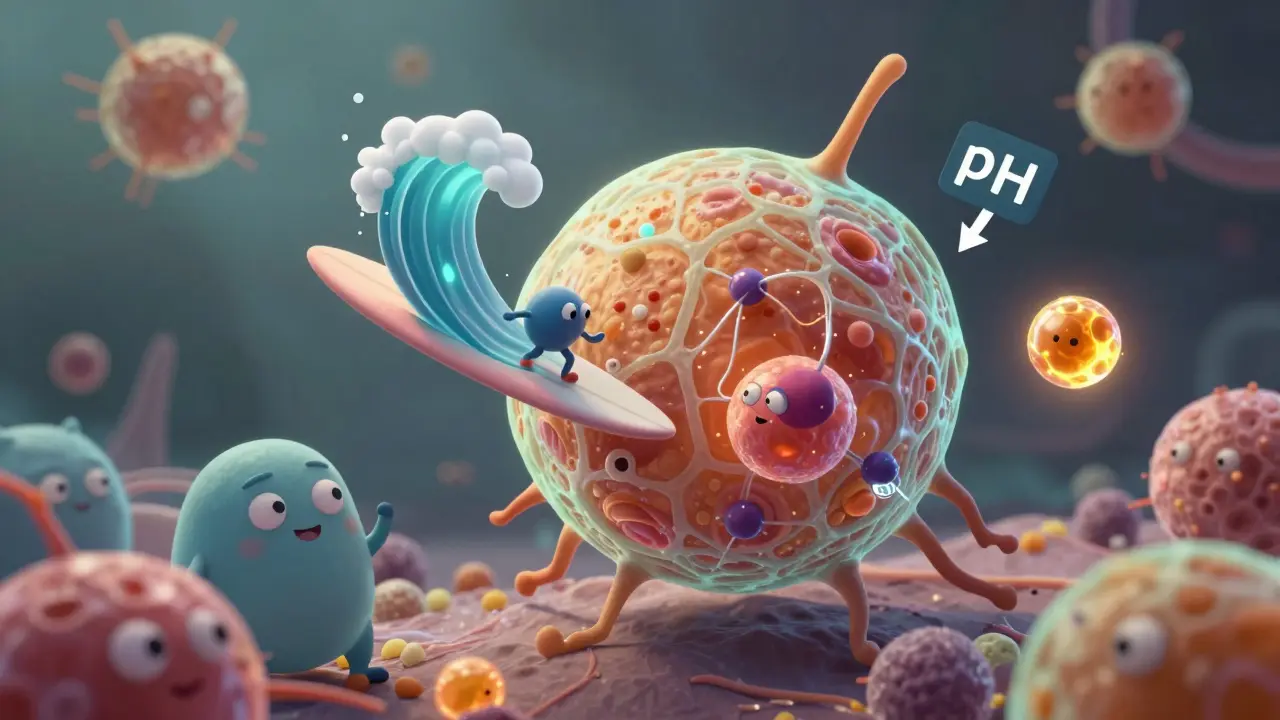
Medications don’t swim through your bloodstream like a river into your milk ducts. They move in quiet, predictable ways. About 75% of drugs cross into breast milk through passive diffusion. That means they follow the natural flow from areas of higher concentration (your blood) to lower concentration (your milk). It’s physics, not magic. The rest? Some drugs hitch a ride on special transporters in your breast cells. Nitrofurantoin, acyclovir, and cimetidine use these pathways. Others get actively pumped in, though that’s rare. What matters most isn’t how they get there-it’s what kind of drug they are. Size matters. If a drug molecule weighs more than 800 daltons, it barely makes it into milk. Heparin, for example, weighs 15,000 daltons. It doesn’t transfer. But lithium? At just 74 daltons, it slips right through. That’s why some drugs show up in milk while others don’t. Lipid solubility is another big player. Drugs that dissolve easily in fat-like diazepam-move into milk more readily. That’s why you’ll find higher levels of benzodiazepines in breast milk than antibiotics like gentamicin, which barely pass through because they’re water-soluble. Protein binding is the silent gatekeeper. If a drug clings tightly to proteins in your blood (like warfarin, which is 99% bound), it can’t float freely into milk. That’s why even though warfarin is a powerful blood thinner, less than 0.1% of the dose ends up in breast milk. Sertraline? It’s 98.5% bound, but still shows up in milk-because that tiny 1.5% is enough to matter. Then there’s pH. Breast milk is slightly more acidic than blood. Weak bases-drugs like amitriptyline or codeine-get trapped in milk because they turn into charged molecules that can’t go back out. That’s why milk levels can be 2 to 5 times higher than in your blood. It’s called ion trapping. And yes, it’s real.Timing and Breastfeeding Patterns Matter More Than You Think
It’s not just about what you take-it’s when. Taking your medication right after you breastfeed gives your body time to clear most of it before the next feed. A 2019 study showed this simple trick cuts infant exposure by 30-50%. If you take your dose at night before bed, and your baby sleeps for 4-5 hours, you’re giving them a much lower dose than if you took it right before feeding. The first week after birth is different too. Right after delivery, the tight junctions between milk-producing cells are still loose. That means bigger molecules-like antibodies, and yes, some medications-can slip through more easily. By day 10, those gaps close. That’s why early postpartum use of certain drugs can lead to higher exposure than later on. For drugs with long half-lives, timing isn’t enough. Diazepam, for example, stays in a newborn’s system for 30 to 100 hours. That’s because babies’ livers aren’t mature yet. If you’re on high doses-over 10 mg a day-your baby’s serum levels should be checked. Levels above 50 ng/mL can cause drowsiness, poor feeding, or breathing issues.What’s Safe? What’s Not?
You’ve probably heard conflicting advice. One doctor says it’s fine. Another says stop breastfeeding. The truth? Most medications are safe. The American Academy of Pediatrics says 87% of commonly prescribed drugs are compatible with breastfeeding. That includes:- Insulin (for diabetes)-zero transfer
- Heparin and low molecular weight heparins-too big to pass
- Amoxicillin and penicillin-low transfer, no known side effects
- Sertraline (Zoloft)-the go-to antidepressant for nursing moms
- Propranolol and metoprolol-beta-blockers with minimal transfer
Antidepressants and Psychiatric Medications: The Big Fear
This is where moms panic. You’re told SSRIs are risky. That your baby might get serotonin syndrome. But here’s the data: sertraline is the most prescribed antidepressant during breastfeeding-3.2 prescriptions per 100 nursing moms every month. Why? Because infant exposure is only 1-2% of the maternal dose. Serum levels in babies are almost always below 10% of what’s considered therapeutic for adults. Yes, some babies get fussy. One study found 8.7% of infants exposed to SSRIs showed irritability. Another 5.3% had trouble feeding. But these are mild, temporary, and usually go away within a few weeks. The alternative-stopping breastfeeding because you’re afraid-is far riskier. Postpartum depression increases the chance of early weaning, poor bonding, and long-term developmental issues. The European Medicines Agency warns about serotonin syndrome, but there are fewer than 10 confirmed cases worldwide in the last 20 years. Most are linked to high doses or combinations with other drugs. If you’re on a single, low-dose SSRI, the risk is near zero.Antibiotics, Painkillers, and Common Meds
Antibiotics are the most common meds moms take while breastfeeding-28.5% of users. Gentamicin? Less than 0.1% transfers. Amoxicillin? About 1.5%. Both are considered safe. Even metronidazole, once thought to be risky, is now cleared for use with just a 12-hour pause after a single dose. Painkillers? Acetaminophen and ibuprofen are top choices. Less than 1% of the dose reaches milk. Even codeine is generally safe if you’re a normal metabolizer-but avoid it if you’re a rapid metabolizer. That’s rare, but it can turn a small dose into a dangerous one for your baby. Naproxen? Use it sparingly. It builds up. Long-term use isn’t recommended. Aspirin? Avoid it. It can cause Reye’s syndrome in infants.What About Nuclear Medicine and Imaging?
A VQ scan? You’ll need to pump and dump for 12-24 hours. The radiation dose to your baby is small-0.15 mSv-but it’s enough to warrant a pause. A bone scan? Tc-99m compounds are safe. You can breastfeed right after. FDG-PET scans? Less than 0.002% of the tracer ends up in milk. No interruption needed. The rule? If it’s radioactive, ask your radiologist. But don’t assume the worst. Most scans are fine.
When to Worry-and When to Trust
You should monitor your baby if you’re on:- Drugs with long half-lives (diazepam, phenobarbital)
- Antidepressants (especially if baby is under 6 weeks old)
- High-dose thyroid meds or anticoagulants
- Excessive sleepiness
- Poor feeding or weight loss
- Unusual fussiness or jitteriness
- Changes in bowel movements
The Real Danger Isn’t the Medicine-It’s Stopping Breastfeeding
Here’s the hard truth: 22.4% of moms stop breastfeeding because they’re worried about medications. That’s the third most common reason after low milk supply and nipple pain. But here’s what no one tells you: 15-30% of those moms stop unnecessarily. A 2022 study found that most medications pose no real risk. The CDC says only 1-2% of drugs absolutely contraindicate breastfeeding. Stopping breastfeeding increases your baby’s risk of ear infections, diarrhea, asthma, and even SIDS. For you? It raises the risk of breast cancer, ovarian cancer, and postpartum depression. You don’t have to choose between being a healthy mom and feeding your baby. You can be both.What You Can Do Today
1. Don’t stop your meds without asking. If your doctor says “avoid breastfeeding,” ask for the evidence. Most don’t know the data. 2. Use the InfantRisk Center’s app. It’s free, updated daily, and based on 2,500+ drugs. Type in your medication. It tells you the risk level, transfer rate, and what to watch for. 3. Time your doses. Take meds right after a feed. Let 3-4 hours pass before the next one. 4. Monitor your baby. Keep a log: feeding times, sleep, fussiness. If something changes, you’ll know why. 5. Ask for alternatives. If you’re on a drug with higher risk, there’s almost always a safer one. Sertraline instead of fluoxetine. Amoxicillin instead of tetracycline. You’re not alone. Over half of breastfeeding moms take at least one medication. You’re not breaking a rule. You’re managing your health-and your baby’s-with smart choices.Do all medications pass into breast milk?
No. Most medications transfer in very small amounts, and many-like heparin, insulin, or large molecules-don’t pass at all. Only about 1-2% of drugs are considered unsafe. Size, solubility, protein binding, and timing determine how much gets into milk.
Is it safe to take antidepressants while breastfeeding?
Yes, most are. Sertraline is the most studied and safest option, with infant exposure at just 1-2% of the mother’s dose. Irritability or poor feeding can happen in a small number of babies, but these are rare and usually mild. Stopping breastfeeding because of fear of SSRIs is far riskier than continuing them.
How can I reduce my baby’s exposure to medication in breast milk?
Take your dose right after breastfeeding, not before. Wait 3-4 hours before the next feed. This lets your body clear most of the drug. Avoid long-acting forms. Use the lowest effective dose. And never stop a medication without checking with a lactation specialist or pharmacist.
What drugs should I avoid completely while breastfeeding?
Avoid radioactive iodine-131, chemotherapy drugs like methotrexate, high-dose estrogen birth control (over 50 mcg ethinyl estradiol), bromocriptine, and certain antivirals or antiretrovirals. Always check with a trusted source like the InfantRisk Center before taking anything new.
Can I breastfeed after a CT scan or X-ray?
Yes. Standard contrast agents used in CT scans and X-rays don’t enter breast milk in meaningful amounts. You can breastfeed normally after the scan. The same goes for most nuclear medicine tests-except for radioactive iodine. Always confirm with your radiologist, but don’t assume you need to pump and dump.
What should I do if my baby seems sleepy or fussy after I start a new medication?
Keep a log of feeding times, sleep patterns, and behavior. Mild fussiness or drowsiness can be temporary. If symptoms last more than a few days, or if your baby isn’t feeding well or losing weight, contact your pediatrician. They can check for drug levels if needed. Most often, the issue resolves on its own or with a small dose adjustment.




Let’s be real-most doctors are still operating on 1990s guidelines. I’ve seen OB-GYNs tell moms to stop breastfeeding because they took ibuprofen. That’s not medical advice, that’s malpractice disguised as caution. The science is clear: 98% of meds are fine. The real issue? Systemic ignorance. We need mandatory lactation pharmacology training for every pediatrician and OB. Not a webinar. Not a pamphlet. Actual certification. This isn’t about fear-it’s about accountability.
I was on sertraline for 8 months while nursing my twins. One was fine. The other? Barely ate for three days. I thought I’d broken my baby. I cried for hours. Then I found the InfantRisk app-turned out it was a growth spurt, not the med. But nobody told me to track symptoms. Nobody warned me about the emotional toll of second-guessing every pill. Please, moms-if you’re scared, don’t suffer alone. Reach out. There’s a whole community waiting to hold your hand.
It is imperative to underscore that the physiological mechanisms governing transmammary drug transfer are governed by well-established principles of pharmacokinetics, including passive diffusion, molecular weight thresholds, protein binding affinity, and pH partitioning. The assertion that 75% of pharmaceuticals enter breast milk via passive diffusion is empirically supported by peer-reviewed literature, including studies published in the Journal of Clinical Pharmacology and the American Journal of Obstetrics & Gynecology. Furthermore, the clinical relevance of infant serum concentrations below 10% of maternal therapeutic thresholds cannot be overstated. It is therefore not merely prudent-it is ethically obligatory-to base clinical recommendations on evidence, not anecdote.
bro. i took benadryl once while nursing and my kid slept for 12 hours straight. i panicked. called my doc. she laughed. said ‘that’s the point of benadryl.’ then i found out half the moms on my fb group were on antidepressants and their kids were running around like caffeinated squirrels. stop overthinking. your body knows what to do. trust the science, not the fear.
You guys are acting like this is some kind of miracle. It’s not. It’s chemistry. You take a pill, it goes in your blood, some of it leaks into milk. Big deal. The real problem? You’re all scared to death of your own bodies. I had a friend who quit breastfeeding because she took a Z-pack. Her baby got ear infections. Twice. Then she found out the antibiotic was safer than the damn pacifier she was giving him. Wake up. Stop letting fear make your decisions. You’re not a lab rat. You’re a mom. Act like it.
As a certified lactation consultant and former NICU nurse, I’ve seen too many mothers stop breastfeeding because they were misinformed. The data is overwhelming: SSRIs like sertraline, antibiotics like amoxicillin, even NSAIDs like ibuprofen-all have minimal transfer and negligible clinical impact. What we’re really seeing is a crisis of trust-not in medicine, but in ourselves. You are not poisoning your baby. You are nurturing them. And when you take care of your mental health, you’re giving your child the greatest gift: a present, stable, healthy mother. Don’t let outdated myths steal that from you.
Stop romanticizing this. If you’re taking antidepressants while breastfeeding, you’re not a hero-you’re taking a risk. And yes, the odds are low, but the consequences? Permanent neurodevelopmental changes. You think your baby won’t notice? They’re more sensitive than you realize. The fact that 22% of moms quit because of fear? That’s not ignorance. That’s instinct. Trust your gut. If you’re unsure, pause. Pump and dump. Wait. Re-evaluate. Your child’s brain is more important than your convenience.
Don’t stop meds. But don’t pretend it’s risk-free either. Sertraline? Fine. But if your baby’s lethargic, stop. Period. No debate. You’re not a martyr. You’re a parent. If your kid’s not thriving, it’s not about guilt. It’s about survival. I’ve seen it. I’ve lived it. Don’t make me explain it again.
Thank you for this comprehensive, evidence-based breakdown. I am a father of two, and I spent months researching this after my wife started sertraline. The data is clear, but the stigma is not. I wish more partners were educated on this. We need to stop leaving mothers to fight this battle alone. Please, if you’re reading this and your partner is on medication while nursing-support her. Don’t question her. Don’t guilt her. Just be there. That’s what matters most.