
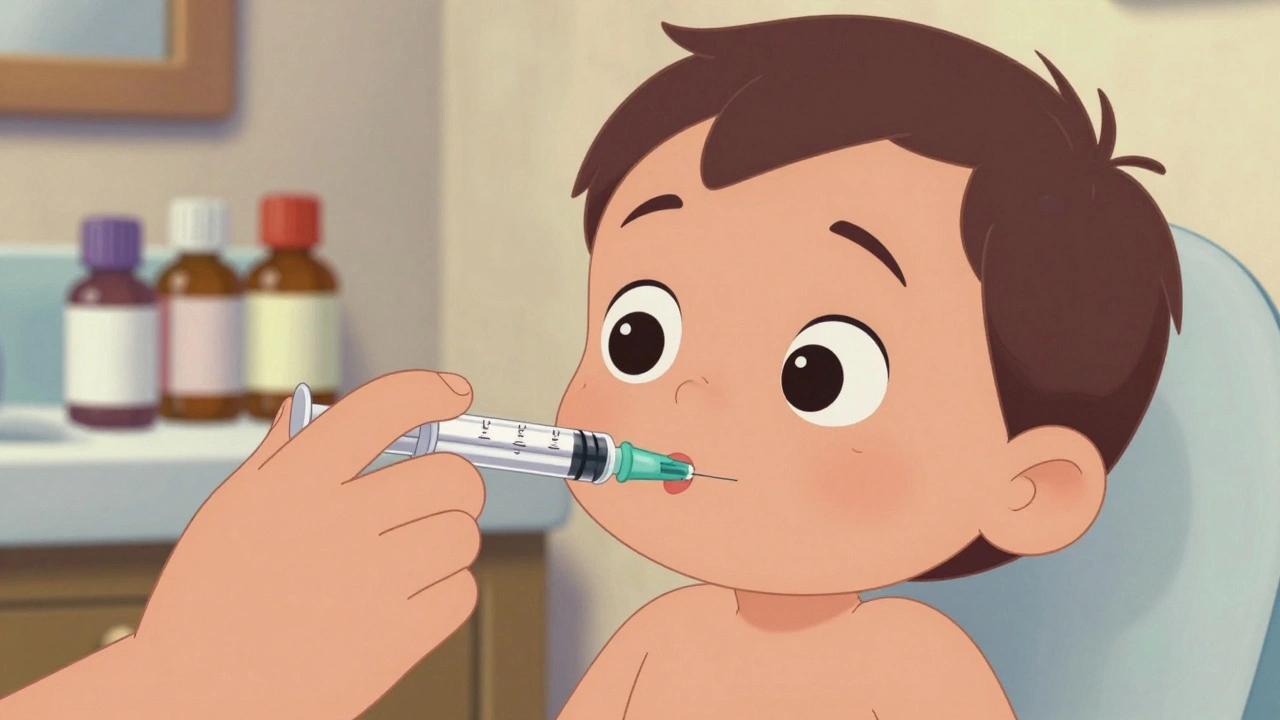
Giving liquid medicine to a child isn’t as simple as pouring it into a spoon. One wrong milliliter can mean the difference between relief and harm. Dosing syringes are the most reliable tool for getting the right amount into your child’s mouth-every time. But if you’re using a kitchen spoon, a measuring cup, or even the cap that came with the bottle, you’re risking an overdose or underdose. The numbers don’t lie: over 40% of parents make dosing mistakes with liquid medicines, and nearly 70% of those errors come from using the wrong tool. The fix? Learn how to use an oral syringe correctly-and why it’s the gold standard for kids’ meds.
Why Oral Syringes Are the Only Safe Choice for Kids
Kitchen teaspoons vary wildly in size-from 2.5 mL to over 10 mL. That’s a 400% difference. A tablespoon? Even worse. The FDA banned teaspoon and tablespoon measurements on prescription labels in 2018 because they caused one in five dosing errors. Studies show parents using household spoons make mistakes in up to 68% of cases. Even the little plastic spoons that come with medicine bottles? They’re off by 22% on average. Oral syringes, on the other hand, are calibrated to within ±5% of the exact dose. They’re designed for children’s tiny, weight-based doses-often as small as 0.5 mL. The American Academy of Pediatrics (AAP) and the Institute for Safe Medication Practices (ISMP) both say oral syringes are the only safe choice for infants and toddlers. For kids under 5, they’re not just recommended-they’re essential.Choosing the Right Syringe Size
Not all syringes are the same. The size you pick depends on the dose your child needs. Using the wrong size makes accuracy harder.- 1 mL syringe: Best for doses under 1 mL. Marked in 0.01 mL increments. Used for newborns or very small doses of antibiotics or fever reducers.
- 3 mL syringe: Ideal for doses between 1-3 mL. Marked in 0.1 mL increments. This is the most common size for infants and toddlers taking acetaminophen or ibuprofen.
- 5 mL syringe: For doses between 3-5 mL. Marked in 0.2 mL increments. Often used for older toddlers on higher doses.
- 10 mL syringe: Only for doses over 5 mL. Marked in 0.5 mL increments. Not for tiny doses-too hard to read accurately.
Always match the syringe size to the dose. If your child needs 1.8 mL, don’t use a 10 mL syringe. Use the 3 mL one. The smaller the syringe, the more precise the markings-and the safer the dose.
How to Draw the Correct Dose
It’s not just about pulling the plunger. Here’s how to do it right:- Shake the bottle well for 10-15 seconds. Many liquid meds are suspensions-medicine settles at the bottom. If you don’t shake it, your child gets too little active ingredient.
- Remove the cap. Check for a protective seal. Never use a syringe if the cap is still attached-it’s a choking hazard.
- Insert the syringe tip into the bottle. Turn the bottle upside down. Slowly pull the plunger back until the top edge of the black rubber stopper lines up with the exact dose mark on the syringe.
- Don’t fill to the top. Always read the mark at eye level. Look straight at the line-not from above or below.
- Check the label again. Confirm the dose matches what the doctor prescribed. If it’s 2.5 mL, make sure the plunger is at 2.5 mL-not 2.4 or 2.6.
Pro tip: If the medicine is thick (like amoxicillin suspension), gently tap the syringe to pop any air bubbles. Then slowly push the plunger back in and redraw the dose. Air bubbles mean you’re giving less medicine than you think.
How to Give the Medicine Without a Struggle
Getting the medicine in is just as important as measuring it. Most parents make the same mistake: squirting it straight to the back of the throat. That triggers the gag reflex-and 15% of kids choke or spit it all out. Here’s what works:- Hold your child upright or slightly leaning forward. Never lie them flat.
- Place the syringe tip between the cheek and gum-on the side of the mouth, not the tongue.
- Press the plunger slowly. Give only 0.5 mL at a time.
- Wait 5-10 seconds between each push. Let them swallow. You’ll see their throat move.
- Keep the syringe in place until they’ve swallowed the full dose. Pulling it out too soon means some medicine stays in the mouth.
For babies, gently stroke their cheek to encourage swallowing. For toddlers, let them hold the syringe (without the plunger) to feel in control. Many parents swear by a “medicine trick”: give a small sip of water after each 0.5 mL to help wash it down.
What to Avoid
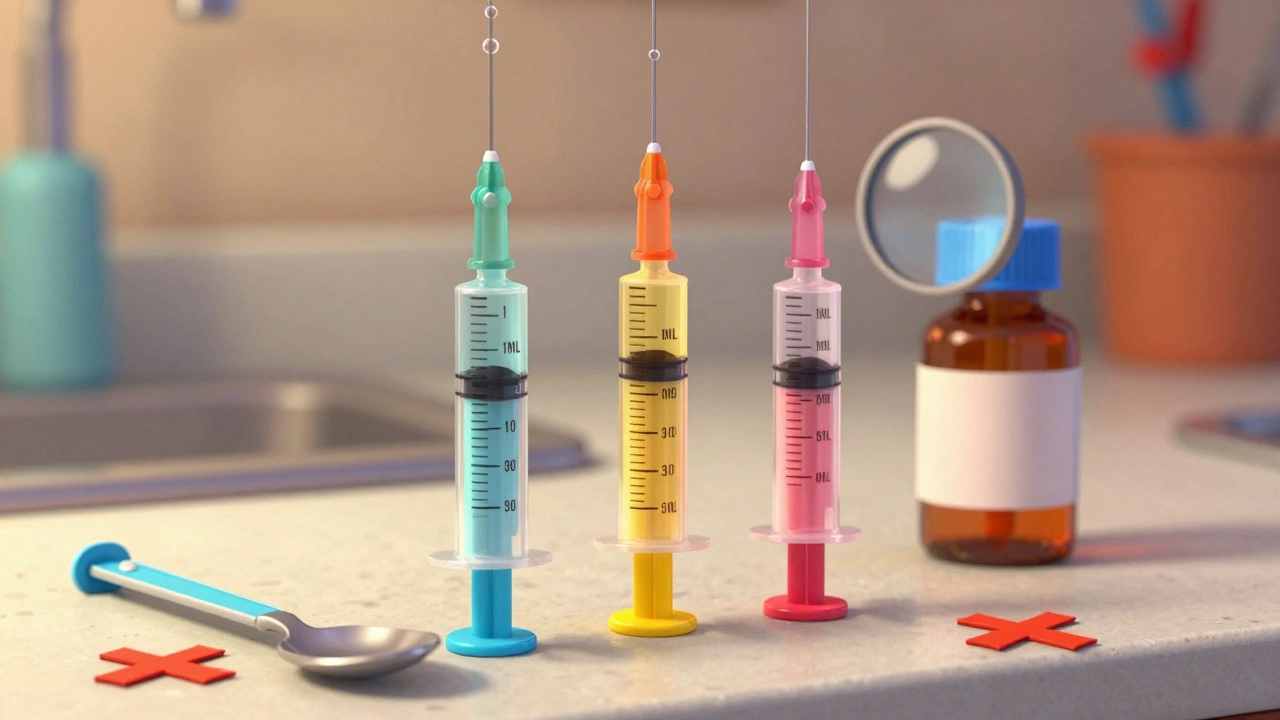
These common mistakes cost lives.- Using a kitchen spoon: Even if you think it’s “close enough.” It’s not.
- Using a needle syringe: Never. Even if it’s the same size. Oral syringes are labeled “for oral use only” to prevent accidental IV use. Between 2001 and 2009, 137 children were hospitalized after oral meds were accidentally given through IV lines.
- Not checking the concentration: Acetaminophen comes in 160 mg/5 mL and 80 mg/0.8 mL. Mixing them up leads to overdose. Always double-check the bottle label.
- Forgetting to remove the cap: The plastic cap on the syringe tip is a choking hazard. Always remove it before use.
- Using the same syringe for different meds: Rinse it with water between uses. Otherwise, residue from one drug can mix with another.
What About Oral Dispensers?
Oral dispensers are the same as oral syringes-just a different name. Some brands call them “oral dosers,” “medication syringes,” or “pediatric droppers.” The key is: no needle, metric markings, and a wide base to prevent rolling. For older kids (over 5) who can reliably drink from a cup, a dosing cup may work for doses over 5 mL. But even then, studies show error rates are still 8%-compared to 5% with syringes. So if your child is under 5, stick with the syringe. Always.What Parents Say
On parenting forums, the most common story? “I switched from the cup to the syringe-and my child’s fever dropped within an hour.” One parent on Reddit wrote: “My 18-month-old had fevers at 104°F. I was giving the wrong dose. After using the syringe, it was 101°F in 45 minutes. I didn’t know I was underdosing.” But challenges remain. One in four parents say their child bites the syringe tip. Solution? Use a syringe with a soft, silicone tip. Some brands now offer color-coded plungers-green for acetaminophen, purple for ibuprofen-to avoid mix-ups. Amazon reviews show these reduce errors by 30%.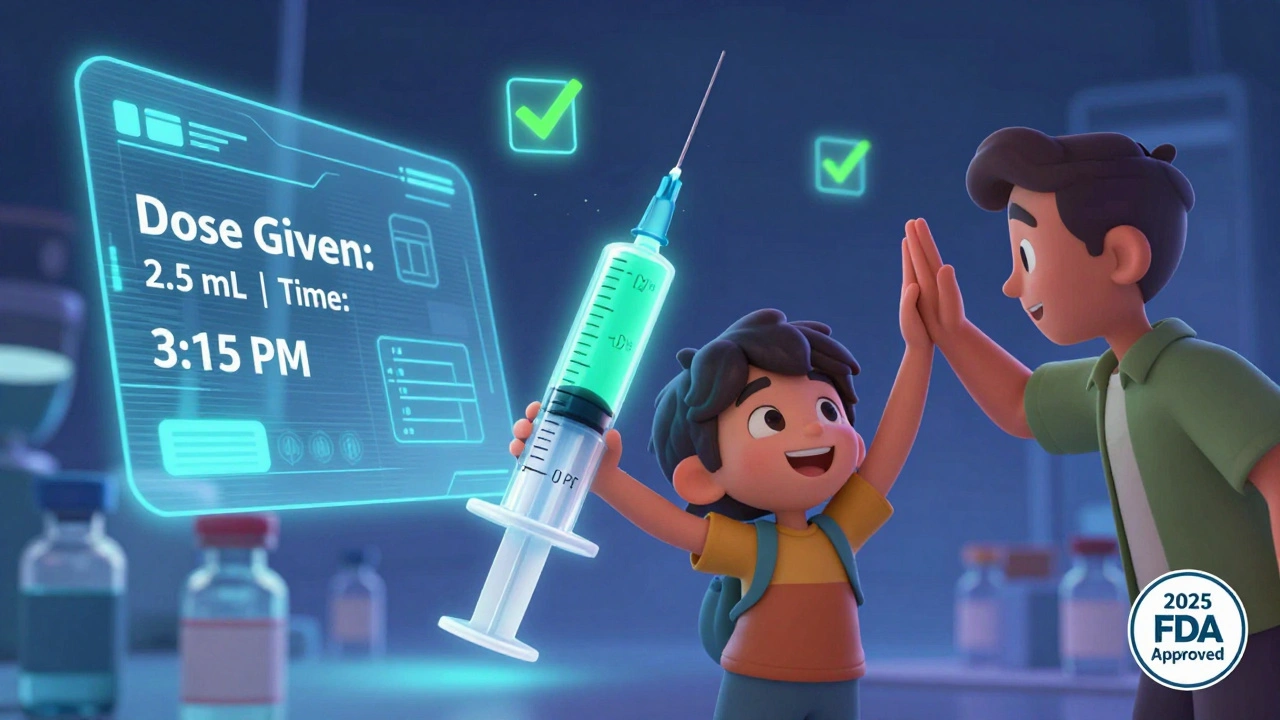
What’s New in 2025
The FDA approved a color-changing syringe in 2023: it turns from blue to green when you’ve drawn the right dose. Clinical trials showed a 37% drop in measurement errors. By late 2025, smart syringes with Bluetooth will hit the market-linking to apps that track when and how much medicine was given. But for now, the simple, cheap, plastic syringe is still the most effective tool you own.When to Call the Doctor
If your child spits up the full dose within 15 minutes, call your pediatrician. Don’t give another dose unless they say so. If you think you gave too much, call Poison Control immediately at 1-800-222-1222. Keep that number saved in your phone.Final Checklist Before Giving Medicine
- ✅ Did I shake the bottle?
- ✅ Did I use the right syringe size for the dose?
- ✅ Did I read the mark at eye level?
- ✅ Did I remove the cap?
- ✅ Did I place the syringe between cheek and gum?
- ✅ Did I give it slowly, in small amounts?
- ✅ Did I check the label for concentration?
If you can answer yes to all seven, you’re doing it right. No guesswork. No spoons. Just safety.



Just used a teaspoon last week. Kid threw up everywhere. Now I got the 3ml syringe. Best $2 I ever spent.
No more guesswork.
THE FDA BANNED TEASPOONS? LOL. That’s just the beginning. They’re coming for your syringes next. You think they care about kids? Nah. They care about controlling the pharmaceutical supply chain. Look at the color-coded syringes-tracking. Every drop you give is logged. Smart syringes? More like spy syringes. They want to know when your kid gets meds. They want to know if you’re ‘compliant.’ Wake up.
They’re not protecting your child. They’re profiling you.
In India, we often use the cap because syringes aren’t always available. But I get it-accuracy matters. I switched to a 3mL syringe after my daughter got sick from underdosing. It’s not about convenience. It’s about trust. The medicine has to be right.
Simple. No drama. Just care.
The real issue here isn’t the tool-it’s the epistemology of dosing. We treat medicine as a quantifiable variable, but the child is a dynamic system. The 0.5 mL increments assume perfect absorption, perfect metabolism, perfect compliance. But biology isn’t linear. The syringe gives precision, yes-but precision ≠ efficacy. We need to stop conflating measurement with healing.
Still, the syringe is the least flawed instrument we have. So use it. But don’t fetishize it. The child’s response is the real endpoint.
Okay, so the FDA banned teaspoons. But did you know the same people who made that rule also approved those damn ‘color-changing’ syringes? And now they’re pushing Bluetooth ones? Who’s making money off this? Big Pharma? The syringe companies? Or the app developers who want to track your kid’s fever like a stock ticker?
I’m not saying don’t use syringes. I’m saying-don’t trust the system. Check the concentration. Always. Twice. Because if you don’t, they’ll let you think you’re safe while they quietly monetize your fear.
STOP USING KITCHEN SPOONS. I don’t care if you’re tired, stressed, or in a hurry. This isn’t a suggestion. It’s a life-or-death rule. I’ve seen kids admitted because someone used a soup spoon. Don’t be that parent. Buy a $2 syringe. Keep it with the meds. Use it every time. No exceptions.
And if your kid bites it? Get the silicone-tip ones. They exist. Use them.
my lil one used to spit out everything til i found the cheek gum trick
now she even holds the syringe herself
shes 2 and she knows its medicine time
no more tears
just slow pushes and hugs
you guys arent alone
we got this
Just got the color-changing syringe! 🌈 It turned green when I pulled the dose and I actually cried. I’ve been so scared of messing up. This feels like a tiny win. Also, my kid loves the purple one for ibuprofen. She calls it ‘the sleepy syringe.’ 😊
Small things matter. You’re doing great.
Let’s be real. The AAP and ISMP say syringes are essential. But they’re also the same people who told us to sleep babies on their backs, then changed their minds, then changed them back. And now they want us to buy a $5 syringe? The real solution is standardized concentrations. Not more tools. More regulation.
Also, ‘oral dispenser’ is just corporate speak for syringe. Stop rebranding.
My wife and I used to fight over dosing. I’d use the cap, she’d use the syringe. We lost sleep over it.
Then we bought the 3mL one with the soft tip. Now we laugh about it. Kid’s been healthy for 8 months.
Best parenting upgrade ever. 💪
And yes, we shake the bottle like it owes us money.
I’m a nurse. I’ve seen too many ER visits from dosing errors. The syringe isn’t just ‘recommended’-it’s the bare minimum. If you’re giving liquid meds to a child under 5, you’re not a good parent if you’re not using one.
But also-be kind to yourself. You’re trying. You’re reading this. That’s already more than most.
Keep going.
Let’s be brutally honest. Most parents are incompetent when it comes to dosing. You use spoons because you’re lazy. You ignore concentrations because you’re too busy scrolling. You don’t shake the bottle because ‘it’s fine.’
Here’s the truth: your child is a guinea pig for your negligence.
Stop. Read. Learn. Use the syringe.
Or stop pretending you know what you’re doing.
My daughter was 104°F. I gave her the wrong dose. Twice. I felt like a monster.
Then I found this guide. Bought the 3mL syringe. Did it right. She was 101°F in 45 minutes.
I’m not a hero. I just listened.
Thank you for writing this. You saved my kid.
And I’m never going back.