

Switching from brand-name drugs to generics can save you hundreds of dollars a year. In Australia, more than 85% of prescriptions are filled with generics - and that number keeps rising. But here’s the thing: not all generics feel the same. Some people swear their blood pressure spiked after switching. Others say their seizures came back. Or their mood dropped out of nowhere. And sometimes, doctors dismiss it as "just in your head."
What if the problem isn’t in your head - but in the pill?
Keeping a medication journal isn’t just for people with complex conditions. It’s the most practical tool you have to spot real differences when you switch to a generic version of your medicine. And if you’re on a drug with a narrow therapeutic index - like warfarin, levothyroxine, or seizure meds - this isn’t optional. It’s essential.
Why Generic Switches Can Feel Different
The FDA says generics are bioequivalent to brand-name drugs. That means they deliver the same active ingredient at the same rate and amount. Sounds perfect, right?
But bioequivalence doesn’t mean identical. The FDA allows generics to vary by up to 20% in how quickly they’re absorbed. That’s within legal limits. But for some people - especially those with epilepsy, heart conditions, or thyroid disorders - that tiny difference can mean the difference between control and crisis.
Take levothyroxine. A 2023 study tracked 1,200 patients who switched generic manufacturers. Nearly 1 in 5 saw their TSH levels jump by more than 30% - even though they took the exact same dose. No change in diet. No change in routine. Just a new pill from a different factory.
And it’s not just about absorption. The fillers, dyes, and binders in generics can vary. One person might get a tablet with lactose. Another might get one with cornstarch. For someone with sensitivities, that’s enough to trigger bloating, headaches, or even rashes.
Even the shape and color matter. A 2022 survey found that 33% of patients couldn’t tell if they’d been switched to a different generic because the pills looked almost identical. But their bodies knew.
What to Track in Your Journal
A simple list of pills won’t cut it. You need structure. Here’s what to write down every time you fill a prescription:
- Brand name and generic name - Write both. "Synthroid" and "levothyroxine sodium" aren’t the same to your body.
- Manufacturer name - Is it Teva? Mylan? Dr. Reddy’s? Each makes different versions. Write it down.
- Lot number - Found on the bottle. If something goes wrong, this is how your pharmacist traces the batch.
- Pill appearance - Color, shape, score lines, imprint code. Take a photo with your phone. Save it.
- Date switched - Exact day. Don’t guess.
- Dosage - Even if it’s the same, write it. 100 mcg. Not "one pill."
- Symptoms - Use a scale. Rate pain, fatigue, mood, or seizures from 1 to 10. Do it daily. Use the same scale every time.
- Side effects - Nausea? Dizziness? Insomnia? Note when it started and how long it lasted.
- Lab results - If you get blood tests (INR, TSH, drug levels), record them. Don’t rely on memory.
- Missed doses - Even one skipped pill can throw off your numbers. Write why: "Forgot," "Too expensive," "Didn’t recognize pill."
Don’t try to remember everything. Write it right after you take your pill. Set a phone reminder for 8 a.m. and 8 p.m. It takes 30 seconds. But those 30 seconds build a pattern.
When Journaling Makes the Biggest Difference
Not every drug needs this level of tracking. But for these, it’s life-changing:
- Antiepileptics - A 2020 study found 7.3% of patients had breakthrough seizures after switching generic manufacturers. That’s 6 times higher than when they stayed on the same version.
- Warfarin - A 5% change in absorption can send your INR from safe to dangerous. One patient in Brisbane reported bruising all over after switching to a new generic. His INR jumped from 2.4 to 5.1 in two weeks.
- Levothyroxine - Thyroid levels are sensitive. A TSH shift from 2.0 to 7.0 can turn you from feeling fine to exhausted, depressed, and gaining weight.
- Immunosuppressants - After transplant, even a small drop in tacrolimus levels can trigger organ rejection. A 2013 Cleveland Clinic case showed patients ended up in ICU after switching to a new generic.
- Heart medications - Digoxin, amiodarone, and others have tight safety margins. Small changes can cause arrhythmias.
If you’re on one of these, your journal isn’t just helpful - it’s your safety net.
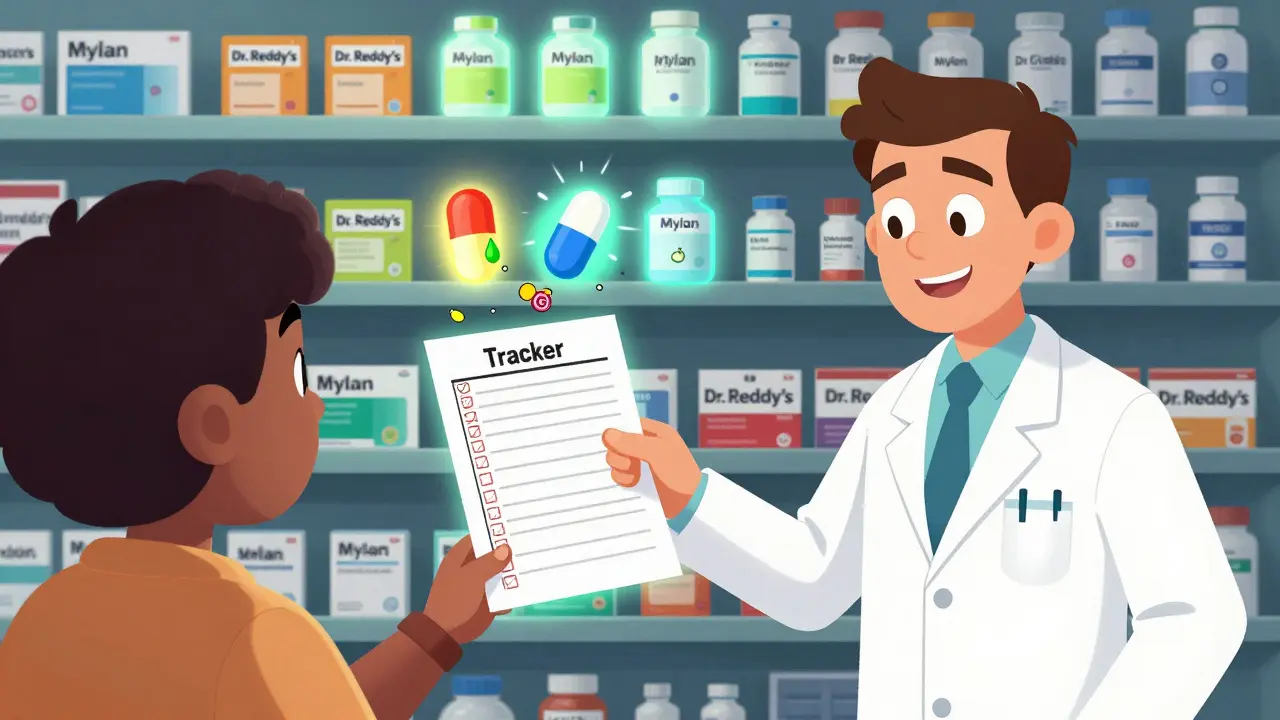
Tools That Actually Work
You don’t need fancy tech. But you do need consistency.
Paper journals are still the top choice for people over 65. A simple notebook with pre-printed templates - like the one from the Cleveland Clinic - works better than most apps. You can tear off a page and bring it to your doctor. No login. No battery. No glitch.
Digital apps like Medisafe and MyTherapy are great if you’re already using your phone for everything. They send reminders, let you log symptoms with taps, and even export reports. Medisafe has a 4.7-star rating from over 150,000 users. But here’s the catch: 62% of people over 65 still prefer paper. If you’re not tech-savvy, don’t force it.
Try this: Use your phone camera to snap a picture of your pill every time you get a new bottle. Then write a note: "Switched to Teva levothyroxine on Jan 3. Took at 7 a.m. Felt dizzy by 10 a.m. TSH was 1.8 last month, now 5.2."
That’s it. No fluff. Just facts.
What Your Doctor Needs to Know
Most doctors don’t ask for your journal. But that doesn’t mean they don’t need it.
When you bring your journal to an appointment, you’re not being difficult. You’re giving your doctor data they can’t get from a blood test alone. A 2022 University of Michigan study found patients who brought journals had 32% fewer unnecessary medication changes - and 27% better adherence.
Don’t say, "I don’t feel right on this pill." Say: "I switched to this generic on January 5. My fatigue score went from 3 to 8. My TSH jumped from 1.9 to 6.1. I’ve had headaches every day since. The pill is white, oval, with "TEVA 867" on it."
That’s a story your doctor can act on.
When Journaling Doesn’t Help
It’s not magic. Some drugs don’t respond well to this kind of tracking.
Antidepressants? They take weeks to work. If you switch generics and feel worse after three days, it’s probably not the pill - it’s the brain adjusting. Journaling here can lead to false alarms.
Same with statins. Muscle aches? Could be the drug. Could be aging. Could be nothing. A journal won’t tell you for sure.
And if you’re not consistent? It’s useless. A 2019 study found only 38% of people kept their journal going past three months. Without regular entries, patterns don’t emerge.
So pick one drug. One condition. One journal. Start small. If it works, expand.

How to Stay Consistent
Most people quit because it feels like a chore. Here’s how to make it stick:
- Link it to something you already do - like brushing your teeth or eating breakfast.
- Set a daily alarm: "Log meds" at 8 a.m. and 8 p.m.
- Use a template. Don’t write free-form. Fill in the blanks.
- Ask your pharmacist to help. Many now offer free tracking sheets.
- Share your journal with a family member. Accountability helps.
Don’t aim for perfection. Aim for consistency. Even three entries a week is better than none.
What Comes Next
The system is changing. In 2024, Apple Health started rolling out built-in medication tracking templates for iOS users. The FDA is testing QR codes on generic packaging that link to bioequivalence data. Some pharmacies now offer free journaling apps with your prescription.
But until the system catches up, you’re still the best detector of change in your own body.
Generics are safe. For most people, they work just fine. But for some - maybe you - the difference is real. And if you don’t track it, no one else will.
Your journal isn’t about distrust. It’s about control. It’s about knowing - for sure - whether that new pill is working, or if it’s time to ask for something else.
Do I really need to track every generic switch, even if I feel fine?
If you’re on a drug with a narrow therapeutic index - like thyroid meds, blood thinners, or seizure drugs - yes. Even if you feel fine, small changes in absorption can build up over time. A TSH level that shifts from 2.0 to 5.0 might not cause symptoms right away, but it increases your risk of heart problems or depression later. Journaling catches these slow changes before they become emergencies.
Can my pharmacist help me with my medication journal?
Absolutely. Many pharmacists now offer free templates and even review your journal during consultations. In one Kaiser Permanente program, pharmacist-led journal reviews reduced unnecessary medication changes by 44%. They can also tell you if your new generic is from a different manufacturer than your last one - something you might miss on the bottle.
What if my doctor says my symptoms are "all in my head"?
Don’t back down. Bring your journal. Show the exact dates, symptoms, and lab results. Studies show patients who present structured data are taken more seriously. If your doctor still dismisses it, ask for a referral to a specialist - especially if you’re on a narrow therapeutic index drug. Your symptoms are real, and your data is valid.
Are there free templates I can use?
Yes. The Cleveland Clinic offers a free NTI Medication Tracker template (downloadable online). The Epilepsy Foundation has a seizure and medication tracker. The CDC also provides printable sheets through their website. Print them, keep them in your wallet, and fill them out as you take each dose.
How long should I track before deciding if a generic isn’t working?
For fast-acting drugs like blood pressure or pain meds, give it 7-10 days. For thyroid or seizure meds, wait at least 4-6 weeks - it takes time for your body to stabilize. Don’t judge too soon. But if symptoms worsen and stay high after that, your journal gives you the proof to ask for a switch back.
Next Steps
Start today. Pick one medication you’re on - the one that matters most. Grab a notebook. Write down the name, manufacturer, and date you last filled it. Take a photo of the pill. Set a reminder for tomorrow. Track your energy, mood, or pain level on a scale of 1 to 10. Do it for seven days.
That’s it. No pressure. No perfection. Just data.
If you notice a pattern - a spike in symptoms after switching - you’ll know what to do next. And if you don’t? You’ll have peace of mind knowing your body is responding as it should.





generic works fine for me lol why u so stressed
This is the most irresponsible medical advice I've seen all week. You're telling people to treat their thyroid meds like a fucking lottery ticket? The FDA doesn't allow 20% variation in bioavailability-that's a myth peddled by anti-pharma cranks. And don't get me started on 'pill appearance matters.' That's placebo psychosis dressed up as science. If you're having symptoms, see a specialist-not your phone's camera roll.
The pharmacokinetic variance in narrow therapeutic index (NTI) agents is not a myth-it's empirically validated in peer-reviewed literature. The 2023 levothyroxine cohort study published in JAMA Internal Medicine demonstrated clinically significant TSH fluctuations across manufacturer switches, even within FDA-compliant parameters. The cognitive dissonance displayed by those dismissing patient-reported outcomes as 'placebo' is not only unscientific-it's ethically negligent.
Ah yes, the classic 'my pill looks different so my body hates it' narrative. Let me guess-you also think your coffee tastes different when the cup changes color? The FDA’s bioequivalence standards are among the most rigorous in the world. If you're having symptoms, maybe it's not the pill-it's the fact that you're obsessively tracking every burp and yawn like it's a NASA telemetry feed.
Listen. I get it. You're scared. You've been told your body's broken, your symptoms are 'in your head,' and now you're finally finding people who get it. But here's the truth: your journal isn't just for you-it's for every person who's been gaslit by a doctor who didn't listen. I had a cousin on warfarin. Switched generics. INR jumped from 2.1 to 5.9. Two weeks later, she was in the ER with a brain bleed. She didn't have a journal. She didn't know to track the lot number. Don't be her. Write it down. Even if it feels silly. Even if your doctor rolls their eyes. You're not crazy. You're just the only one paying attention.
I started journaling after my psychiatrist said my depression was 'just stress'-even though my TSH had jumped from 2.3 to 7.8 in six weeks. I took a photo of the pill, wrote down the manufacturer (Teva), and tracked my energy on a 1–10 scale. By day 14, the fog lifted. I brought it to my endocrinologist. She said, 'I've never seen someone document this so clearly.' I cried. Not because I was right-but because someone finally saw me. You don't need to be loud to be right. Just consistent. Start with one pill. One day. One note. That's all it takes.
I'm not trying to be dramatic, but I think this is the most important thing I've read all year. My mom switched to a generic seizure med and had a grand mal in the grocery store. The pharmacy didn't even tell her it was a different maker. She was 68. Didn't know to check the label. I wish someone had told us to take a picture of the pill. We lost three months of her life because no one thought to ask. Please, if you're on anything NTI-don't wait. Start today. Even if you feel fine. Your future self will thank you.
You know what this really is? A rebellion against the pharmaceutical-industrial complex. We've been trained to believe that all pills are interchangeable-that the body is just a machine that doesn't notice the difference between cornstarch and lactose. But the soul remembers. The body remembers. The 20% variation? It's not just chemistry-it's a metaphysical rupture. When you switch generics, you're not just changing a tablet-you're changing your relationship with your own biology. And that's terrifying. But also sacred. Journaling isn't about data-it's about reclamation.
You're all delusional. The FDA's bioequivalence standards are scientifically robust. 99.9% of patients have zero issues with generics. The 0.1% who claim otherwise are either hypochondriacs or conspiracy theorists. Stop feeding the fear. This article is dangerous. It's giving people permission to ignore evidence-based medicine.
bro i started journaling after i switched my bp med and i swear my headaches stopped after i realized the new pill was blue instead of white. i took a pic. wrote 'blue pill = no head pain'. life changed. also i spelled 'pharmacy' wrong in my notes like 3 times but who cares? it worked.
I used to think this was nonsense until I switched to a generic levothyroxine and started crying for no reason every Tuesday. I didn't even know I was depressed until I started tracking. The journal didn't fix me-but it gave me proof. Now I print it out and hand it to every doctor. They don't like it. But they read it. And that's all I need.
I work as a clinical pharmacist, and I can tell you-this isn't anecdotal. We’ve had patients come in with journals so detailed they could’ve been published. One woman tracked her INR, pill color, manufacturer, and mood for 18 months. We found a pattern: every time she got Teva’s version, her INR spiked. We switched her back. She hasn’t had a bleed since. Your data matters. Even if it’s messy. Even if it’s handwritten. Even if you only write three times a week. You’re not overreacting. You’re being smart.
I respect the intention behind this post-but please, don't confuse correlation with causation. Many patients report symptoms after switching generics, but placebo effects, stress, and confirmation bias play a huge role. That said, I agree: if you're on warfarin or levothyroxine, document everything. Even if you think it's unnecessary. It's not about distrust-it's about responsibility. And yes, pharmacists can help. I give out free templates every week. No judgment. Just support.