
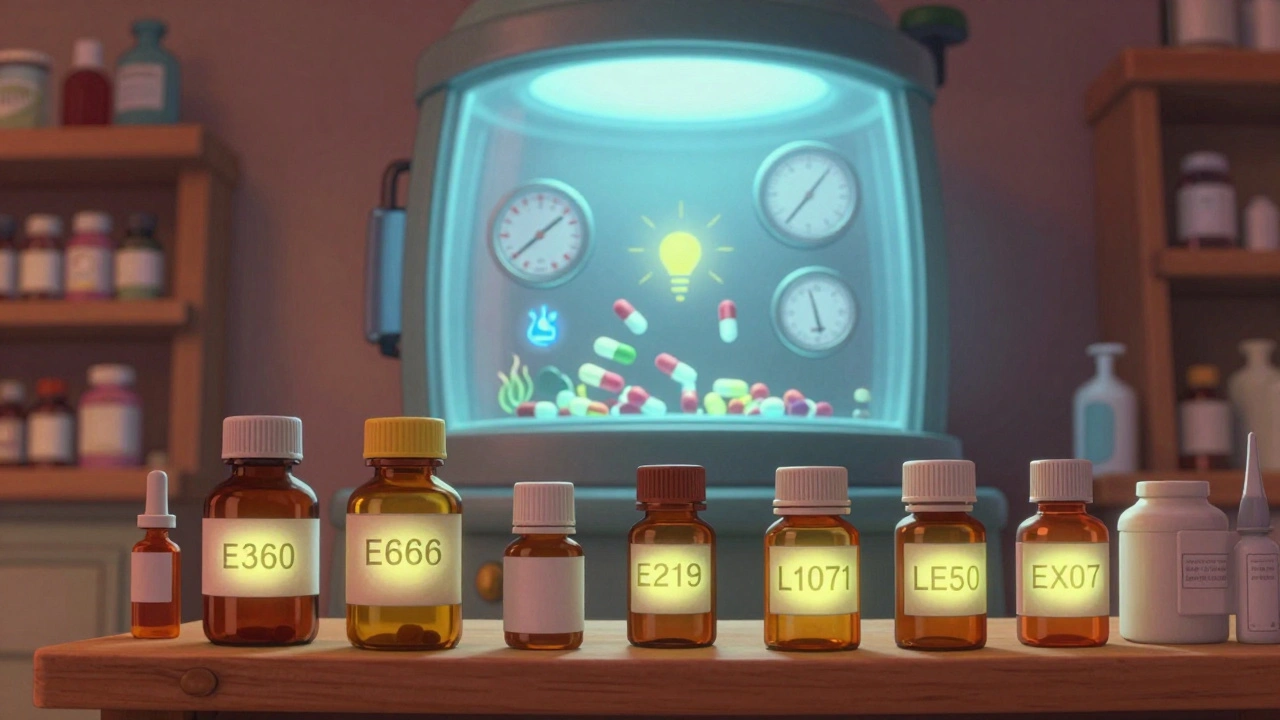
When you pick up a bottle of pills from the pharmacy, you assume they’ll work the same way on day 300 as they did on day one. But that’s not luck-it’s the result of stability testing, a quiet, rigorous process that keeps drugs safe and effective long after they leave the factory. Without it, medicines could lose potency, break down into harmful substances, or change in ways you’d never see until it’s too late.
Why Stability Testing Isn’t Optional
Stability testing is the backbone of pharmaceutical quality control. It’s not just about checking if a pill still looks the same after a year. It’s about proving that the active ingredient hasn’t degraded, that the tablet won’t crumble in humid conditions, and that the liquid won’t grow bacteria or change pH. The FDA and global regulators require this data before any drug can be sold. In 2021, nearly 1 in 6 drug recalls in the U.S. were tied to stability failures-like a cancer drug losing potency or an antibiotic turning toxic over time. The goal is simple: ensure that every dose, from the first to the last, delivers the same therapeutic effect. That’s why stability testing isn’t a box to check. It’s a commitment to patient safety.How It Works: The Science Behind the Chambers
Imagine a room where temperature and humidity are locked in like a vault. These are stability chambers. Inside, bottles of medicine sit on shelves, monitored 24/7. Some are kept at 25°C and 60% humidity-mimicking a typical home in a temperate climate. Others are pushed harder: 40°C and 75% humidity, simulating extreme heat and moisture. A third group is exposed to bright light, mimicking sunlight, to test if packaging protects against photodegradation. Samples are pulled out at set intervals-0, 3, 6, 12, 24, and 36 months-and tested for:- Chemical purity: Is the active ingredient still at 95-105% of the labeled amount?
- Degradation products: Are harmful byproducts forming? How much?
- Physical integrity: Does the tablet crack? Does the liquid cloud up?
- Dissolution rate: Will the drug still dissolve properly in the body?
- Microbial growth: Is the product sterile? No mold, no bacteria.
Regulations That Shape Every Pill
The rules aren’t made in a vacuum. They come from the International Council for Harmonisation (ICH), a group formed in 1990 by regulators and industry experts from the U.S., Europe, and Japan. Their guidelines-especially ICH Q1A(R2)-are the global standard. These rules demand:- Real-time data for at least 12 months (often 24-36 months for new drugs)
- Accelerated testing at 40°C/75% RH for 6 months to predict long-term behavior
- Photostability testing per ICH Q1B: 1.2 million lux hours of visible light and 200 watt-hours/m² of UV
- Statistical analysis to prove that 95% of the product will stay within specs with 95% confidence
Costs, Challenges, and Hidden Risks
Stability testing isn’t cheap. A single product study can cost between $50,000 and $150,000. For a company with 20 products, that’s over $1 million a year. Add in chamber maintenance, calibration, staff training, and data management, and you’re looking at $500,000 to $2 million annually. And the risks? They’re real. In 2021, a small biotech delayed its ANDA submission by 8 months because humidity spikes in their stability chambers wiped out three months of data. That delay cost them $2.3 million in lost sales. Another company ignored out-of-spec results on a cancer drug-leading to a 14-month approval delay and an FDA warning letter. Even the best labs struggle. Temperature mapping studies, required every quarter to prove chambers are uniform, cost around $8,500 per unit. And 68% of quality professionals say chamber reliability is their biggest headache.How the Industry Is Evolving
The old way-waiting 3 years to see if a drug holds up-is changing. Companies are now using Quality by Design (QbD) and ICH Q12 principles to reduce testing burden. By understanding how a drug degrades from the start, they can cut sample sizes by 30-40%. One generics company saved $120,000 per product annually by doing this. New tech is helping too. Electronic data systems cut review time by 55%. AI and machine learning are being tested to predict degradation patterns-potentially cutting testing timelines by 30-40% by 2027. The biggest shift? Continuous manufacturing. Unlike traditional batch production, where drugs are made in large lots, continuous manufacturing produces medicine in a steady flow. The ICH Q13 guideline, finalized in February 2023, now requires stability testing to adapt to this new model-meaning data must be collected in real time, not just at batch endpoints.Who Does It? In-House or Outsourced?
Big pharma companies like Pfizer and Roche run their own stability labs. They have the resources, the staff, and the need for tight control. But for smaller biotechs? Outsourcing is the norm. About 72% of pharmaceutical firms use contract labs like SGS, Eurofins, or Charles River Laboratories. These CROs offer specialized chambers, validated methods, and regulatory expertise. But they come at a price: full-service stability programs cost $150,000 to $500,000 a year. Still, for a startup with limited staff, it’s smarter than building a lab from scratch.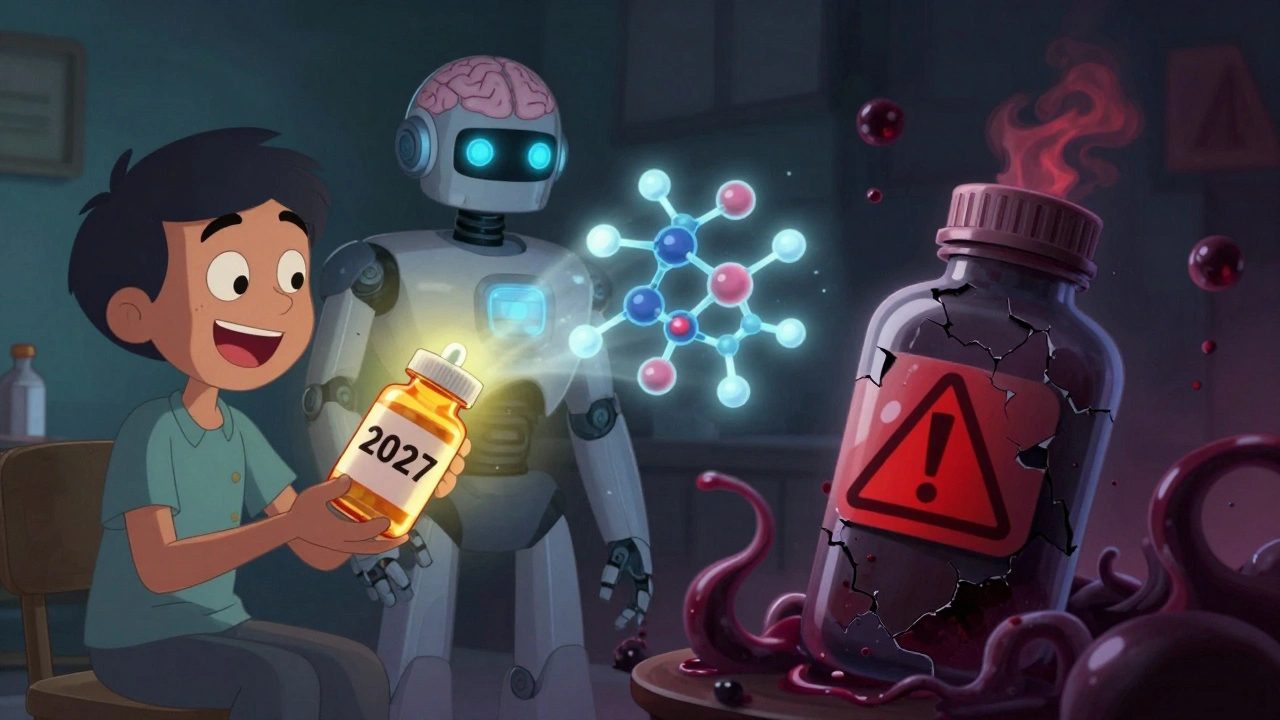
What Happens When It Fails
A stability failure isn’t just a data point-it’s a crisis. If a drug degrades faster than expected, the company must:- Recall batches already on the market
- Reassess the shelf life
- Redesign packaging or formulation
- Submit new data to regulators
- Potentially halt production
The Future: Less Testing, More Smarts
Stability testing won’t disappear. But it will change. Experts predict that by 2035, traditional 36-month studies could drop by 25% as predictive models, real-time sensors, and AI take over. For stable small-molecule drugs-like aspirin or metformin-regulators may allow risk-based approaches, skipping years of testing if the chemistry is well understood. But for complex products-biologics, mRNA vaccines, personalized therapies-stability testing will grow. These drugs are fragile. They degrade faster. They need more data. And regulators know it. The bottom line? Stability testing is no longer just a compliance task. It’s a strategic advantage. Companies that invest in smarter, faster, and more reliable stability programs don’t just meet the rules-they outpace competitors.What You Should Know as a Patient
You don’t need to understand HPLC or ICH guidelines. But you should know this: the expiration date on your medicine isn’t arbitrary. It’s the result of years of testing, thousands of samples, and millions of dollars spent to protect you. Never use expired medication. Don’t store pills in the bathroom. Don’t leave them in a hot car. These aren’t just tips-they’re science-backed precautions. The stability data was generated under controlled conditions. Real-world abuse? That’s a different story. If your drug looks different-discolored, cracked, cloudy-don’t take it. Report it. Your safety is the whole point of stability testing.What is the purpose of stability testing in pharmaceuticals?
The purpose is to determine how a drug’s quality changes over time under real-world conditions like heat, humidity, and light. This data is used to set expiration dates, define proper storage conditions, and ensure the medicine remains safe, effective, and pure throughout its shelf life.
How long does stability testing take?
Real-time stability testing typically lasts 12 to 36 months, depending on the drug’s intended shelf life. Accelerated testing (40°C/75% RH) runs for 6 months to predict long-term behavior, but it doesn’t replace real-time data. For new drugs, manufacturers often run studies for 3 years to support a 2-3 year expiration date.
What are ICH Q1A(R2) stability conditions?
ICH Q1A(R2) requires two main conditions: long-term testing at 25°C ± 2°C and 60% RH ± 5% RH for temperate climates, and 30°C ± 2°C and 65% RH ± 5% RH for hot, humid climates. Accelerated testing is done at 40°C ± 2°C and 75% RH ± 5% RH for 6 months. Photostability testing requires exposure to 1.2 million lux hours of visible light and 200 watt-hours/m² of UV light.
Why do some drugs need more stability testing than others?
Complex drugs-like biologics, vaccines, and injectables-are more sensitive to heat, light, and pH changes. They degrade faster and have more potential degradation pathways. Small-molecule drugs like aspirin are chemically stable, so they require less testing. Regulators require more data for higher-risk products to ensure patient safety.
Can stability testing be shortened or avoided?
For well-understood, stable drugs, regulators are starting to allow risk-based approaches under ICH Q12. Companies can use historical data, predictive modeling, and Quality by Design principles to reduce testing duration. But for new or complex drugs-especially biologics-full real-time studies are still required. There’s no shortcut for patient safety.
What happens if a drug fails stability testing after it’s on the market?
The manufacturer must investigate the cause, recall affected batches, and notify regulators. They may need to shorten the expiration date, change packaging, reformulate the product, or even halt production. In severe cases, the FDA can issue a warning letter or block future approvals. The goal is to protect patients from ineffective or unsafe medication.


lol so the pills i buy at walmart are basically in a science lab for 3 years before they hit the shelf? that's wild. i always thought expiration dates were just a way for pharma to make us buy more.
turns out they're just trying not to kill us. thanks, science.
You people act like this is some heroic effort. It's a cost of doing business. If your drug degrades in 18 months, you made a bad product. Fix it. Stop pretending this is patient care when it's just liability insurance.
Honestly this is one of those things that should be common knowledge. Like how seatbelts save lives. We don't cheer for the engineers who design them, but we're alive because of them. Same here.
I just had to check my ibuprofen after reading this. 😅 The bottle says 2026. I'm gonna keep it in the fridge now. 🥶💊
so you mean to tell me all those 200 dollar pills i buy dont just expire because the company wants more money? wow. mind blown. guess i shouldnt have bought the generic version from the guy at the gas station after all 🤡
I work in a rural clinic and we get so many patients who think expired meds are 'still good enough'. I show them the stability charts sometimes. They don't get the HPLC part but they get this: if it looks weird, smells weird, or crumbles in your hand - don't risk it. Your body isn't a lab rat. And honestly? This post made me feel seen. Thank you.
The ICH Q1A(R2) guidelines are among the most rigorously enforced standards in all of regulated science. Every parameter - temperature, humidity, light exposure - is statistically validated. What’s remarkable is how little public awareness exists about this. The system works because it’s obsessive. Not because it’s convenient.
I used to think stability testing was just paperwork until my mom’s cancer med started failing tests at 18 months. We found out the packaging material was leaching into the solution. They recalled 12,000 bottles. My mom got her refill two weeks late. I cried. Not because she was scared - because I realized how many people never even knew they were at risk. This isn’t bureaucracy. It’s a lifeline. Thank you for explaining it so clearly.
so let me get this straight... some guy in a lab in ohio watches pills sit in a box for 3 years so i dont die from a bad aspirin? thats like the most boring superpower ever. i mean, sure, its important, but why does it feel like the universe’s most underpaid job? someone should make a documentary called ‘The Pill Whisperers’ - slow zooms on vials, ambient synth music, and a narrator whispering ‘the degradation curve… it never sleeps’
This is one of the quietest pillars of modern medicine. We take it for granted. The fact that a drug made in India can be trusted in Minnesota, or a vaccine shipped to Nairobi still works - that’s not magic. That’s stability testing. It deserves more respect.
Okay but why do we even need this? Why not just make everything last forever? Like, if I can keep a jar of pickles for 5 years, why can't a pill? Is it because they're too fancy? Or is this just corporate greed dressed up as science? I'm not buying it.
I come from a country where people reuse expired meds because they can’t afford new ones. I read this and felt both proud and heartbroken. Proud that someone’s fighting to keep people safe. Heartbroken that so many never get that safety. This isn’t just about chemistry - it’s about justice. We need global access to these standards, not just rich countries.
I used to work in a pharma lab. Stability chambers are the most terrifying places on earth. You sit there watching a pill you helped make slowly die. You know if it fails, someone’s life could be on the line. And you can’t do anything but wait. No drama. No heroics. Just data. That’s the real heroism.
Why does America spend millions testing pills while other countries just wing it? This is a luxury. We’re not better. We’re just richer. And now we act like it’s some moral victory. Get over it.