
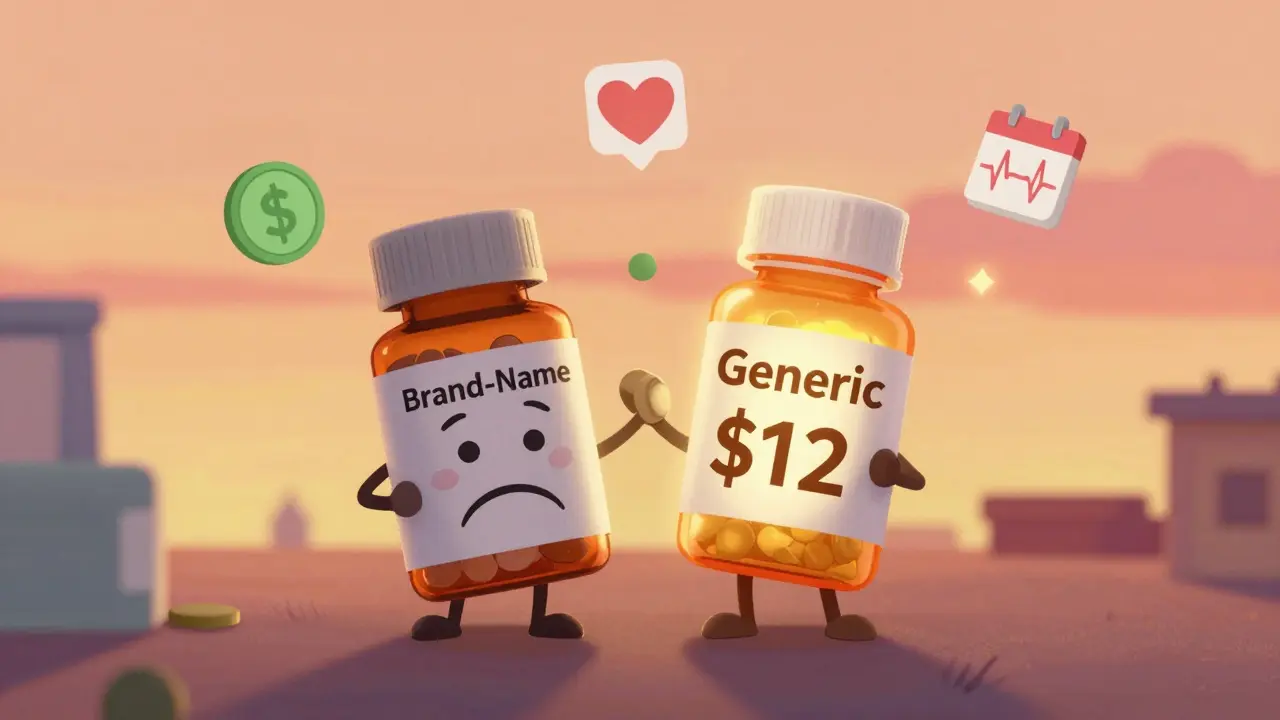
Imagine you’re on a monthly medication for high blood pressure. Your doctor prescribes a brand-name drug that costs $200 a month. Then, your pharmacy tells you there’s a generic version - same active ingredient, same results - for $12. That’s not a trick. That’s the power of generic drugs and why cost-effectiveness analysis matters more than ever.
What Cost-Effectiveness Analysis Really Measures
Cost-effectiveness analysis (CEA) isn’t about cutting corners. It’s about asking: What health outcome do we get for every dollar spent? In the world of generics, this means comparing the price of a generic drug to the health benefits it delivers - like extra years of life, fewer hospital visits, or better quality of life - against other options, including the original brand-name drug or another generic. The standard metric here is the incremental cost-effectiveness ratio, or ICER. It’s calculated by dividing the extra cost of one treatment by the extra health benefit it provides, usually measured in quality-adjusted life years (QALYs). A lower ICER means better value. For generics, the ICER is often so low it’s practically invisible - because the cost drops so dramatically while the benefit stays the same.How Much Do Generics Actually Save?
The numbers don’t lie. When the first generic version of a brand-name drug hits the market, prices typically drop by 39%. When six or more generic makers start producing it, prices plunge more than 95% below the original brand price. That’s not inflation - that’s competition. Over the decade ending in 2017, generic drugs saved the U.S. healthcare system $1.7 trillion. In 2022 alone, they saved over $250 billion. And here’s the kicker: generics made up 90% of all prescriptions filled in the U.S. that year, but only 17% of total drug spending. That’s the definition of efficiency. But savings don’t stop at switching from brand to generic. A 2022 study in JAMA Network Open looked at the top 1,000 most-prescribed generics and found 45 of them were way more expensive than other drugs in the same therapeutic class - drugs that worked just as well. One example: a generic version of a common cholesterol drug was priced at $1,200 per year. A different generic in the same class, equally effective, cost $77. Replacing the high-cost ones with the low-cost alternatives would have cut total spending from $7.5 million down to just $873,711. That’s an 88% reduction.Why Are Some Generics So Expensive?
If generics are supposed to be cheap, why do some cost nearly as much as the brand? The answer isn’t science - it’s market structure. One big reason? Pharmacy Benefit Managers (PBMs). These middlemen negotiate prices between drugmakers and insurers. But instead of passing savings along, many PBMs use something called “spread pricing.” They charge insurers one price, pay pharmacies another, and pocket the difference. If a high-priced generic is on the formulary, the PBM makes more money - even if a cheaper, equally effective option exists. Another issue is formulation complexity. A generic version of a drug in a special extended-release capsule or liquid form can cost 20 times more than a simpler version of the same drug. That’s not because it’s harder to make - it’s because manufacturers exploit the complexity to justify higher prices. Even two identical drugs from different manufacturers can have wildly different prices. One study found that the mean price difference between two identical generics was just 1.4 times - but the range? Sometimes over 10 times. That’s not quality. That’s pricing chaos.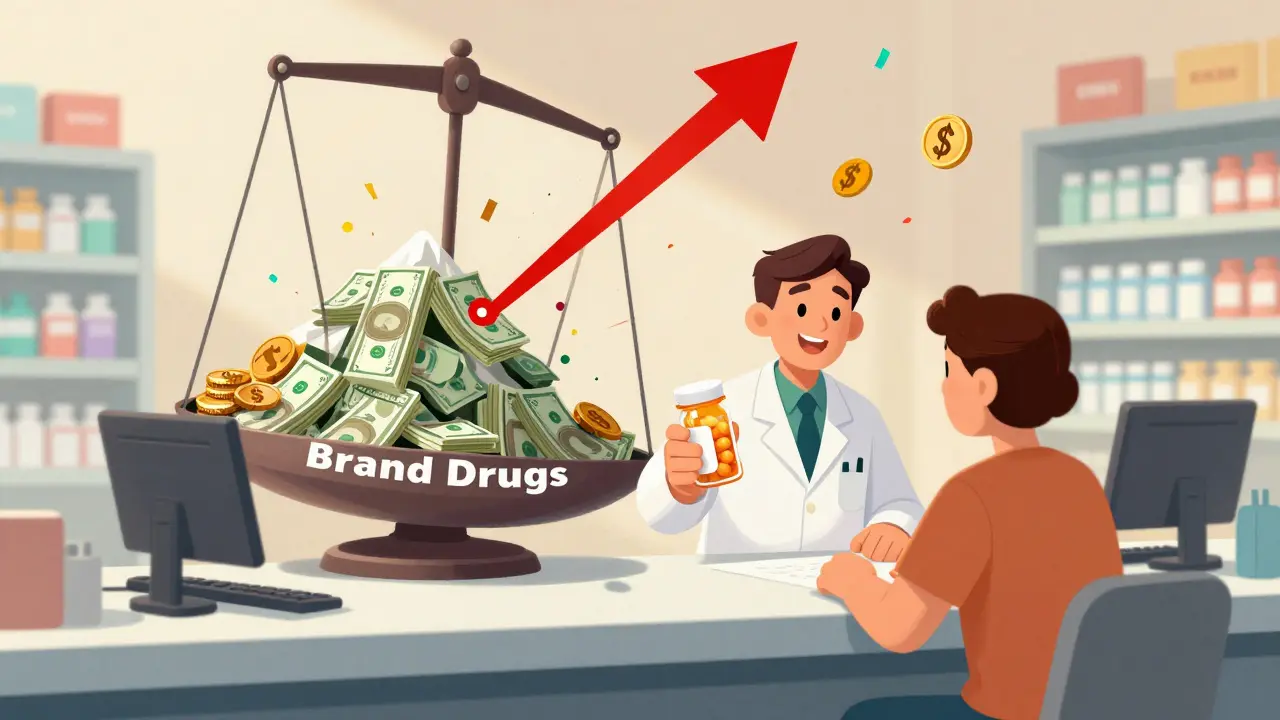
What’s Missing in Most Cost-Effectiveness Studies
Here’s the uncomfortable truth: 94% of published cost-effectiveness analyses don’t account for what happens next - generic entry. Most studies look at a drug’s price today and assume it’ll stay the same. But if a patent expires in 18 months, the price will crash. If you ignore that, you make the brand look more cost-effective than it really is. You also make it harder for payers to plan ahead. Experts like Dr. John Garrison point out that this creates a dangerous distortion. If analysts don’t model future generic prices, drugmakers have no incentive to lower prices early. They wait until the last possible moment, then watch their profits collapse. That’s bad for patients, bad for payers, and bad for innovation. The NIH’s 2023 framework says this clearly: cost-effectiveness models must include expected price drops after patent expiration. Otherwise, you’re not doing analysis - you’re guessing.Therapeutic Substitution: The Hidden Opportunity
You don’t always have to switch to the exact same drug to save money. Sometimes, switching to a different drug in the same class - called therapeutic substitution - saves even more. Take diabetes medications. Two different generics might both lower blood sugar, but one costs $50 a month and the other $800. The cheaper one isn’t “worse” - it’s just less marketed. Many formularies still favor the expensive one because of PBM deals or outdated guidelines. The JAMA study showed that therapeutic substitution - picking a cheaper drug from the same class - often saves more than switching to a generic of the same drug. In fact, the price difference between therapeutic alternatives was 20.6 times higher on average than between two identical generics. This isn’t about cutting corners. It’s about smart prescribing. A good CEA doesn’t just compare a brand to its generic. It compares all viable options - brand, generic, and alternative therapies - and picks the one that gives the best value.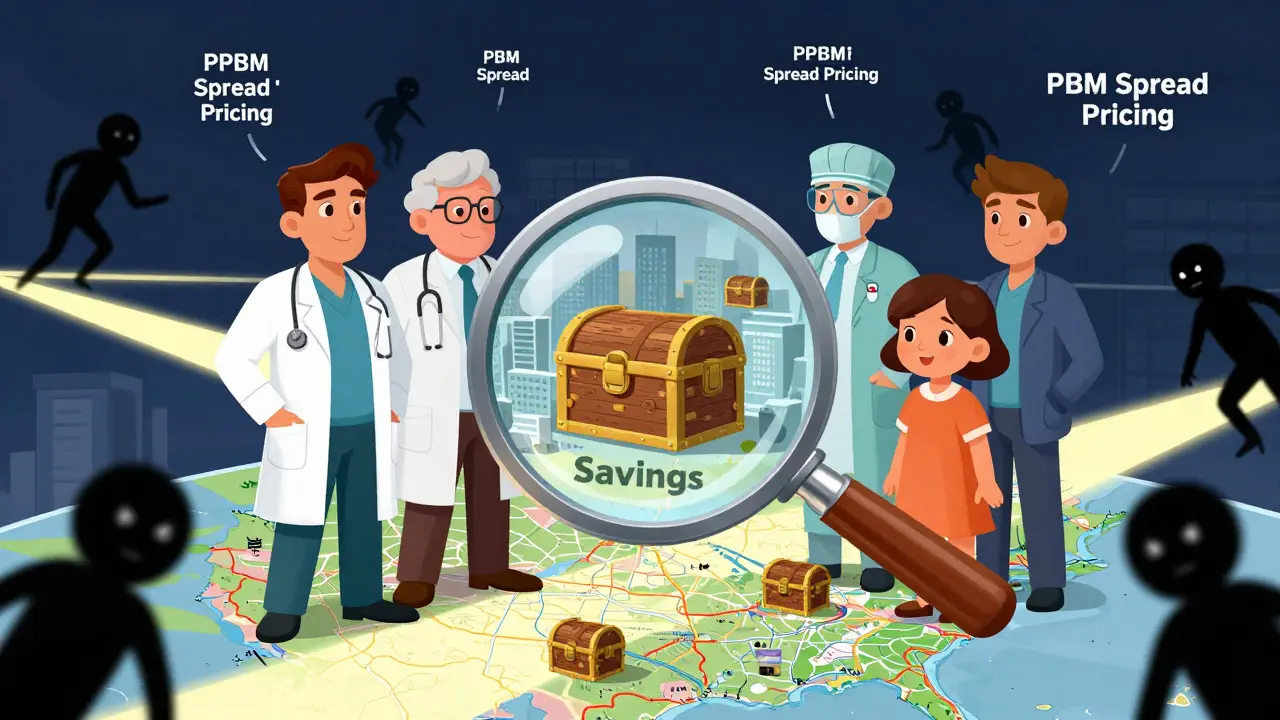
How Paying for Drugs Is Changing
The rules are shifting. The 2022 Inflation Reduction Act lets Medicare negotiate prices for some drugs. The 2020 Drug Pricing Reduction Act pushed Medicare Part D to prioritize low-cost generics. European health agencies use formal CEA in over 90% of coverage decisions. In the U.S., only 35% of commercial insurers do the same. That gap matters. When payers skip CEA, they pay more. When they use it, they save. And those savings don’t just help insurers - they lower out-of-pocket costs for patients. The future of drug pricing won’t be decided by marketing teams. It’ll be decided by data. Who can model generic entry? Who can track therapeutic alternatives? Who can build a system that rewards value, not just volume?What This Means for Patients and Providers
If you’re a patient: ask if there’s a cheaper generic or alternative in the same class. Don’t assume your prescription is the only option. If you’re a doctor: push for formularies that include low-cost generics and therapeutic alternatives. Your patients will thank you. If you’re a payer: stop relying on outdated formularies. Start using real-time pricing data and build CEA models that factor in patent cliffs and generic competition. The bottom line? Generics aren’t just cheaper. They’re smarter. But only if we measure them right.Are generic drugs really as effective as brand-name drugs?
Yes. The FDA requires generic drugs to have the same active ingredient, strength, dosage form, and route of administration as the brand-name version. They must also meet the same strict standards for purity, stability, and performance. Bioequivalence studies prove they work the same way in the body. The only differences are in inactive ingredients - like fillers or dyes - which don’t affect how the drug works.
Why do some generic drugs cost more than others?
Price differences between generics come from market dynamics, not quality. Factors include the number of manufacturers producing the drug, packaging complexity, distribution deals, and how Pharmacy Benefit Managers (PBMs) structure their contracts. A drug with only one or two generic makers might cost more than one with ten. A special formulation - like a slow-release capsule - might also carry a higher price, even if the active ingredient is identical.
Can switching to a cheaper generic cause side effects?
Rarely. Most patients experience no difference when switching between generics or from brand to generic. In rare cases, people may react to inactive ingredients - like dyes or preservatives - which can vary between manufacturers. If you notice a change in how you feel after switching, talk to your doctor. But this isn’t about effectiveness - it’s about individual sensitivity to non-active components.
Why don’t all insurers use cost-effectiveness analysis?
Many U.S. commercial insurers still rely on formularies built on historical deals or PBM contracts rather than economic analysis. Some lack the data infrastructure or expertise to run proper cost-effectiveness models. Others prioritize simplicity over savings - it’s easier to stick with a brand than to re-evaluate every drug. But as generic competition grows, those who ignore CEA will pay more - and pass those costs onto patients.
What’s the biggest mistake in cost-effectiveness analysis for generics?
The biggest mistake is ignoring future price drops. Many analyses use today’s price and assume it won’t change. But when a patent expires, prices crash. If you don’t model that, you make brand-name drugs look more cost-effective than they are. That leads to poor decisions - keeping expensive drugs on formularies when cheaper, equally effective generics are just months away.




Wow, finally someone who gets it. I mean, I was on lisinopril for years and my pharmacy kept trying to switch me to the 'premium' generic-same damn pill, different color, $300 a month. I called them out. They didn’t even know what ICER stood for. 😒
Let’s be real-this isn’t about cost-effectiveness, it’s about systemic corruption masked as healthcare reform. PBMs are the real villains here, extracting rent from every prescription like feudal lords. The FDA’s bioequivalence standards? A charade. You think a 1.4x price variance between identical generics is a market failure? No. It’s collusion. And we’re all paying for it in deductible hikes and insulin rationing.
Okay, so here’s the wild part: if you take the top 100 most-prescribed generics and swap out the overpriced ones for the $77 versions like in that JAMA study, you could literally fund free mental health therapy for 2 million Americans. Like, imagine that. We’re not talking about pennies here-we’re talking about billions sitting in PBM vaults while people choose between meds and groceries. It’s not broken. It’s designed this way.
And don’t even get me started on how formularies are built on backroom deals, not science. It’s like ordering pizza and being charged extra because the delivery guy likes pepperoni.
Oh sweetie, you think this is about drugs? Nah. This is about who gets to decide what ‘value’ means. The people who write the algorithms don’t take insulin. The CEOs don’t have hypertension. The analysts? They’ve never had to choose between their medication and their kid’s school trip. So yeah, your ‘cost-effectiveness model’ is just a fancy way of saying ‘who can we afford to let die quietly?’
Interesting analysis-though I’d argue the real issue lies in the lack of transparency in PBM contracting. It’s not just spread pricing; it’s opaque rebates, hidden fees, and formulary manipulation that distort the entire system. The data exists-but it’s locked behind NDAs and corporate silos. Until we mandate public disclosure of all drug pricing flows, CEA will remain a theoretical exercise. 🤔
Generics are cheap. PBMs are greedy. End of story. Why are we even talking about QALYs? Just make the cheap one the default. Done.
Let me guess-you’re one of those people who thinks ‘same active ingredient’ means ‘same experience.’ Have you ever had a generic make you dizzy? Or cause rashes? Or make your depression worse? No? Because you’ve never had to live with the consequences of someone’s ‘cost-effective’ decision. Your math doesn’t care if you’re suicidal because your ‘equivalent’ pill doesn’t work the same. You’re not analyzing. You’re erasing people.
Here’s the philosophical abyss: we treat medicine like a spreadsheet when it’s a living, breathing, trembling human experience. The body doesn’t care about ICERs. It cares about sleep. It cares about not crying in the shower. It cares about the dignity of swallowing a pill without wondering if you’ll be able to afford groceries next week. Generics aren’t ‘value’-they’re survival. And the system treats survival like a negotiation tactic.
When you reduce a diabetic’s life to a cost-per-QALY, you’ve already abandoned them. The math is clean. The humanity? Gone.
Think about this: in 1980, a single generic pill cost 15 cents. Now? Sometimes $12. Why? Because we stopped seeing medicine as a public good and started seeing it as a revenue stream. We let corporations turn survival into a commodity-and now we’re shocked when people die because they can’t afford the ‘cheaper’ option? This isn’t capitalism. This is cannibalism dressed in white coats.
And let’s not pretend PBMs are neutral. They’re middlemen who profit from your suffering. They’re not ‘negotiating’-they’re extracting. And we let them because we’re too tired to fight.
Here’s the real win: if we just switched everyone to the cheapest effective generic in every class, we could eliminate patient cost-sharing for 90% of chronic meds. Imagine that. No more ‘I skipped my pill because I had to pay for gas.’ No more ‘I’ll wait until next month.’ We have the data. We have the tools. We just need the will. And maybe, just maybe, we start treating health like a right-not a reward for financial luck.
Did you know the FDA allows generics to vary by up to 20% in absorption rate? That’s not ‘bioequivalent’-that’s Russian roulette. And PBMs? They’re in bed with Big Pharma. They don’t want you to know that the $77 generic is made in the same factory as the $1,200 one-just with different packaging. They profit from confusion. They profit from fear. They profit from your ignorance. And they’re laughing all the way to the bank while you’re choosing between your blood pressure med and your child’s lunch money. This isn’t healthcare. It’s a pyramid scheme with pills.
My grandma in Delhi takes the same generic for diabetes as your neighbor in Ohio-same pill, same factory, same price. But in America, you pay 100x more because someone in a suit decided your life is worth less than their quarterly report. We don’t need more analysis. We need justice. Medicine is not a luxury. It’s oxygen. And you’re pricing oxygen.
Wait-so you’re saying we should just switch to the cheapest generic? But what if the patient has a rare allergy to the filler in that one? Or what if the bioequivalence study was flawed? Or what if the manufacturer cut corners? You can’t just flip a switch and assume everyone’s fine. This isn’t Amazon. People aren’t products. You can’t optimize human health like a supply chain.