
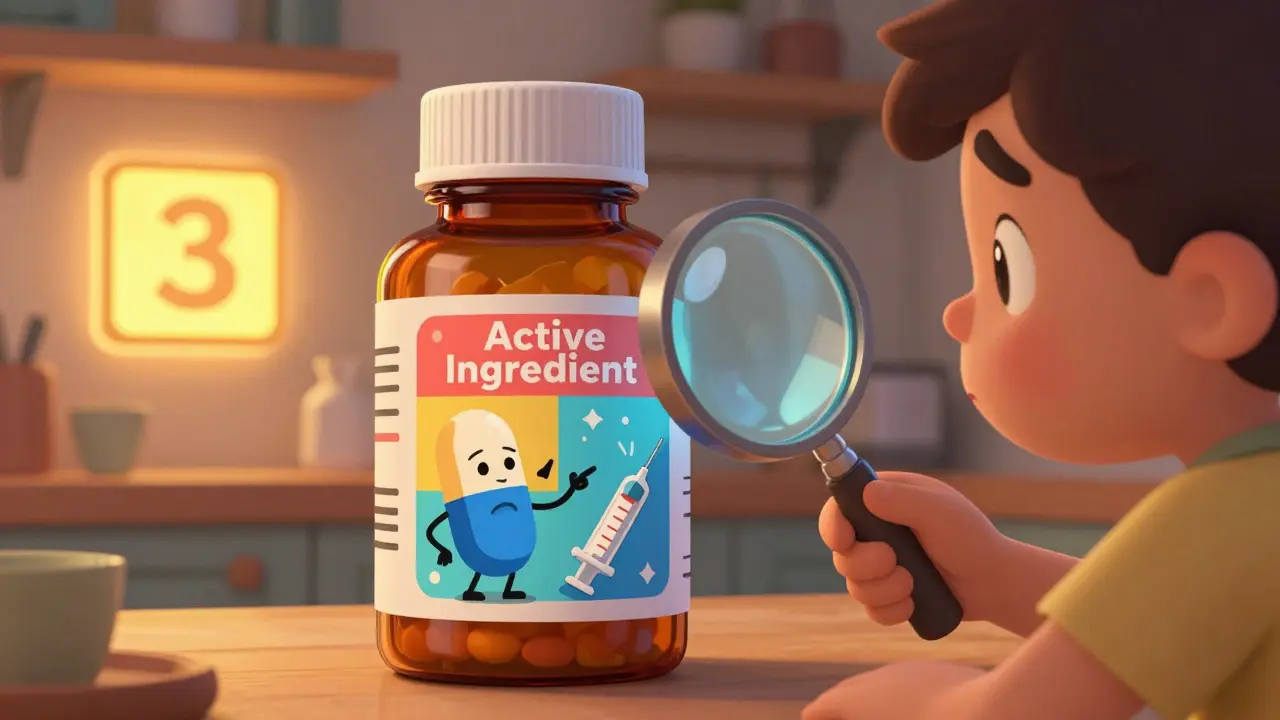
Every pill, liquid, or patch you take comes with a label. But how many of us actually read it properly? If you’ve ever taken medicine and wondered, “Was that the right dose?” or “Should I take this with food or on an empty stomach?” - you’re not alone. Misreading medication labels is one of the leading causes of preventable harm. In the U.S. alone, about 1.5 million people suffer avoidable side effects each year because they misunderstood their medicine instructions. And it’s not just about getting it wrong once - it’s about doing it over and over, day after day.
What’s on the label - and why it matters
Medication labels aren’t just small pieces of paper stuck on bottles. They’re legal documents designed to keep you safe. Whether it’s a prescription from your doctor or a bottle of painkillers from the pharmacy, every label follows strict rules set by the FDA. These rules exist for one reason: to stop mistakes before they happen. For prescription drugs, the label includes 16 key sections. The most important one is Dosage and Administration. This tells you exactly how much to take, how often, and for how long. It also includes special notes - like if you have kidney or liver problems, or if you’re taking other medicines that might react badly. For example, if you’re on blood thinners, your label might warn you not to take certain cold medicines because they can increase your risk of bleeding. Over-the-counter (OTC) medicines - like paracetamol, ibuprofen, or cough syrup - follow a simpler format called “Drug Facts.” It’s broken down into seven parts:- Active Ingredient: The medicine that actually works. This is listed with its scientific name and how much is in each dose. If you see “acetaminophen” or “ibuprofen,” that’s the active ingredient.
- Purpose: What the medicine does. Is it a pain reliever? A sleep aid? A decongestant?
- Uses: What symptoms it treats. Don’t assume it works for everything - some cold medicines only help runny noses, not coughs.
- Warnings: This is where people skip. It tells you who shouldn’t take it, what to avoid (like alcohol), and signs of a bad reaction.
- Directions: The exact instructions on how to use it. This includes how many pills, how many milliliters, and how often.
- Inactive Ingredients: Things like dyes, flavors, or preservatives. If you’re allergic to certain substances, this section helps you avoid them.
- Expiration Date: After this date, the medicine may not work as well - or could even become unsafe.
Understanding dosage: It’s not just “take two”
The biggest mistake people make? Thinking “take two” means the same thing for every medicine. It doesn’t. Take liquid medicines, for example. A label might say: “350 mg per 5 mL.” That means every 5 milliliters (about one teaspoon) contains 350 mg of the active drug. If your doctor says you need 700 mg, you don’t take two teaspoons. You take 10 mL - two full doses. Many parents get this wrong. A 2022 study found that 68% of parents misread liquid medicine labels when measuring doses for their kids. That’s why pharmacies now hand out oral syringes with clear markings - not spoons. And never use kitchen spoons. A teaspoon from your cupboard can hold anywhere from 2.5 mL to 7.3 mL. That’s a difference of nearly 200% in dose. One study showed that using a regular spoon for children’s medicine led to overdoses in 1 in 5 cases. Always use the measuring tool that comes with the medicine - or buy a cheap oral syringe from the pharmacy. Also, watch out for multi-symptom medicines. If you’re taking a cold remedy that says “for fever and pain,” it likely already contains acetaminophen. If you then take a separate painkiller with acetaminophen, you could accidentally overdose. The Cleveland Clinic found that 27% of ER visits due to medication errors involved people doubling up on the same active ingredient. Always check the “Active Ingredient” section before taking more than one medicine.Directions aren’t suggestions - they’re instructions
“Take as needed” sounds flexible. But what does that really mean? For many medicines, “as needed” means no more than 4 times a day - even if you’re still in pain. For others, it means only if symptoms return after 6 hours. The label doesn’t say “if you feel like it.” It says “every 4 to 6 hours as needed for pain.” That’s a maximum of 6 doses in 24 hours. Go beyond that, and you risk liver damage, stomach bleeding, or worse. Some medicines must be taken on an empty stomach. Others need food to reduce nausea. A label might say “take 1 hour before meals” or “take with food.” Skipping this can make the medicine less effective - or more dangerous. For example, taking certain antibiotics without food can cause severe stomach upset. Taking others with food can block absorption entirely. And don’t assume “once daily” means anytime. Some medicines work best at night - like blood pressure pills - because your body’s rhythm affects how they’re absorbed. Others need to be taken in the morning to avoid sleep disruption. Your label might not say it outright, but your pharmacist will. Always ask if you’re unsure.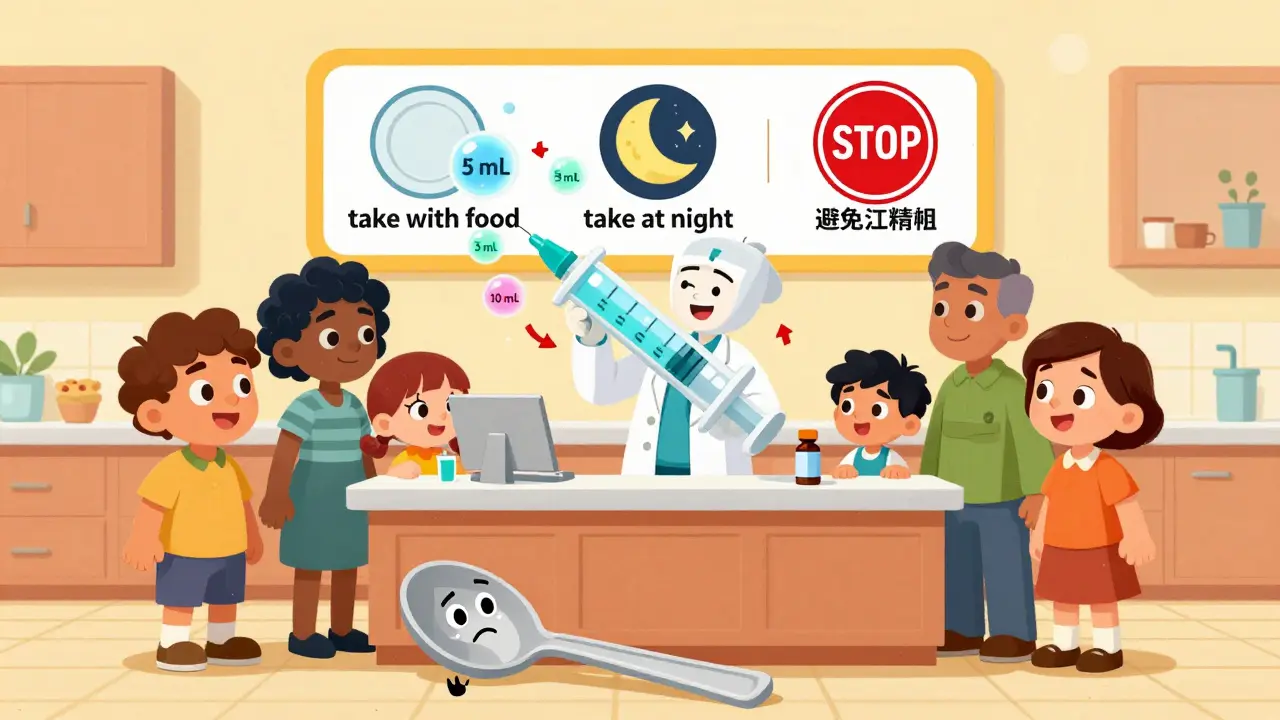
Warnings are not optional
People skip the “Warnings” section more than any other part. But this is where the label protects you. It tells you if you’re at risk because of:- Other medical conditions (like asthma, high blood pressure, or pregnancy)
- Other medicines you’re taking (including supplements and herbal products)
- Alcohol use
- Driving or operating machinery
What to do when you’re confused
If a label doesn’t make sense - or if it’s printed in tiny font - don’t guess. Here’s what to do:- Ask your pharmacist. They’re trained to explain labels. They can even show you how to measure liquid doses with a syringe.
- Check the medication guide. For high-risk drugs like opioids, blood thinners, or chemotherapy, the pharmacy must give you a separate printed guide. Read it.
- Use the FDA’s online database. Type the medicine name into fda.gov/drugs and find the official prescribing information. It’s long, but Section 2 is all dosage.
- Take a photo. If you’re helping an older relative, snap a picture of the label and send it to a family member or nurse. Sometimes seeing it visually helps.
What’s changing - and what to expect soon
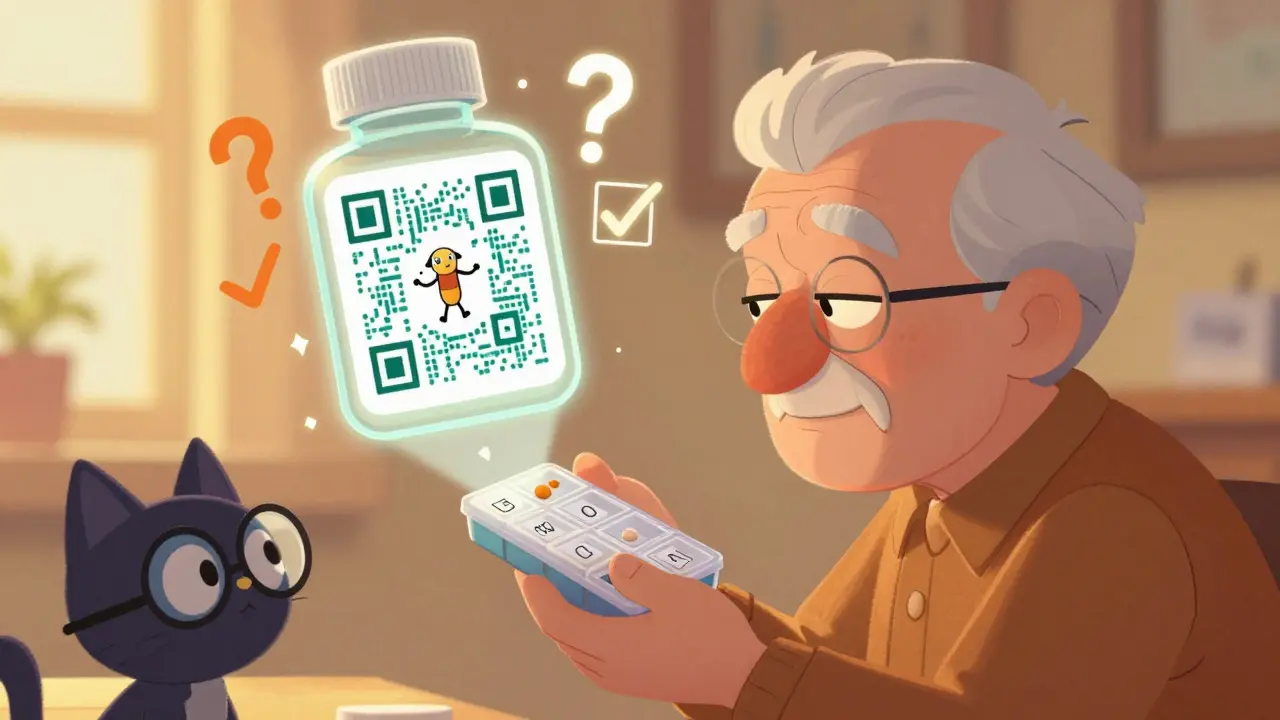
The system is getting better. The FDA is pushing for simpler language, bigger fonts, and visual icons on labels. By 2024, you’ll start seeing QR codes on medicine bottles. Scan it with your phone, and you’ll get a video showing how to take the medicine, how to measure it, and what side effects to watch for. Some countries are already using color-coded caps: red for high-risk medicines, yellow for those that need extra caution. In the UK, the NHS is testing a new system where labels include a simple icon for “take with food” or “avoid alcohol.” The goal? To make labels so clear that you don’t need a degree to understand them.Final checklist: Before you take any medicine
Before you swallow, pause and ask:- Is this the right person’s medicine? (Check your name on prescription labels)
- Is this the right drug? (Compare the name to your prescription or doctor’s note)
- Is this the right dose? (Check the strength - 5 mg vs. 50 mg is a big difference)
- Is this the right time? (Morning? Night? With food? On empty stomach?)
- Am I taking anything else that could clash? (Check for overlapping active ingredients)
- Is this still good? (Check the expiration date)
Medication labels aren’t just paperwork. They’re your lifeline. Reading them carefully doesn’t take long - but it can save your life.
What should I do if I can’t read the small print on my medicine label?
Ask your pharmacist for a larger-print version - most pharmacies can provide this for free. You can also use a magnifying glass or smartphone camera to zoom in. If the label is unclear, don’t guess. Call your doctor or pharmacist and read the label aloud to them. They’ll confirm the correct dosage and instructions. Never take medicine if you’re unsure about the label.
Can I split a pill if the dose seems too high?
Only if the pill is scored (has a line down the middle) and your doctor or pharmacist says it’s safe. Some pills are designed to release medicine slowly - splitting them can cause a dangerous overdose. Others are coated to protect your stomach - breaking them can cause irritation. Always check the label or ask before splitting any pill.
Why do some medicines say “take on an empty stomach”?
Food can block how well your body absorbs the medicine. For example, antibiotics like tetracycline bind to calcium in dairy products and become useless. Other medicines, like certain thyroid drugs, need an empty stomach to work properly. The label tells you because skipping this step can mean the medicine doesn’t work at all - or causes side effects.
Is it safe to take expired medicine?
For most medicines, taking them a few months past the expiration date isn’t dangerous - but they may not work as well. For life-saving drugs like insulin, epinephrine, or antibiotics, never use expired ones. They can fail when you need them most. The FDA says some solid pills retain potency for years, but liquids, creams, and injectables degrade faster. When in doubt, dispose of it and get a new prescription.
I’m taking multiple medicines. How do I avoid mixing them wrong?
Keep a list of every medicine you take - including vitamins and supplements - and bring it to every doctor visit. Use a pill organizer with time slots. Check each label for overlapping active ingredients. For example, many cold and flu medicines contain acetaminophen. Taking two at once can cause liver damage. Always ask your pharmacist: “Could any of these interact?” They can spot hidden risks you might miss.
OMG I just read my ibuprofen label for the first time and I’ve been taking it wrong for YEARS 😭
Turns out I was hitting the max dose 3x a day instead of 4… and I thought I was being careful. Thank you for this. I’m gonna read every single bottle now. My body deserves better.
Ugh, another ‘read the label’ lecture. In Canada we don’t need this crap. We have pharmacists who actually do their jobs. In the US you people let corporations print tiny fonts and call it ‘compliance.’ Pathetic. We don’t need to be babysat-we need better regulation.
Did you know the FDA is hiding the truth? Those QR codes? They’re tracking your pill usage. And the color-coded caps? They’re tagging you for future medical profiling. I checked the source code on a pill bottle once… it had a hidden IP address. 👁️
my mom took her blood pressure med with grapefruit juice for 10 years bc she thought it tasted better… she’s fine now but i swear i nearly had a heart attack. yall gotta read the warnings. even if it’s just a cold med. it’s not worth it. 🙏
It's not about reading the label it's about understanding pharmacokinetics and bioavailability. Most people can't even define half-life yet they think they're safe because they saw 'take two tablets.' The system is designed to be accessible but human ignorance is the true epidemic. You can't dumb it down enough for the masses.
wait so if a label says 'take with food' does that mean any food? like a candy bar? or does it have to be like actual protein? i ask bc i always just eat whatever’s handy 😅
Knowledge is armor. If you don’t read your labels, you’re walking into battle blind. This isn’t just about health-it’s about discipline. Treat your meds like your ammo. Check the caliber. Check the expiry. Never assume. Stay sharp.
Consider the label as a metaphysical contract between your corporeal self and the pharmakon-the ancient Greek word for both remedy and poison. The FDA doesn’t regulate meaning, only syntax. The real danger isn’t misreading dosage-it’s failing to recognize that every pill is an invocation of fate. You’re not just swallowing a compound-you’re negotiating with entropy. And the expiration date? That’s not a timestamp. It’s a countdown to your own existential vulnerability.
Thank you for this comprehensive and well-structured overview. The clarity of the Drug Facts format and the emphasis on pharmacist consultation are critical public health measures. I would recommend expanding this guidance into multilingual formats to better serve non-English-speaking populations, particularly in urban centers with high immigrant density.
I used to ignore labels too… until my cousin ended up in the ER because she took two cold meds and didn’t realize they both had acetaminophen. She’s okay now but it scared the hell out of me. Now I write down every med I take on my phone and check them against each other. Seriously y’all-this stuff saves lives. Don’t be lazy. Your future self will thank you. 💪❤️