
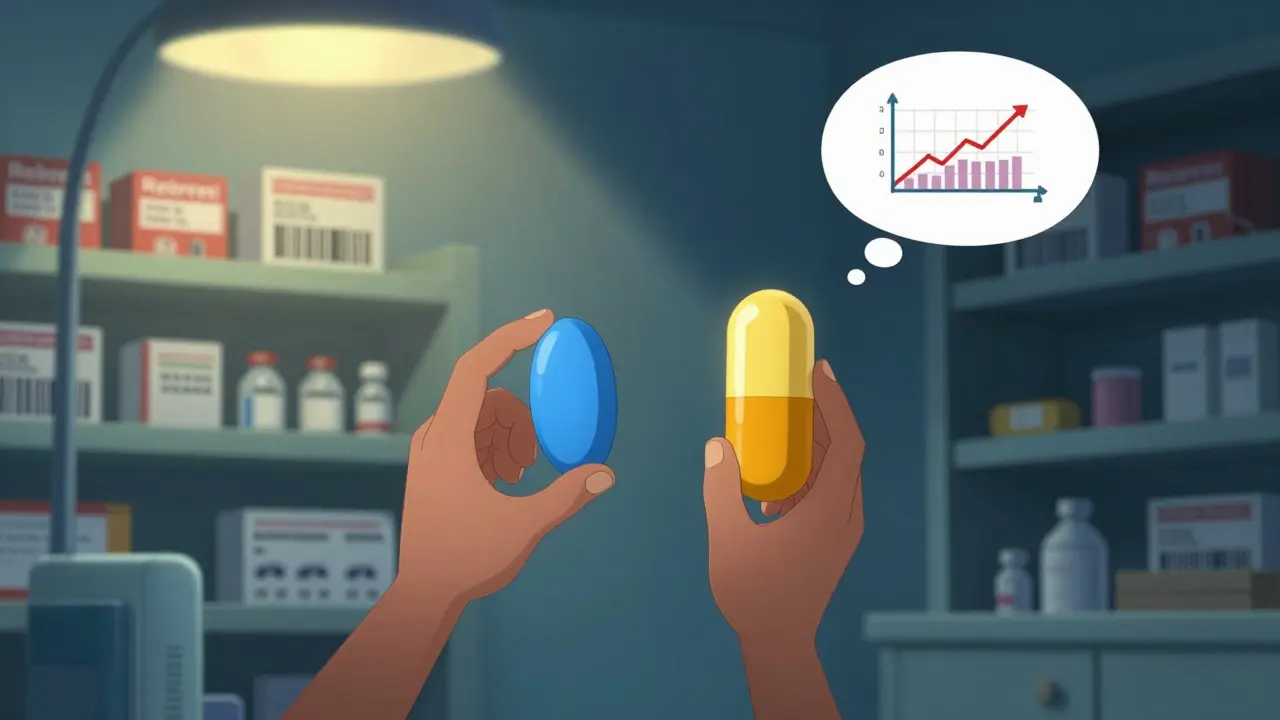
When your pharmacy hands you a pill that looks completely different from the one you’ve been taking for years, it’s normal to feel uneasy. Maybe it’s a different color, shape, or has strange letters stamped on it. You might not think much of it-after all, your doctor says it’s the same medicine. But for some people, that switch from brand-name to generic-or from one generic to another-triggers real, sometimes serious, side effects. And if you’re taking a drug with a narrow therapeutic index, those changes aren’t just in your head. They’re measurable, dangerous, and often ignored.
Why Do Generics Look Different?
Generic drugs aren’t copies of brand-name drugs in the way you might think. They contain the same active ingredient-the chemical that actually treats your condition. But everything else? The fillers, the coating, the way the pill breaks down in your body? Those can be totally different. The U.S. Food and Drug Administration (FDA) allows generics to differ by up to 20% in how quickly or completely they’re absorbed. That’s legal. That’s approved. But for some people, even a 5% shift in absorption can mean the difference between control and crisis. Take thyroid medication like levothyroxine. A 2023 study showed that switching between different generic versions led to abnormal thyroid hormone levels in over 1 in 5 patients. That’s not a fluke. It’s a pattern. And because thyroid levels affect your heart, mood, energy, and weight, even small changes can ripple through your whole body. You might feel tired, gain weight, or get anxious-not because your condition got worse, but because the pill you swallowed behaved differently.Which Drugs Are Most Risky to Switch?
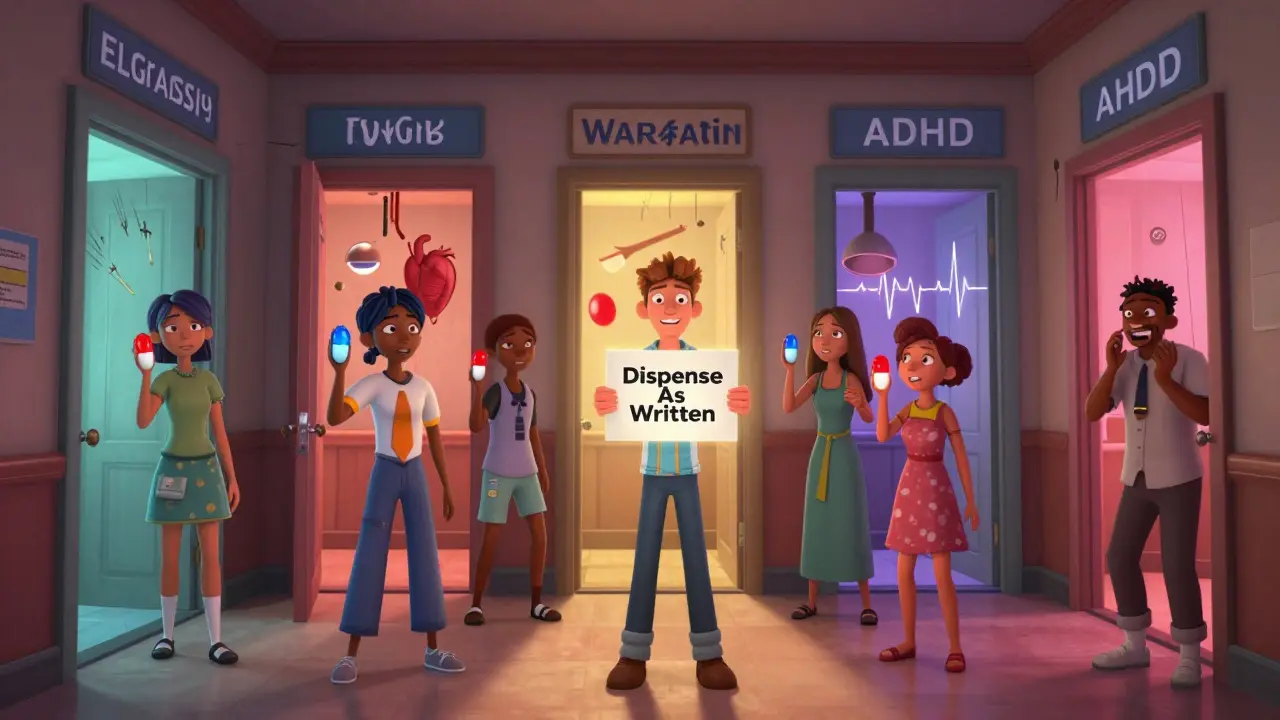
Not all medications are created equal when it comes to switching. Some are forgiving. Others? Not so much. The FDA and medical experts agree: five categories carry the highest risk:- Antiepileptics (like phenytoin, valproate, or extended-release versions of lamotrigine): A 2021 survey of neurologists found that nearly 7 out of 10 believed switching generics increased seizure risk. One patient reported breakthrough seizures within days of switching to a new generic version-even though her blood levels were "in range." The problem? The timing of absorption changed. Her body got a slow drip instead of a steady stream.
- Thyroid medications (levothyroxine): With over a dozen generic manufacturers in the U.S., each using different fillers and coatings, switching can cause your TSH levels to swing wildly. Patients often feel fine one month, then exhausted and depressed the next-no other changes in their life. Just a new pill.
- Anticoagulants (warfarin): Even a 10% difference in absorption can raise your risk of clotting or bleeding. One man on warfarin for years had his INR jump from 2.8 to 5.1 after his pharmacy switched him to a different generic. He ended up in the ER with internal bleeding.
- Immunosuppressants (tacrolimus, cyclosporine): After organ transplants, these drugs keep your body from rejecting the new organ. Too little? Rejection. Too much? Toxicity. A 2022 study found that 18% of kidney transplant patients had to be hospitalized after a generic switch.
- Psychiatric and ADHD meds (especially extended-release formulations like Adderall XR, bupropion XL, or venlafaxine ER): These rely on complex bead-release systems. Different manufacturers use different coatings. One patient on Reddit described her switch from one generic Adderall XR to another as "like going from a calm river to a flash flood." She had panic attacks, insomnia, and lost focus within 48 hours. Her doctor thought she was noncompliant. She wasn’t. The pill just didn’t work the same way.
What Do Patients Actually Experience?
The FDA says generics are interchangeable. But real people? They tell a different story. A 2023 review of 1,437 patient records found that 67% identified their meds by how they looked-not by name. When the shape or color changed, many didn’t realize they’d been switched. Some even took both versions, thinking the new one was an extra dose. One woman ended up in the hospital with serotonin syndrome after accidentally doubling up on her antidepressant because she didn’t recognize the new generic. On Reddit’s r/ADHD community, a thread titled "Generic Adderall Switch Ruined My Life" had over 800 comments. Most described the same pattern: sudden return of symptoms, new anxiety, headaches, nausea, or insomnia-all within 24 to 72 hours of the switch. One man said he went from functioning well at work to crying in his car every day. He didn’t know why until he checked the pill imprint and realized his pharmacy had switched manufacturers. A MedShadow survey of 1,247 people taking generic ADHD meds found that 63% noticed decreased effectiveness after a manufacturer change. Over 40% reported new side effects. The most common? Headaches (28%), anxiety (22%), and stomach issues (19%). These aren’t rare. They’re predictable.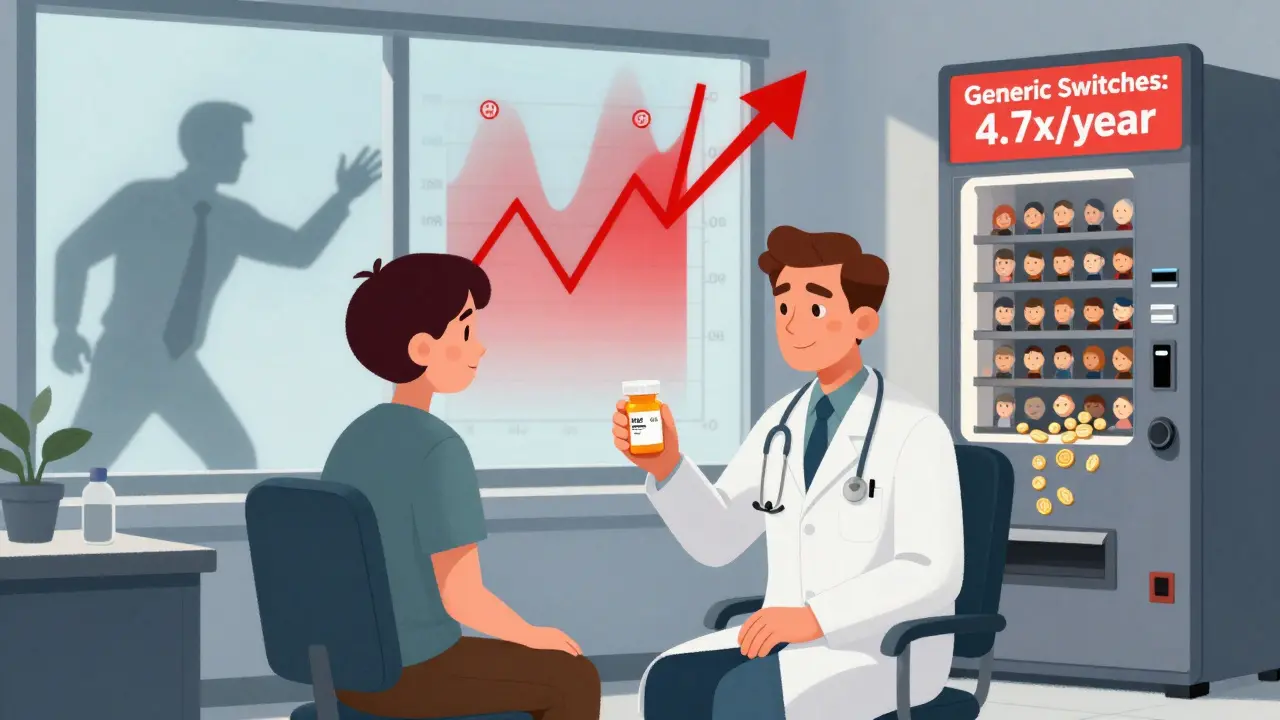
Why Does This Keep Happening?
It’s not about bad science. It’s about money. Pharmacy benefit managers (PBMs)-companies like CVS Caremark and Express Scripts-control which generics pharmacies stock. They don’t pick based on safety or consistency. They pick based on rebates. The manufacturer that pays the biggest kickback gets the contract. And they change it often. On average, PBMs switch generic suppliers 4.7 times a year per drug. That means you could get a different version every few months. For drugs like levothyroxine, there are 12 approved generic manufacturers. Each one is technically "bioequivalent." But none of them are identical. And when you’re switching every 60 days? Your body never gets a chance to stabilize. Even worse? Most patients don’t know they’re being switched. Pharmacists aren’t required to tell you. Insurance plans don’t notify you. You just get a different-looking pill-and assume it’s the same.What Can You Do?
You don’t have to accept this. Here’s what works:- Ask for the manufacturer name when you pick up your prescription. Say: "Can you give me the same brand as last time?" Most pharmacists can honor that request-even if it costs a little more.
- Check the NDC code on your pill bottle. It’s a 10-digit number. Write it down. Next time you refill, compare it. If it changed, you were switched.
- Request "Dispense As Written" (DAW-1) on your prescription. This tells the pharmacist not to substitute. It’s legal. It’s allowed. And for high-risk drugs like warfarin or tacrolimus, your doctor should already be doing this.
- Keep a medication log. Note the date, drug name, manufacturer, and any changes in how you feel. If you start having new side effects, you’ll have proof.
- Talk to your doctor. If you notice a pattern-headaches after every refill, mood swings after a switch-say it out loud. Many doctors still believe generics are perfect substitutes. But more are starting to listen.
When to Worry
You should worry if:- You’ve been stable for months, then suddenly feel worse after a refill
- You experience new side effects that weren’t there before
- You have breakthrough symptoms (seizures, clots, high blood pressure, mood crashes)
- You’re taking a drug from one of the five high-risk categories listed above
What’s Changing?
There’s some progress. In 2023, Medicare started limiting generic switches to no more than twice a year for its beneficiaries. The FDA launched a new initiative to improve testing for complex generics. And in January 2024, the American Society of Health-System Pharmacists updated guidelines to recommend against automatic substitution for 17 high-risk drugs. But the system is still broken. Generics save billions-but they’re not always safe for everyone. And until patients are treated as individuals-not just numbers in a rebate spreadsheet-this will keep happening.Final Thought
A pill is more than its active ingredient. It’s the whole package-the coating, the timing, the way it dissolves. For most people, switching generics is fine. But for a significant number, it’s not. If you’ve ever felt "off" after a refill, you’re not imagining it. You’re not crazy. You’re not noncompliant. You’re just one of the people the system forgot to protect. Your body remembers. So should your doctor. So should your pharmacist. So should you.Can switching from brand-name to generic drugs cause side effects?
Yes, for some people. While generics must contain the same active ingredient and meet FDA bioequivalence standards, differences in inactive ingredients, coating, and release mechanisms can alter how the drug is absorbed. This can lead to new or worsened side effects, especially with medications that have a narrow therapeutic index, like antiepileptics, thyroid drugs, or anticoagulants.
Which generic drugs are most likely to cause problems when switched?
The highest-risk categories include antiepileptics (e.g., phenytoin, valproate), thyroid medications (levothyroxine), anticoagulants (warfarin), immunosuppressants (tacrolimus, cyclosporine), and extended-release psychiatric or ADHD drugs (like Adderall XR or bupropion XL). These drugs require very precise blood levels-small changes in absorption can cause treatment failure or toxicity.
Why do I feel worse after my pharmacy switched my generic medication?
Different generic manufacturers use different fillers, coatings, and release technologies-even if they’re the same drug. For example, one version of Adderall XR uses a bead system that releases medication over 8 hours, while another might release it faster or slower. If your body is sensitive to timing, even a 10% difference can cause anxiety, insomnia, or return of symptoms. This isn’t rare-it’s documented in clinical studies and patient reports.
How can I find out if my pharmacy switched my generic drug?
Check the NDC (National Drug Code) number on your prescription label-it’s a 10-digit number. Write it down each time you refill. If it changes, you were switched. You can also ask your pharmacist directly: "Which manufacturer made this version?" and compare it to your last refill. Many people don’t realize they’ve been switched because the pill looks different but has the same name.
Can I ask my doctor to prevent generic switches?
Yes. Ask your doctor to write "Dispense As Written" (DAW-1) on your prescription. This legally prevents the pharmacy from substituting a different generic without your permission. This is especially important for high-risk medications. Some doctors may not know to do this-so ask. You have the right to request consistency in your medication.
Are there any laws protecting patients from frequent generic switches?
There’s no federal law banning frequent switches, but Medicare Part D now limits generic manufacturer changes to no more than twice per year for its beneficiaries. Some states have passed laws requiring pharmacists to notify patients of substitutions. However, most private insurance plans still allow PBMs to switch generics monthly based on rebates. Patients need to be proactive-tracking NDC codes and requesting consistency is the best protection.
Should I stop taking my generic medication if I feel worse?
No-don’t stop without talking to your doctor. But do contact them right away. Describe exactly when the symptoms started and what changed in your medication. Bring your pill bottle or the NDC code. Many side effects from switching are reversible once you return to the original formulation. Your doctor can help you switch back or request a specific manufacturer.



Been on levothyroxine for 12 years. Switched generics last fall and went from feeling like a human to a zombie in 72 hours. TSH shot up, weight piled on, brain fog so thick I forgot my kid’s birthday. Took me three months and three different pharmacies to get back to the original manufacturer. Nobody told me it was a switch. No warning. Just a different-looking pill. I’m not paranoid-I’m just tired of being treated like a lab rat.
lol you think this is bad? my mom got switched from one generic warfarin to another and ended up with a pulmonary embolism. they blamed her for ‘not taking it right.’ she’s 71 and can’t even spell ‘bioequivalence.’
Thank you for writing this. I’ve been silent for years because I thought I was just ‘being dramatic.’ I take lamotrigine and after a switch, I had seizures I hadn’t had in 8 years. My neurologist said it was ‘stress.’ I showed him the NDC change. He apologized. Turns out he didn’t know either.
so the FDA lets drug companies play Russian roulette with your brain because they got a better rebate? 🤡
and the pharmacy? they don’t even tell you? i’m starting to think this whole system is designed to make people sick so they need MORE drugs. it’s not a conspiracy-it’s a business model.
Just checked my last prescription-NDC changed last month. I’ve had headaches since. Didn’t connect the dots until now. Going to ask for DAW-1 tomorrow. Wish I’d known sooner.
Interesting how the FDA calls it bioequivalent while ignoring pharmacokinetic variability across formulations. The 20% absorption window is a regulatory loophole disguised as consumer protection. Real-world data from the UK’s MHRA shows similar patterns with generic antiepileptics. This isn’t an American problem-it’s a global regulatory failure.
Hey-I’ve been a pharmacist for 18 years. I see this every single day. We’re told to switch based on rebates. We’re not allowed to tell patients unless they ask. Some of us quietly write DAW-1 on scripts we know are risky. But if we push back too hard? We get moved to a different store. This isn’t about bad people-it’s about a broken system that rewards volume over safety.
Why do people take generics at all? If you can afford brand-name, why risk your health for a few bucks? This is why America is falling apart-people choose cheap over safe. No wonder we have so many health crises.
HAHAHA this is so American 😂
in Nigeria, if you take a drug, you take the one your doctor gives you. No switching. No rebates. No pharmacy bots playing with your life. You want consistency? Pay for it. You want cheap? You get what you pay for. Stop crying and get a better insurance plan.
Just had a moment. I’m on Adderall XR. Last refill looked totally different. I thought I was going crazy. Turns out it was a new generic. I called my doctor, got the old one back. I’m not okay with this. I’m not okay with being a guinea pig.
Let’s be real-most people who say they feel worse after a switch are just experiencing placebo effect or noncompliance. The FDA’s bioequivalence standards are rigorously tested. If you’re having issues, it’s probably because you’re not tracking your labs or you’re self-diagnosing. Stop blaming the system and start taking responsibility.
You’re not alone. I’ve been here. Took me three tries to get back to the right generic. Now I write the NDC on my hand before I leave the pharmacy. I keep a log. I ask for DAW-1. It’s annoying? Yeah. But I’d rather be annoyed than in the ER. You got this.