
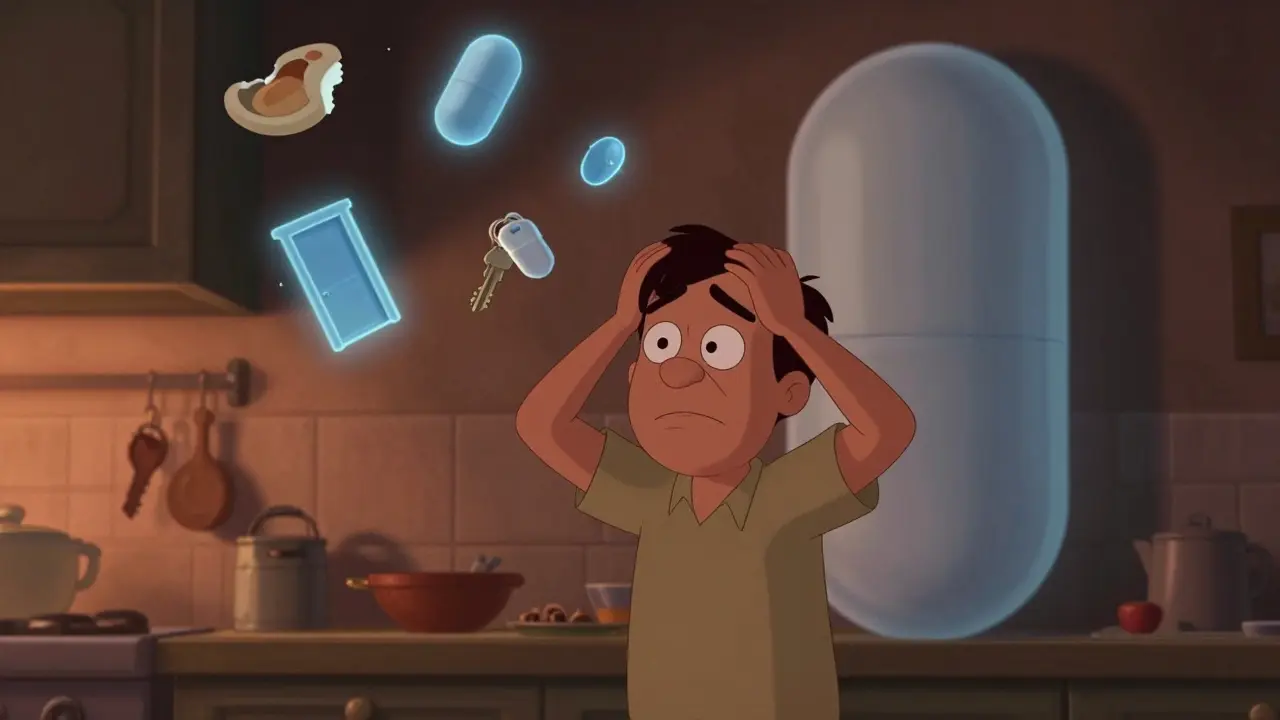
Every year, millions of people in the U.S. take benzodiazepines for anxiety, insomnia, or seizures. Drugs like Xanax, Valium, and Ativan work fast. They calm nerves, help you sleep, stop seizures. But behind that relief is a hidden cost: memory trouble, increased falls, and a hard road to stopping them. If you’ve been on these meds for months or years, you’re not alone-and you’re not imagining the foggy brain or the near-misses when you stand up too fast.
How Benzodiazepines Hurt Your Memory
Benzodiazepines don’t just make you drowsy. They interfere with how your brain forms new memories. This isn’t just forgetting where you put your keys. It’s not remembering what you had for breakfast, or why you walked into a room. This is anterograde amnesia-the inability to create new memories after taking the drug. Studies show this happens across all benzodiazepines, but it’s worse with higher doses and longer use. The hippocampus, the part of your brain responsible for turning short-term experiences into long-term memories, gets suppressed. Even after you stop taking the drug, this damage doesn’t always reverse. A 2023 review of 19 studies found that long-term users had significantly worse memory, attention, and processing speed-even six months after quitting. About half of those who stopped still showed cognitive deficits. Think of it like this: your brain is trying to file away new information, but benzodiazepines jam the filing system. Complex tasks? They’re hardest hit. Trying to follow a conversation in a noisy room? That’s a struggle. Remembering instructions from your doctor? That’s risky.Falls Aren’t Just Accidents-They’re a Direct Side Effect
Falls in older adults aren’t just “part of aging.” For people on benzodiazepines, they’re a medical red flag. A 2014 analysis of over a million people found that benzodiazepine users had a 50% higher chance of falling and a 70% higher risk of breaking a hip. That’s not a small risk. That’s life-changing. Why? These drugs slow down your reaction time by 25-35%. They make your balance shaky. Your muscles don’t respond as quickly when you trip. You don’t catch yourself. Studies show people on these medications have 30-40% less control over their posture. It’s not just dizziness-it’s your nervous system being muted. High-potency drugs like alprazolam (Xanax) and lorazepam (Ativan) are even riskier than longer-acting ones like diazepam (Valium). The American Geriatrics Society has listed benzodiazepines as “potentially inappropriate” for seniors since 2012. And it’s not just the elderly. Anyone with balance issues, vision problems, or who takes other sedatives is at higher risk. Every year in the U.S., benzodiazepines contribute to nearly 93,000 emergency room visits for falls in people over 65. That’s not just a number. That’s someone who breaks a hip, ends up in a nursing home, loses independence.Tapering Isn’t Optional-It’s Necessary
If you’ve been on benzodiazepines for more than a few weeks, your body has adapted. Stopping cold turkey isn’t just uncomfortable-it’s dangerous. Seizures, panic attacks so bad they feel like heart attacks, hallucinations, tremors. These aren’t myths. They’re real withdrawal symptoms. The gold standard for coming off is the Ashton Protocol, developed by neuropharmacologist Professor C. Heather Ashton. It’s simple in theory: reduce your dose by 5-10% every 1-2 weeks. But in practice, it’s slow, patient work. For people who’ve been on these drugs for years, sometimes the reductions are as small as 2-5% per month. Switching from a short-acting benzodiazepine like alprazolam to diazepam makes tapering smoother. Diazepam has a longer half-life, meaning it leaves your system slowly, which prevents the spikes of withdrawal that cause rebound anxiety and insomnia. A 2021 study with 312 long-term users showed that a 12-16 week taper using diazepam helped 68.5% of people successfully quit. Those who succeeded saw their brain fog start to lift within four weeks. By eight weeks, processing speed and attention improved by over 15%. But 22% needed to pause the taper for a few weeks because symptoms got too intense. Eight percent couldn’t continue at all.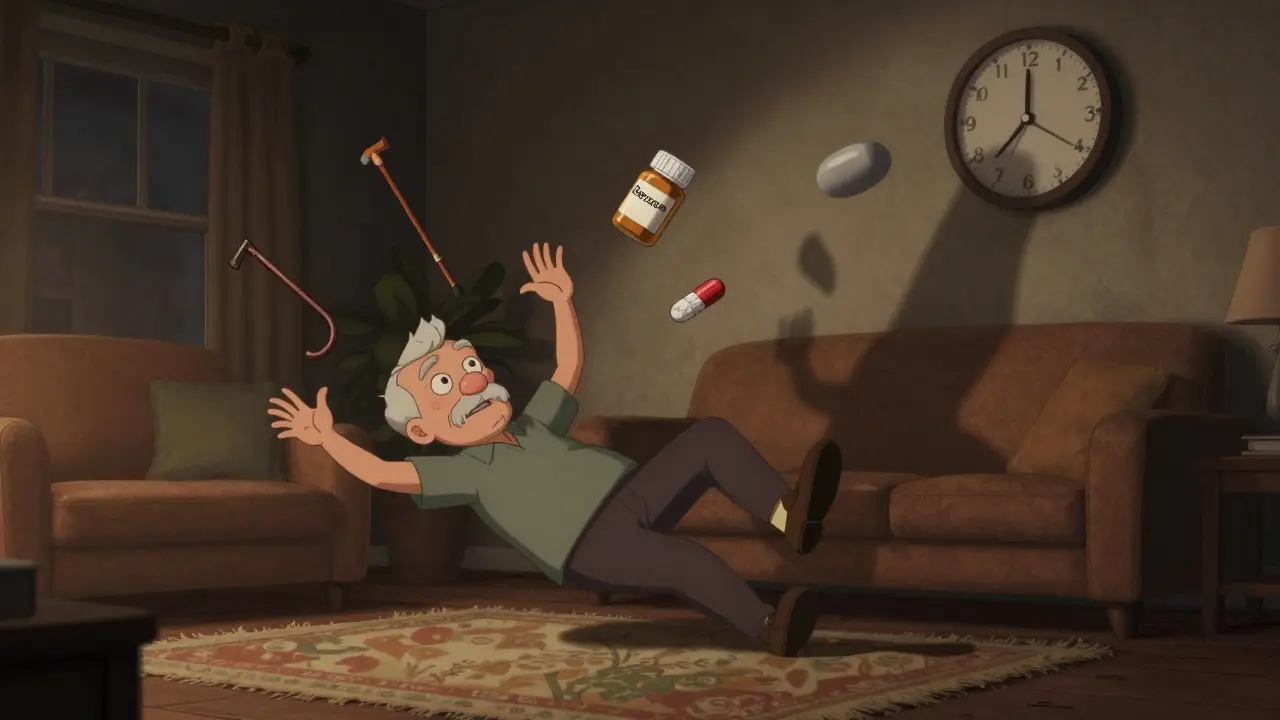
What Recovery Really Looks Like
Many people believe once they stop, their brain bounces back. That’s not always true. A 10-month study found only 45% of former users returned to normal cognitive function. The rest still struggled with memory, focus, and mental speed-even after quitting. But here’s the hopeful part: improvement keeps coming. People on online forums like Benzodiazepine Information Coalition report that brain fog doesn’t vanish overnight. It fades. Slowly. Over 6 to 12 months. Those who taper slowly and track their progress with apps like BrainBaseline often see the clearest gains. One common piece of advice from people who’ve been through it: “Don’t rush. Don’t compare yourself to others. Your brain is healing, not broken.”When Stopping Isn’t Possible-What to Do Instead
Some people can’t stop. Chronic pain, severe anxiety, PTSD-these conditions are real. For them, the goal isn’t always quitting. It’s minimizing harm. The 2023 Beers Criteria recommends maximum daily doses of 5 mg of diazepam for people over 65, and 10 mg for younger adults. That’s less than one standard dose of Xanax. The key is using the lowest dose that works, and only when needed. Doctors should screen patients every six months with tests like the MoCA or MMSE. If your score drops by 2-3 points, it’s a sign the drug may be doing more harm than good. New drugs are coming. Early trials of GABA receptor-targeted medications show promise: they reduce anxiety without affecting memory. One phase II trial in early 2024 showed a 70% drop in anxiety symptoms with no memory loss-something traditional benzodiazepines can’t claim.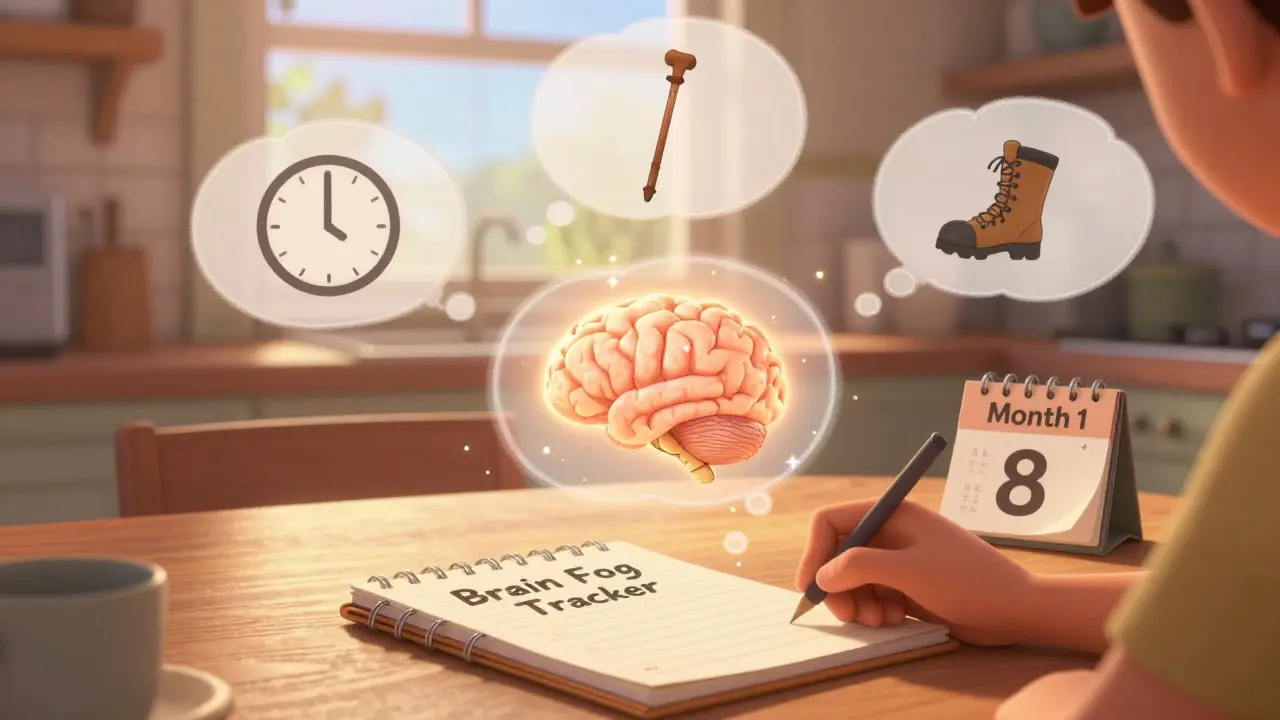
What You Can Do Today
If you’re on benzodiazepines:- Don’t stop suddenly. Talk to your doctor about a taper plan.
- Ask if switching to diazepam could make tapering easier.
- Track your memory and balance. Use a simple notebook or app to note brain fog, falls, or confusion.
- Ask for a cognitive screening if you haven’t had one in the last six months.
- Consider non-drug options: CBT for anxiety, sleep hygiene for insomnia, physical therapy for balance.
- Watch for signs of confusion or unexplained falls.
- Don’t pressure them to quit-but gently encourage a conversation with their doctor.
- Help them find resources like the Benzodiazepine Information Coalition.



so i took xanax for like 3 years and honestly the brain fog was real. i’d walk into a room and forget why. then one day i just stopped. no taper. big mistake. panic attack for 72 hours straight. felt like my skull was cracking open. don’t be me.
the hippocampus isn’t just ‘shut down’-it’s put into a state of suspended animation. benzodiazepines don’t kill neurons, they silence the synaptic dance. memory isn’t lost-it’s archived in a drawer with no key. and yes, the recovery is glacial. but i’ve seen people who tapered over 18 months come back to themselves. not perfectly, but enough to laugh again. it’s not magic. it’s neuroplasticity, stubbornly refusing to give up.
as a pharmacist who’s helped over 200 people taper, i can say the Ashton Protocol works-but only if you treat it like rehab, not a checklist. switching to diazepam? non-negotiable for short-acting benzos. and tracking progress? vital. i give my patients a simple journal: ‘rate brain fog 1–10, note any stumbles.’ small data, huge insights. also, CBT is the unsung hero here. it doesn’t fix the brain, but it gives you tools to live with the fog while it clears.
oh please. you think this is new? the pharmaceutical industry has been selling anxiety as a disease since the 80s. benzodiazepines? they’re not drugs-they’re emotional pacifiers for a society that can’t sit with discomfort. your ‘brain fog’? that’s your soul screaming. and now you want to ‘taper’ like it’s a diet? wake up. the real cure is learning to be alone with your thoughts. but that’s too hard, isn’t it? easier to swap one pill for another.
i’m from the uk and we’ve been warning about this for years. the nhs stopped prescribing benzos for insomnia over a decade ago. people still get them for anxiety, but it’s tightly controlled. what’s shocking is how little awareness there is in the us. i’ve watched friends here stay on these for 15+ years because their doctors just kept renewing scripts. it’s not negligence-it’s systemic inertia.
you know what’s really happening? the cia started this. benzos were used in mind control experiments in the 50s. now they’re everywhere because they make people docile. your memory loss? that’s intentional. your falls? designed to keep you dependent on caregivers. the ‘ashton protocol’? a front. the real cure is vitamin d and sunlight. they’ve hidden that from you.
everyone says ‘taper slowly’ like it’s some sacred ritual. but here’s the truth: most people can’t do it. their anxiety spikes, they panic, they go back. and the doctors? they don’t care. they’re paid to write scripts, not to hold your hand through hell. if you’re still on benzos after a year, you’re not trying hard enough. you’re weak. stop blaming the drug. blame yourself.
i’ve been tapering for 14 months and it’s been the hardest thing i’ve ever done. some days i feel like i’m crawling through molasses. but i started writing down one good thing each day-even if it was ‘i remembered where i put my socks.’ now, after a year, i can read a book without rereading the same paragraph 5 times. it’s slow. but it’s real. you’re not broken. you’re healing.
they say ‘don’t stop cold turkey’ but what if i want to? what if i’m tired of being a zombie? what if i’d rather have seizures than this fog? you think i don’t know the risks? i’ve read the studies. i just don’t care anymore. let the panic come. let the tremors shake me. at least then i’ll feel something real.
this is why america is falling apart. we let corporations tell us how to feel. you want peace? work harder. lift weights. meditate. stop being a baby. benzos are for weak people. real americans don’t need pills to get through the day. get off your couch. go outside. breathe. you don’t need a doctor-you need discipline.
lol i took valium for 8 years and now i can’t remember my wife’s birthday. also my dog died last year and i forgot for 3 months. the doctors said taper. i said nah. i just got a new prescription. life’s too short to be sober. also i’m from india so i don’t care about your western guilt trips
the 2021 study showing 68.5% success with diazepam tapering? that’s the data we use in our clinic. but here’s the kicker: success isn’t just quitting. it’s regaining function. we track gait stability, reaction time, and verbal recall. the biggest improvement? people start recognizing their own face in the mirror again. not because the drug left their system-but because they stopped believing they were broken. hope isn’t placebo. it’s neurochemical.
you say memory loss is permanent. but studies show only half have deficits after six months. that means half recover. why are you focusing on the worst case? it’s fearmongering. if you’re not improving after a year, maybe it’s not the benzos. maybe it’s depression. or sleep apnea. or you’re just getting older. stop blaming the pill.
the philosophical underpinning of this crisis is the illusion of control. we believe we can engineer peace through chemistry. but true tranquility is not manufactured-it is cultivated. the benzodiazepine is a crutch for a culture that has forgotten how to sit with silence. healing, then, is not merely physiological-it is existential. to taper is not to withdraw from a drug, but to re-enter the fullness of being human, with all its trembling, uncertain, glorious weight.
just started tapering last month 🌱 2 weeks in and i can finally remember names again. also i cried for 20 minutes yesterday because i remembered the smell of my mom’s kitchen. it’s not about the drug. it’s about coming back to yourself. you’re not losing time-you’re reclaiming it 💛