
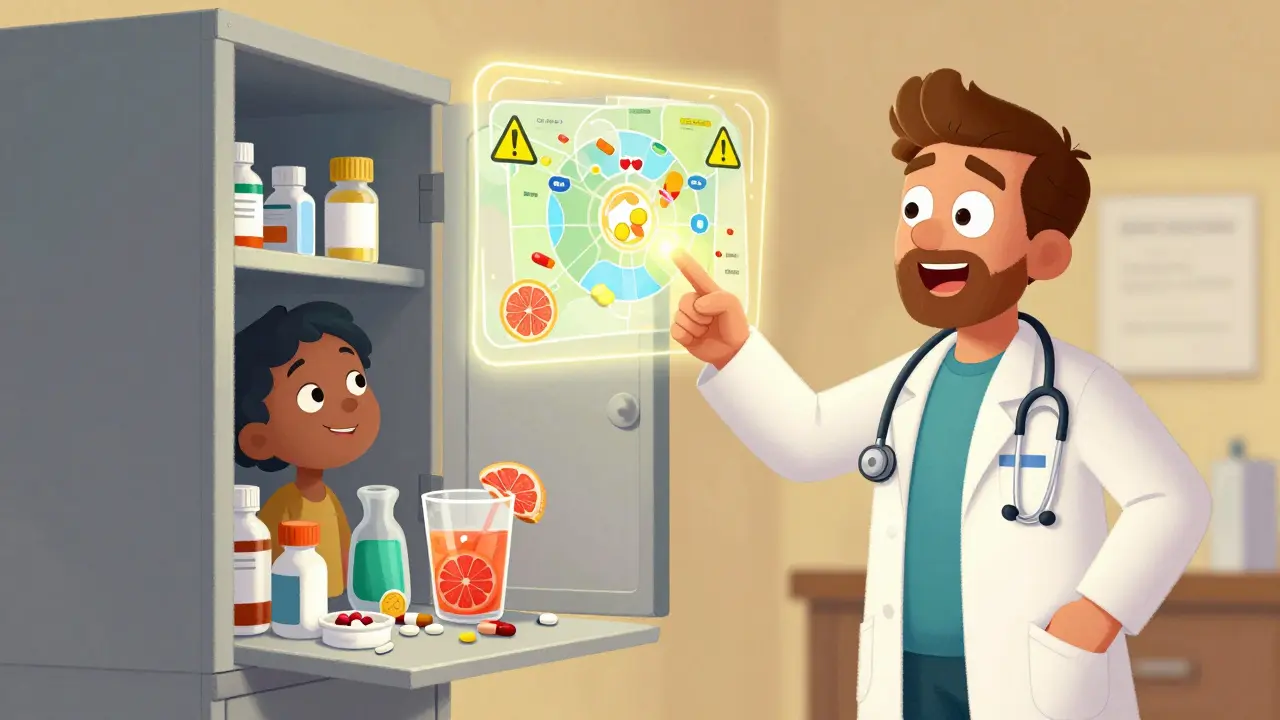
Every year, over a million people in the U.S. end up in the emergency room because of unexpected reactions between their medications. Many of these cases are preventable - and the key often lies in one simple step: asking your pharmacist the right questions.
You don’t need to be a medical expert to spot a problem. You just need to know what to ask. Pharmacists aren’t just the people who hand out pills. They’re trained to see the full picture: what you’re taking, what you eat, what supplements you use, and how your body reacts. And they’re the best people to catch hidden dangers before they become emergencies.
What medications are you really taking?
Before you even ask about interactions, you need to know what’s in your own medicine cabinet. Most people think they remember everything: their blood pressure pill, their painkiller, maybe their vitamin D. But what about the antacid you take after dinner? The melatonin for sleep? The turmeric capsule from the health store? The OTC cold medicine you grabbed last week?
These aren’t just "extras." They’re active ingredients that can change how your other drugs work. Grapefruit juice can make cholesterol drugs too strong. St. John’s wort can make birth control fail. Even common pain relievers like ibuprofen can raise your risk of bleeding if you’re on blood thinners.
Bring a written list. Include every pill, capsule, patch, liquid, and injection - even if you take it once a week. Write down the dose and how often you take it. Don’t guess. If you don’t remember, bring the bottles. Your pharmacist will compare everything against a database that tracks over 150,000 known interactions.
Can this interact with my other drugs?
This is the most basic, most important question. But don’t just ask it once. Ask it every time you get a new prescription, even if it’s from a different doctor. Many patients don’t realize their cardiologist doesn’t know what their rheumatologist prescribed.
Some of the most dangerous interactions happen with common medications:
- Warfarin (a blood thinner) and vitamin K-rich foods like kale or broccoli - too much can reduce its effect, too little can cause bleeding.
- Statins (cholesterol drugs) and grapefruit juice - even one glass can spike drug levels and damage your muscles.
- Antibiotics like ciprofloxacin and antacids - if taken together, they can cancel each other out.
- SSRIs (antidepressants) and painkillers like tramadol - this combo can trigger serotonin syndrome, a life-threatening condition.
Your pharmacist will check for these and dozens more. They’ll tell you if the interaction is mild, moderate, or high-risk. And they’ll explain what to watch for.
Should I avoid certain foods or drinks?
It’s not just about other drugs. What’s on your plate matters too.
Alcohol can intensify drowsiness from sleep aids or anxiety meds. It can also damage your liver when mixed with acetaminophen. High-sodium foods can interfere with blood pressure drugs. Dairy products can block absorption of antibiotics like tetracycline.
One of the most overlooked dangers? Tyramine-rich foods if you’re on MAO inhibitors (used for depression or Parkinson’s). Foods like aged cheese, cured meats, soy sauce, and tap beer can cause a sudden, dangerous spike in blood pressure. You won’t feel it coming - until it’s too late.
Ask: "Are there any foods or drinks I should avoid while taking this?" Don’t assume it’s just alcohol. Ask about grapefruit, caffeine, dairy, salt, and even herbal teas.
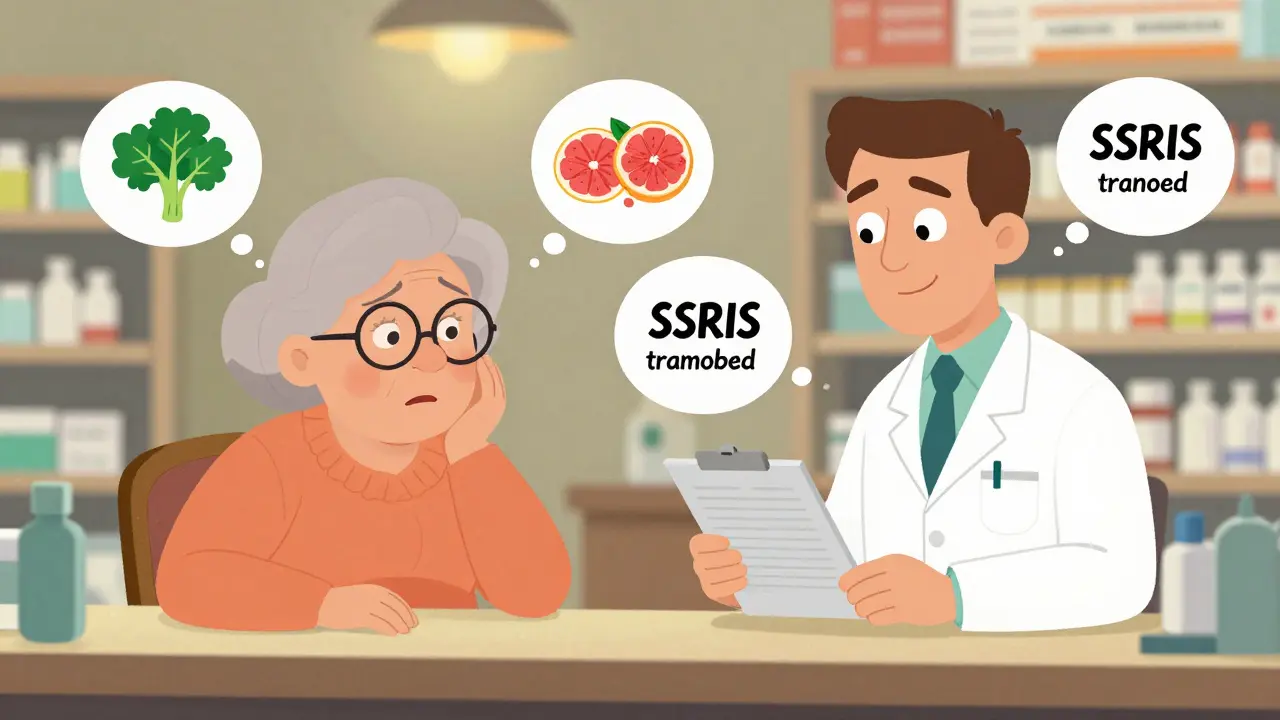
What about supplements and herbal products?
"Natural" doesn’t mean safe. Over 77% of American adults take some kind of supplement. And most don’t tell their doctor - or pharmacist - about it.
Here’s what you need to know:
- St. John’s wort can reduce the effectiveness of antidepressants, birth control, and even some cancer drugs.
- Ginkgo biloba increases bleeding risk, especially if you’re on aspirin or warfarin.
- Garlic and ginseng can interfere with blood pressure and blood sugar control.
- Magnesium and calcium supplements can bind to antibiotics and make them useless.
Pharmacists see this every day. They know which supplements are risky and which are harmless. But they can’t help if you don’t tell them. Say: "I take [name] every day. Is that safe with my other meds?"
How will this affect my existing health conditions?
It’s not just about what you’re taking - it’s about what’s going on inside your body.
If you have kidney disease, your body can’t clear drugs the same way. A standard dose might build up to toxic levels. If you have liver disease, your body might not break down medications properly. If you have high blood pressure, decongestants in cold medicines can push it dangerously high.
Ask: "Will this make my [condition] worse?" For example:
- "Will this raise my blood sugar?" - if you have diabetes.
- "Could this make my heart palpitations worse?" - if you have atrial fibrillation.
- "Is this safe if I have glaucoma?" - some antihistamines can increase eye pressure.
Your pharmacist will know which drugs are risky for your specific condition. They’ve seen the data. They’ve helped others with the same diagnosis.
When and how should I take this?
Timing isn’t just about convenience - it’s about safety.
Taking a drug with food might help reduce stomach upset. But for some medications, food blocks absorption. For others, it boosts it. Some drugs need to be taken on an empty stomach. Others need to be spaced out by hours.
Ask: "Should I take this with food? Or wait 2 hours after eating?" Also ask: "Can I take this with my other pills, or should I space them out?"
For example:
- Levothyroxine (thyroid medication) must be taken alone, 30-60 minutes before food or other meds.
- Iron supplements shouldn’t be taken with calcium or dairy - they block each other.
- Some antibiotics need to be taken 2 hours before or after antacids.
These small details make a big difference. And your pharmacist will know the exact timing rules.
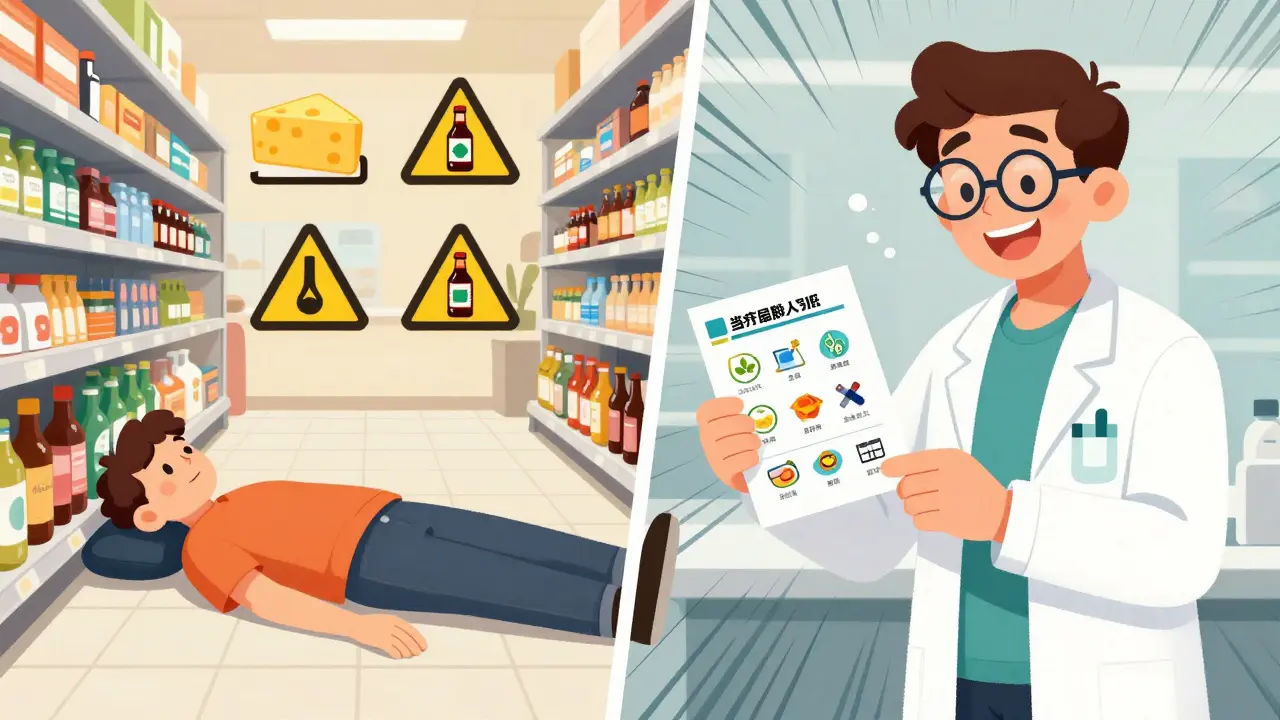
What signs should I watch for?
Not all interactions cause immediate symptoms. Some build up slowly. Others strike suddenly.
Ask: "What should I look out for?" Then write down the answer.
Red flags include:
- Unusual dizziness or fainting
- Severe nausea or vomiting
- Unexplained bruising or bleeding
- Rapid heartbeat or chest pain
- Confusion, memory loss, or trouble speaking
- Swelling in your face, lips, or throat
These could mean your body is reacting badly. Don’t wait. Call your pharmacist or go to urgent care. Keep a note of when symptoms started and what you took that day.
Can I get a full review?
Many pharmacies offer free medication reviews - especially if you’re on five or more drugs. That’s not a luxury. It’s a safety net.
Ask: "Can you do a full review of all my medications?" They’ll look at everything: prescriptions, OTCs, supplements, vitamins. They’ll check for duplicates, unnecessary drugs, and hidden interactions.
One study found that when pharmacists did full reviews for Medicare patients, drug-related emergencies dropped by over 23%. That’s not luck. That’s expertise.
Don’t wait until you’re sick. Ask for a review when you get a new prescription. Or at least once a year.
What if I can’t afford to stop a drug?
Sometimes, you’re stuck. You need a drug - but it interacts badly with something else. Maybe you can’t stop the supplement because it helps your joint pain. Maybe you can’t stop the OTC painkiller because you have chronic back pain.
Ask: "Is there a safer alternative?"
Pharmacists know about other options. Maybe there’s a different painkiller that doesn’t interact. Maybe there’s a non-drug solution - like physical therapy or a different supplement. Maybe they can adjust the dose or timing to reduce risk.
They’re not here to judge. They’re here to help you stay safe while still managing your health.
Drug interactions aren’t rare. They’re common. And they’re often silent - until it’s too late. But you don’t have to be a victim. You have the power to ask, to speak up, and to protect yourself. Your pharmacist is your partner. Use them.
What are the most common drug interactions?
The most common interactions involve blood thinners like warfarin, cholesterol drugs like statins, and antidepressants. These often interact with grapefruit juice, St. John’s wort, alcohol, and certain antibiotics. For example, grapefruit juice can cause statin levels to rise dangerously high, while St. John’s wort can make birth control or antidepressants less effective. Over-the-counter pain relievers like ibuprofen can increase bleeding risk when taken with blood thinners.
Can I take supplements with my prescription drugs?
Some supplements are safe, but many are not. St. John’s wort, ginkgo biloba, garlic, and ginseng can interfere with blood thinners, blood pressure meds, and antidepressants. Even common vitamins like vitamin K can affect warfarin. Always tell your pharmacist exactly what supplements you take - including doses and frequency. They’ll tell you which ones are risky and which are okay.
Do I need to tell my pharmacist about OTC medications?
Yes. Over-the-counter drugs like cold medicine, antacids, sleep aids, and pain relievers can interact with your prescriptions. For example, pseudoephedrine (in decongestants) can raise blood pressure in people with hypertension. Antacids can block absorption of antibiotics. Even aspirin can increase bleeding risk if you’re on blood thinners. Always include OTCs in your medication list.
How often should I review my medications with a pharmacist?
At least once a year, and every time you start, stop, or change a medication. If you’re taking five or more drugs - which is common for adults over 65 - you should ask for a review every six months. Medication changes are the most common cause of new interactions. The newest drug added is often the one causing the problem.
Can my pharmacist help if I can’t afford to stop a drug?
Yes. Pharmacists can suggest alternatives - like a different drug with fewer interactions, a lower dose, or a non-drug option. They may also help you find patient assistance programs or generic versions. Never stop a drug without talking to them first. They’ll help you balance safety and effectiveness.
Do drug interactions happen with herbal teas or natural remedies?
Yes. Herbal teas like green tea, black tea, and chamomile can affect how your body processes medications. Green tea can interfere with blood thinners and beta-blockers. Chamomile can increase bleeding risk when taken with warfarin. Even "natural" doesn’t mean safe. Always mention any herbal teas or remedies you use - including how often.
What if I forget to ask a question during my visit?
Call or message your pharmacy. Most offer free phone consultations. You can also ask for a follow-up appointment. Don’t wait until you feel sick. Many interactions don’t cause symptoms right away. It’s better to ask late than to risk a serious reaction. Keep a notebook or phone note of questions so you don’t forget.


Bro. I took my statin with a grapefruit smoothie and woke up feeling like a robot who just won the lottery. My muscles? Gone. My pharmacist? Laughing. I now carry a grapefruit like a warning sign. 🍊💀
This is really helpful. I never realized how many things can interact. I take turmeric and blood pressure meds - now I’m going to ask my pharmacist next time I pick up my prescription.
It is imperative that patients recognize the critical role pharmacists play in medication safety. The data presented here underscores the necessity of proactive communication between healthcare providers and patients. A structured medication review protocol should be standard practice.
I always bring my pill bottles in a ziplock bag to the pharmacy and just say hey whats this do with this and this and they always have a good answer. No need to overthink it just talk to them
Pharmacists? Please. I’ve been on 12 meds since 2010 and I’ve never once trusted some guy in a white coat to know more than my Google search. I do my own research. And I don’t need your pamphlets.
I mean, sure, the pharmacist is the gatekeeper of the pharmaceutical pantheon - but let’s be real, half these interactions are just Big Pharma’s way of making us buy more drugs. I took St. John’s wort with my SSRI and felt like a human sunbeam. Who’s the real villain here? The herb? Or the FDA?
I’ve been a pharmacist for 22 years. The number of people who don’t tell us about their herbal teas, vitamins, or that ‘miracle’ supplement from TikTok is staggering. We’re not judging. We just want you to live. Please. Just tell us.
You know who really benefits from you asking pharmacists questions? The corporations that sell the databases. The software they use? Licensed by three companies. The ‘150,000 interactions’? A marketing tool. They want you dependent. Always ask: who profits?
I must emphasize, with the utmost gravity and solemnity, that the systemic neglect of pharmacist consultation is not merely an oversight - it is a national tragedy, a silent epidemic of preventable suffering, a catastrophic failure of civic responsibility and personal accountability. One must pause. Reflect. And then - with trembling hands and a heart full of purpose - bring one’s entire medicine cabinet to the pharmacy, accompanied by a handwritten letter, a certified copy of one’s birth certificate, and a single white rose. Only then can true healing begin.