
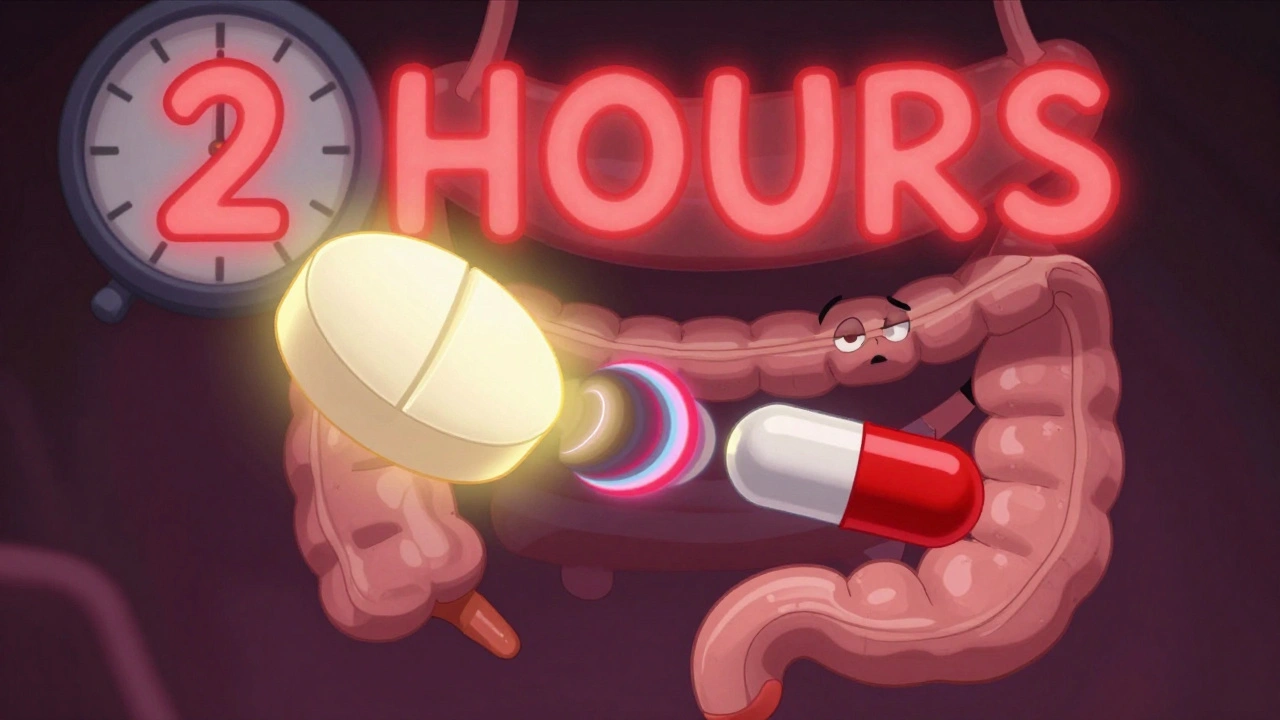
It’s easy to think of calcium and iron as harmless supplements - after all, they’re in milk, spinach, and multivitamins. But if you’re taking prescription meds, these minerals can quietly sabotage your treatment. A 40% drop in antibiotic effectiveness. A thyroid hormone that stops working. These aren’t rare side effects. They’re everyday risks for millions of people who take supplements without knowing the clock matters as much as the dose.
How Calcium Blocks Antibiotics
Calcium doesn’t just build bones. It binds to certain antibiotics like a magnet, trapping them so your body can’t absorb them. This isn’t a minor inconvenience - it’s a treatment failure waiting to happen. Tetracycline, doxycycline, and fluoroquinolones like ciprofloxacin are especially vulnerable. When calcium from a supplement, Tums, or even a glass of milk meets these drugs in your gut, they form an insoluble complex. That means the antibiotic passes right through you, useless.Studies show calcium carbonate can reduce ciprofloxacin absorption by up to 40%. That’s not a 10% dip. That’s enough to let an infection grow unchecked. If you’re on antibiotics for a urinary tract infection, pneumonia, or even acne, taking calcium at the same time could mean the difference between healing in days or ending up back in the clinic with a worse infection.
The fix? Don’t take calcium within two hours of these antibiotics. For safety, many pharmacists recommend waiting four to six hours. If you take your antibiotic in the morning, hold off on your calcium until after lunch or later. If you take it at night, skip the dairy or supplements until the next day.
Iron and Antibiotics: A Similar Battle
Iron supplements - especially ferrous fumarate, the most common type prescribed in the UK - face the same problem. Iron binds tightly to tetracyclines and fluoroquinolones, just like calcium does. The result? The antibiotic becomes ineffective. This is especially tricky for teens or young adults prescribed doxycycline for acne who also need iron for anemia. Parents often don’t realize the two can’t be taken together.The timing rule here is simpler: take iron at least two hours before or four hours after the antibiotic. If your antibiotic is taken once daily at bedtime, take your iron at breakfast. If you take it twice a day, space the iron around the doses - never at the same time. Don’t rely on feeling “fine.” Even if you don’t notice symptoms, the drug isn’t doing its job.
Calcium and Thyroid Medicine: A Silent Saboteur
Levothyroxine, the standard treatment for hypothyroidism, is one of the most commonly prescribed drugs in the UK. And it’s extremely sensitive to calcium. Even a single calcium supplement taken too close to your thyroid pill can cut its absorption by half.Research from the South Medical Journal showed that when calcium is taken within four hours of levothyroxine, thyroid hormone levels drop significantly. Patients end up with symptoms like fatigue, weight gain, and brain fog - not because their dose is wrong, but because their body isn’t absorbing it. Many people assume their doctor adjusted the dose when they started supplements. They didn’t. They just assumed the pill was working.
The solution? Take levothyroxine on an empty stomach, first thing in the morning, with a full glass of water. Wait at least four hours before taking any calcium supplement, antacid, or even a fortified cereal. If that’s not possible, switch your thyroid pill to bedtime - but only if your doctor agrees. Some patients find taking levothyroxine at night works better, as long as they avoid calcium-rich snacks before bed.

Iron and Heartburn Meds: A pH Problem
Iron needs stomach acid to be absorbed. That’s why doctors often recommend taking it with orange juice - the vitamin C helps, but so does the mild acidity. Now imagine you’re also on omeprazole, pantoprazole, or famotidine for heartburn. These drugs shut down stomach acid production. No acid? No iron absorption.Studies show people on long-term proton pump inhibitors (PPIs) are more likely to develop iron deficiency - even if they’re taking supplements. The supplement isn’t broken. The environment it’s trying to work in is. This is a hidden cause of persistent anemia that many doctors miss.
How to fix it? Take your iron supplement at least two hours before your heartburn medicine. That gives your stomach time to produce acid naturally before the drug blocks it. If you take your PPI once a day, take iron at breakfast, then wait two hours before your pill. If you’re on a bedtime PPI, take iron with lunch or early dinner. And avoid milk with your iron - calcium in milk binds iron just like it does with antibiotics.
Why Timing Isn’t Just a Suggestion
You might think, “I took my calcium with my antibiotic once and felt fine.” But that’s the problem. These interactions don’t always cause immediate symptoms. They cause slow, silent failures. Your infection lingers. Your thyroid levels stay low. Your anemia doesn’t improve. You get told to increase your dose - when what you really need is to change your schedule.Pharmacists in the UK and US now routinely ask patients: “Are you taking calcium or iron supplements?” It’s not a casual question. It’s a safety check. And it’s not just for older adults. Teens on acne meds, pregnant women on iron, postmenopausal women on bone supplements - all are at risk.
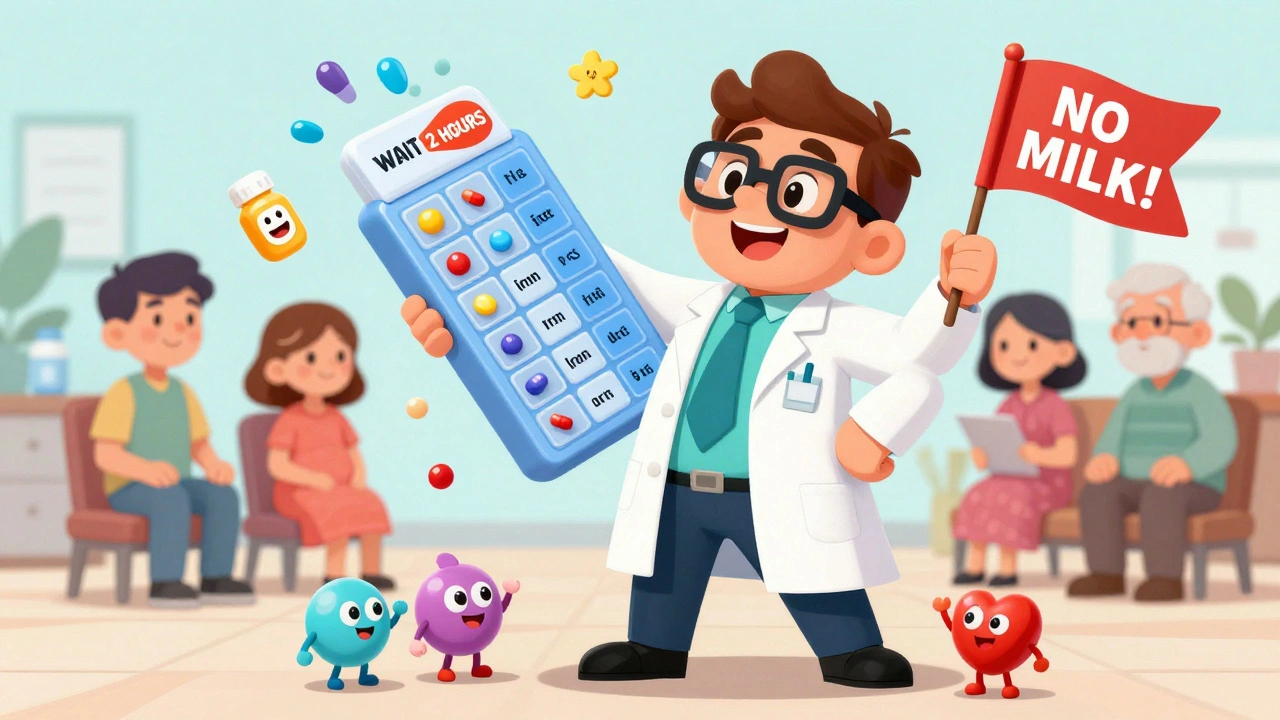
There’s no universal rule that fits every combo. Some interactions need two hours. Others need six. The best practice? Write down every supplement and medication you take - including antacids, multivitamins, and even herbal teas - and bring it to your pharmacist. They can map out a safe schedule. Don’t guess. Don’t rely on memory. Use a pill organizer with time slots if you need to.
What to Do Right Now
If you’re taking any of these, act now:- If you’re on antibiotics: Stop taking calcium or iron supplements until your course is done. Ask your pharmacist if your specific antibiotic is affected.
- If you’re on levothyroxine: Take it first thing in the morning, alone, with water. Wait four hours before anything else - especially calcium or iron.
- If you’re on PPIs or H2 blockers: Take your iron supplement at least two hours before your heartburn medicine. Avoid milk with your iron.
- If you’re taking multiple supplements: Make a list. Don’t assume “natural” means safe. Calcium, iron, magnesium, and zinc all interact with drugs in different ways.
There’s no shame in asking. Most people don’t know these interactions exist until something goes wrong. But once you know, you can fix it - without stopping your meds or your supplements. Just space them out.
What About Food?
You don’t need to avoid dairy forever. Just avoid it around your meds. A bowl of cereal with milk at breakfast? Fine - if you take your thyroid pill at night. A glass of milk with your iron? Not ideal. Stick to orange juice or vitamin C-rich foods instead. Eggs, meat, and whole grains don’t interfere with iron absorption - so don’t fear them. It’s the calcium in milk and fortified foods that’s the issue.And if you’re unsure? Ask. Pharmacists don’t mind. They’ve seen it all. A simple question like, “I take iron and amoxicillin - can I take them together?” could prevent a hospital visit.
Can I take calcium and iron together?
No, you shouldn’t take calcium and iron together. They compete for the same absorption pathways in your gut. Taking them at the same time reduces how much of each your body can absorb. Space them at least two hours apart. If you’re taking both as supplements, take one in the morning and the other in the evening.
Does milk affect iron absorption?
Yes. Milk contains calcium, which binds to iron and stops it from being absorbed. That’s why doctors recommend taking iron supplements with orange juice or vitamin C-rich foods instead. Avoid drinking milk, eating yogurt, or having cheese with your iron pill.
How long should I wait between calcium and levothyroxine?
Wait at least four hours. Studies show calcium reduces levothyroxine absorption significantly if taken within this window. Many people take their thyroid pill in the morning and their calcium at lunch - that’s a safe gap. If you take your thyroid pill at night, avoid calcium-rich snacks before bed.
Can I take iron with my heartburn medicine?
Only if you space them correctly. Heartburn medicines like omeprazole reduce stomach acid, which your body needs to absorb iron. Take your iron at least two hours before your heartburn pill. If you take your heartburn medicine at night, take iron with lunch. Never take them together.
What if I forget and take them together?
Don’t panic. One mistake won’t ruin your treatment. But don’t make it a habit. If you accidentally take calcium with your antibiotic, skip the next dose of the supplement and wait until the next day to resume. For thyroid or iron meds, just resume your normal schedule - but be more careful next time. Consistency matters more than perfection.
Are all calcium supplements the same?
No. Calcium carbonate (found in Tums and many cheap supplements) is the most likely to cause interactions because it’s poorly absorbed and binds tightly to drugs. Calcium citrate is better absorbed and may have fewer interactions, but it still affects antibiotics and thyroid meds. Always assume any calcium supplement will interfere unless your pharmacist says otherwise.
Should I stop taking calcium or iron supplements?
No - unless your doctor tells you to. These supplements are important for bone and blood health. Instead of stopping, learn how to take them safely. Use a pill organizer, write down your schedule, and talk to your pharmacist. You don’t have to choose between your meds and your supplements. You just need to time them right.
Final Tip: Talk to Your Pharmacist
Pharmacists are the hidden experts in drug interactions. They see hundreds of medication lists every week. They know which supplements clash with which pills. And they’re trained to spot the ones patients forget to mention - like calcium tablets, iron gummies, or even magnesium for muscle cramps.Bring your entire list - supplements, over-the-counter meds, herbal teas, and vitamins - to your pharmacist. Don’t wait for a problem to happen. Prevention is simple: ask, space, and track. Your body will thank you.




I took my iron with my antibiotic once and thought I was fine. Turns out my UTI came back worse. Learned the hard way. Just space it out. Life's easier that way.
This is exactly why I started using a pill organizer. I used to mix everything together and wonder why my thyroid meds weren't working. Now I have separate slots for morning, noon, and night. Game changer.
As a pharmacist, I see this every single day. Patients think 'natural' means 'safe.' Calcium supplements, Tums, even fortified oat milk - all can interfere. Always ask. Always check. It's not complicated, but it's critical.
I used to take my levothyroxine with breakfast... until I realized my coffee and yogurt were sabotaging me. Now I take it at bedtime with water. No food. No calcium. No drama. My energy levels are back. 🙌
My mom had unexplained fatigue for months. Turns out she was taking her calcium with her thyroid med. We just changed the timing and she's like a new person. Why isn't this taught in high school health class?
Honestly, if you're taking supplements without reading the fine print, you're just gambling with your health. People think 'vitamins' are harmless. They're not. They're pharmaceutical-grade chemicals with serious interactions. Stop being lazy and educate yourself.
The science is clear. Calcium carbonate binds to fluoroquinolones with high affinity, reducing bioavailability by up to 40%. This is not anecdotal. This is pharmacokinetic data replicated across multiple clinical trials. Timing is non-negotiable.
It's fascinating how our bodies are these intricate biochemical systems, and yet we treat them like vending machines - pop in a pill, get a result. But absorption isn't binary. It's a dance of pH, chelation, transporter competition. Iron and calcium both use DMT1. They're literally fighting for the same doorway. That's why spacing matters. It's not about inconvenience. It's about biology.
Wait, so you're telling me I can't just take my gummy vitamins with my antibiotics? What am I, a lab rat? I've been doing this for years. Why are you suddenly acting like this is a big deal?
I get it - it's a lot to keep track of. I used to forget too. Now I use a free app that alerts me when to take what. It even flags interactions. Took me 2 weeks to set up. Now I sleep better knowing I'm not accidentally undermining my meds. You don't need to be perfect. Just consistent.
I started taking my iron at lunch with orange juice and stopped drinking milk with meals. My ferritin levels went from 12 to 48 in three months. Simple changes. Big results.
I take my thyroid med at night now. No morning rush. No dairy. No Tums after dinner. Works great. My doctor was surprised I figured it out. Honestly, I just read the pamphlet.
I've been telling people this for years. You're not 'taking supplements' - you're taking unregulated drugs that interfere with your prescribed medications. And yet, people still grab their calcium gummies like candy. It's not ignorance. It's willful disregard. Your body isn't a toy. Stop treating it like one.