
Rational Combination Drug Evaluator
Your Health Profile
Results
Enter your details to see if this combination is appropriate
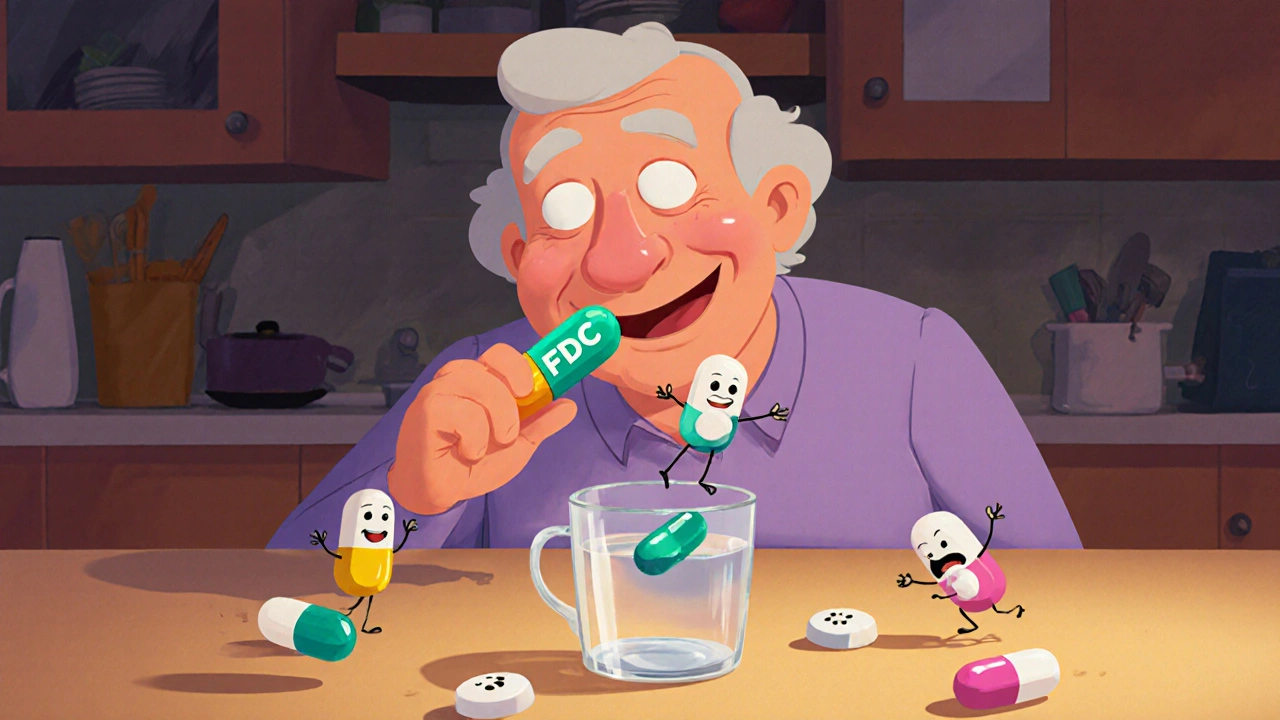
Imagine taking just one pill instead of five every morning. That’s the promise of combination drugs-single tablets that pack two or more medicines into one. For millions of people managing high blood pressure, tuberculosis, or Parkinson’s, this isn’t just convenient; it’s life-changing. But behind the simplicity lies a hidden trade-off: when you combine drugs, you’re not just making life easier-you’re also mixing risks that don’t always add up cleanly.
Why Combination Drugs Exist
Combination drugs, or fixed-dose combinations (FDCs), didn’t start in a modern lab. Ancient systems like Traditional Chinese Medicine used plant blends for centuries. But the real shift came in the 1970s, when scientists began pairing antibiotics like sulfamethoxazole and trimethoprim to fight bacteria more effectively. These weren’t random mixes. They were carefully chosen because each drug attacked the infection in a different way, making it harder for bacteria to resist. Today, the World Health Organization includes 18 FDCs in its Essential Medicines List. These aren’t luxury options-they’re core tools in global health. For tuberculosis, a single pill with rifampicin and isoniazid has boosted treatment completion rates in poor regions. For hypertension, low-dose combinations of blood pressure meds cut stroke risk better than single drugs alone. In Parkinson’s, levodopa paired with carbidopa helps the brain absorb the medicine more efficiently, reducing side effects like nausea. The logic is simple: if two drugs work better together, why make patients juggle pills? Studies show FDCs improve adherence by up to 30%. Fewer pills mean fewer missed doses. That’s huge when you’re managing a chronic condition.The Hidden Cost of Convenience
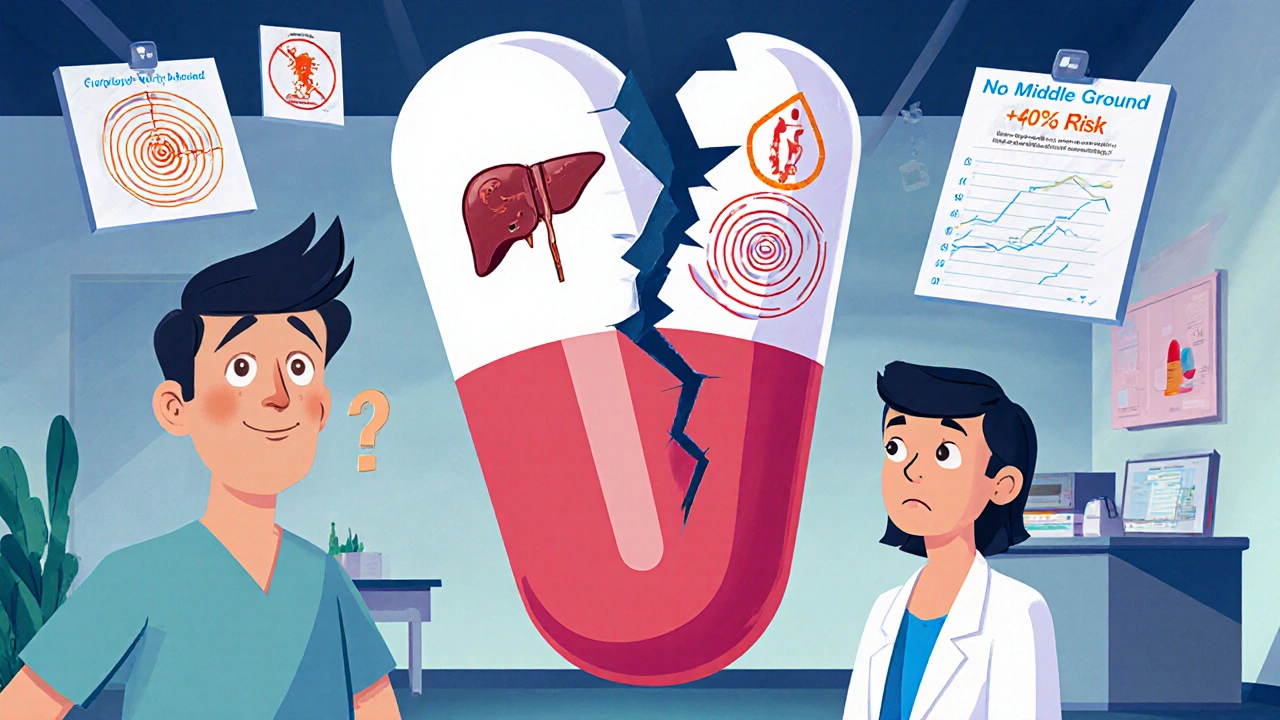
But here’s the catch: when you combine drugs, you lose control. If one ingredient causes a bad reaction-say, dizziness or liver stress-you can’t just lower its dose. You have to stop the whole pill. That’s a problem if the other drug is still helping. A patient on a hypertension combo might need to stop because one component caused a rash, even if their blood pressure was perfectly controlled. Doctors can’t adjust doses easily. If someone needs 10 mg of Drug A but only 5 mg of Drug B, and the combo only comes as 10/10 or 20/10, they’re stuck. No middle ground. That’s why some specialists, like orthopedists and neurologists, say FDCs limit personalization. For complex cases, flexibility matters. Worse, some combinations have hidden dangers. When two drugs interact in unpredictable ways, side effects can multiply. The risk isn’t just additive-it’s multiplicative. One study found that patients on certain FDCs had a 40% higher chance of serious adverse events than those taking the same drugs separately. This isn’t theoretical. In India, regulators have banned over 300 irrational FDCs in the last decade because they offered no proven benefit and carried clear risks. Some contained antibiotics mixed without justification, fueling drug-resistant infections.What Makes a Combination Rational?
Not all FDCs are created equal. The World Health Organization and the FDA have clear standards for what counts as a smart combo:- The drugs must target different pathways in the disease
- They must have similar half-lives-so they stay active in the body at the same time
- They shouldn’t increase toxicity when combined
- There must be clinical proof they work better together than apart
Compounded Medications: The Alternative
If you need precision, FDCs aren’t the only option. Compounded medications are custom-made by pharmacists. A patient with swallowing issues might get a topical cream with gabapentin, baclofen, and ketamine for nerve pain. Someone allergic to dyes or fillers can get a version without them. These aren’t mass-produced. They’re tailored. But here’s the catch: compounding isn’t regulated like FDCs. The FDA doesn’t test them before they’re sold. That means quality varies. One batch might be perfect. Another might be contaminated. For stable, long-term conditions, FDCs are safer. For rare needs or allergies, compounding wins.Who Benefits Most-and Who Should Be Careful?
FDCs shine for people with stable, predictable conditions:- Those on long-term hypertension meds
- Tuberculosis patients in resource-limited areas
- People with Parkinson’s needing steady levodopa delivery
- Patients on HIV or hepatitis C regimens
- Your condition changes often (like diabetes with fluctuating insulin needs)
- You’re elderly and sensitive to side effects
- You’ve had bad reactions to one drug in the past
- You’re on multiple other meds-more ingredients mean more chances for interactions
The Future: Smarter Combos, Tighter Rules
The future of combination drugs isn’t about more pills-it’s about better ones. Companies are using AI to predict which drug pairs will work without dangerous side effects. Researchers are testing combinations for rare diseases that previously had no treatment options. The WHO plans to add more evidence-based FDCs to its Essential List in 2025. But regulation is catching up. The FDA now requires proof that a combination is safer or more effective than the individual drugs. Countries like India are cracking down on irrational FDCs. Australia and the EU already require strict clinical data before approving any new combo. The message is clear: convenience shouldn’t override safety. A good combination drug saves lives. A bad one puts them at risk.What to Ask Your Doctor
If you’re prescribed a combination drug, ask:- Why was this combo chosen instead of separate pills?
- Is there proof it works better than taking the drugs alone?
- What happens if I have a reaction to one ingredient?
- Can I switch back to individual drugs if needed?
- Are there cheaper or safer alternatives?



i took one of those combo pills for bp and got dizzy as hell. couldnt adjust the dose so i just stopped. now i take two separate ones and im fine. why do they make us pay for inflexibility?
so basically we're trading "oh nice, one pill" for "oh shit, now i can't tweak anything"? classic pharma move. they don't care if you live or die, they just want you to swallow the whole damn box. 🤡
this is why america's healthcare is a dumpster fire. people take these combo pills like candy and then wonder why they're in the ER. no one checks if the combo makes sense. just slap 3 drugs in a capsule and call it innovation. dumb.
i work in pharmacy and i see this every day 😔
combo pills are amazing for stable patients - like TB folks in rural areas who’d never stick to 4 pills a day.
but for elderly or polypharmacy patients? absolute nightmare.
always ask: "is this combo proven, or just convenient?"
and if your doc can't answer, get a second opinion 🤝💊
you know what's wild? back in the 90s, we used to joke that combo drugs were just a way for Big Pharma to extend patents - slap two old drugs together, call it a new product, and keep charging premium prices. and honestly? it worked. look at all those hypertension combos that cost 3x more than the individual pills. and don't get me started on the ones that have no clinical evidence behind them. i've seen patients on combos for migraines that include an antihistamine and a muscle relaxant - neither of which do anything for migraines. it's not medicine, it's marketing dressed up in a white coat. the real win is when you have something like HIV triple therapy - that's science. that's life-saving. but 80% of these combos? they're just convenience with a side of risk. and we're letting them sell it like it's a gift, when it's really a gamble.
in india they banned 300+ combo pills last decade 🤯
some had antibiotics in cold meds
no one needs that
but here we still buy them like they're candy
and the docs just shrug
its wild
THIS IS WHY PEOPLE ARE DYING. THEY'RE GIVING OUT DRUG BOMBs LIKE IT'S A CEREAL BOX PRIZE. ONE PILL? NO. ONE PILL THAT COULD KILL YOU IF YOU HAVE A SLIGHT REACTION? YES. THEY DON'T CARE. THEY JUST WANT YOU TO TAKE IT. AND THEN WHEN YOU GO TO THE HOSPITAL, THEY'LL SAY "OH YOU SHOULD'VE ASKED MORE QUESTIONS." WELL I DIDN'T KNOW I WAS PLAYING RUSSIAN ROULETTE WITH MY MEDS. #pharmalobby #stopthecombos
i think the real issue is we treat meds like they're one-size-fits-all. some combos are lifesavers. others are just lazy prescribing. the key is knowing your body and your history. if you've had side effects before, don't just trust the script. ask. push back. it's your health.
The fundamental epistemological flaw in the widespread adoption of fixed-dose combinations lies in the conflation of logistical convenience with therapeutic efficacy. The pharmaceutical-industrial complex has successfully manufactured a pseudo-scientific narrative wherein polypharmacy reduction is equated with improved outcomes, despite the absence of robust comparative effectiveness data in the majority of cases. One must interrogate the ontological status of the pill - is it a tool of liberation or a mechanism of control?