
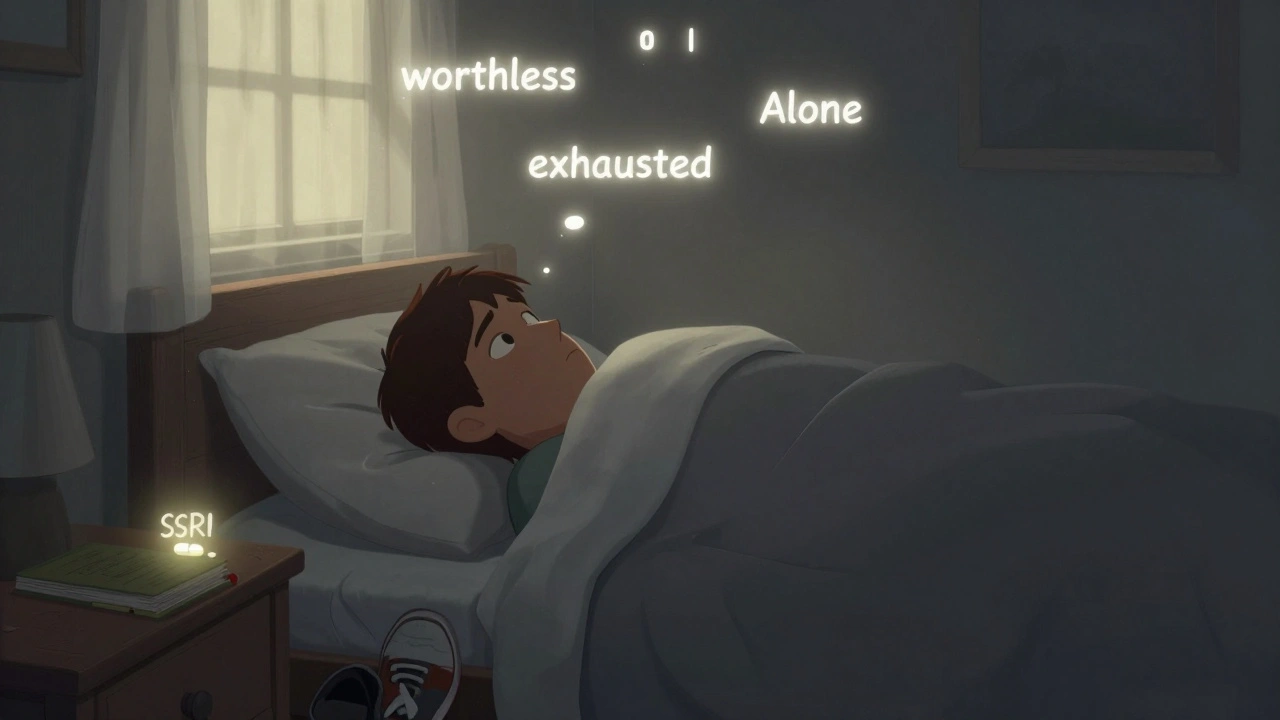
Depression isn’t just feeling sad. It’s waking up exhausted, staring at the ceiling, and not having the energy to shower. It’s canceling plans with friends, losing interest in food, and feeling numb even when good things happen. For 280 million people worldwide, this isn’t a phase-it’s a medical condition that needs real, structured care. The good news? We now know exactly what works. Medications, therapy, and lifestyle changes aren’t just options-they’re the backbone of effective treatment. And the best part? You don’t have to do all three at once. You start where you’re ready.
Medications: Not a Quick Fix, But a Tool
When doctors talk about antidepressants, they mean second-generation drugs like SSRIs-sertraline, citalopram, fluoxetine. These aren’t magic pills. They don’t make you happy overnight. What they do is help your brain regain balance, slowly, over weeks. Many people expect to feel better after a few days. That’s not how it works. It takes 4 to 8 weeks to see real changes. And if you don’t feel anything after 8 weeks, it’s not failure-it’s data. Time to adjust.
Why SSRIs first? Because they’re safer than older drugs. Tricyclic antidepressants can be dangerous in overdose. SSRIs? Much lower risk. But they come with trade-offs. About 30 to 50% of people on SSRIs report sexual side effects-lower libido, delayed orgasm. That’s not rare. It’s expected. If that’s a dealbreaker, bupropion might be a better fit. It doesn’t usually affect sex drive, but it carries a small seizure risk-0.4% at normal doses. Not high, but real.
For moderate to severe depression, guidelines from NICE and the American College of Physicians agree: start with either an SSRI or therapy. Not both. Not neither. One. Choose based on what fits your life. If you’re already in therapy, add medication if you’re not improving. If you can’t get therapy right now, medication can buy you time.
What if nothing works after two tries? That’s treatment-resistant depression. It’s not rare. About 30% of people reach this point. Then it’s time for augmentation-adding lithium, thyroid hormone, or even low-dose quetiapine. Or consider ECT. Yes, electroconvulsive therapy. It sounds scary, but for severe, unresponsive depression, it’s the most effective option we have. Remission rates? 70 to 90%. Memory issues? Yes, temporary ones. But for someone who can’t get out of bed, that trade-off makes sense.
Therapy: Talking Changes Your Brain
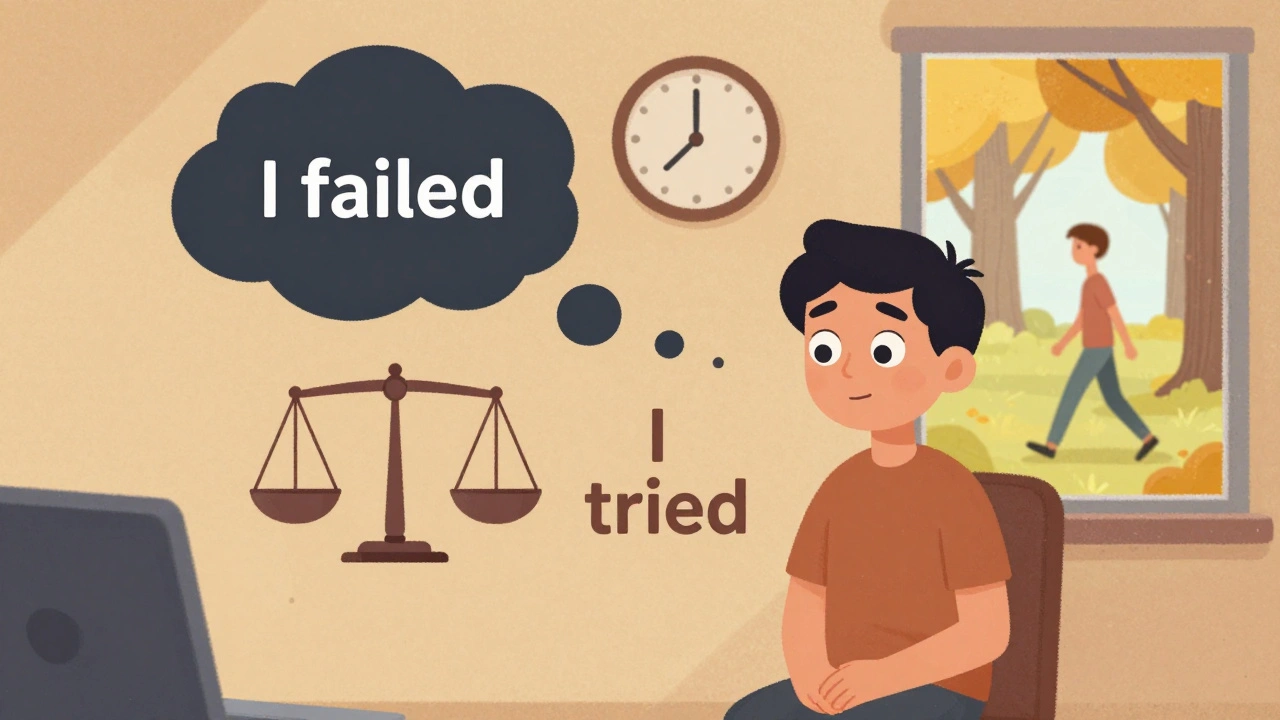
Therapy isn’t just venting. It’s training. Cognitive behavioral therapy, or CBT, is the gold standard. It teaches you to spot distorted thoughts-like “I’m worthless because I missed a deadline”-and replace them with more realistic ones. Studies show CBT alone helps 50 to 60% of people with mild to moderate depression. That’s as good as medication. And the effects last longer after treatment ends.
Interpersonal therapy (IPT) focuses on relationships. If your depression started after a breakup, job loss, or family conflict, IPT can help. It’s structured: 12 to 16 weekly sessions. No vague talk about childhood. You work on current relationships, communication patterns, and grief. A 2016 meta-analysis found it worked just as well as antidepressants for moderate depression.
For people who’ve had depression more than once, mindfulness-based cognitive therapy (MBCT) is a game-changer. It combines CBT with meditation. An 8-week group program reduces relapse risk by 31% over a year. That’s not minor. It’s life-changing. If you’ve been through this before, MBCT is one of the smartest moves you can make.
And yes, couples therapy works-if your depression is tangled up in relationship stress. NICE recommends it. Studies show 40 to 50% symptom improvement when both partners are involved, compared to 25 to 30% with individual therapy alone. Depression doesn’t live in isolation. It thrives in silence. Talking together breaks that.
Lifestyle Changes: The Forgotten Pillars
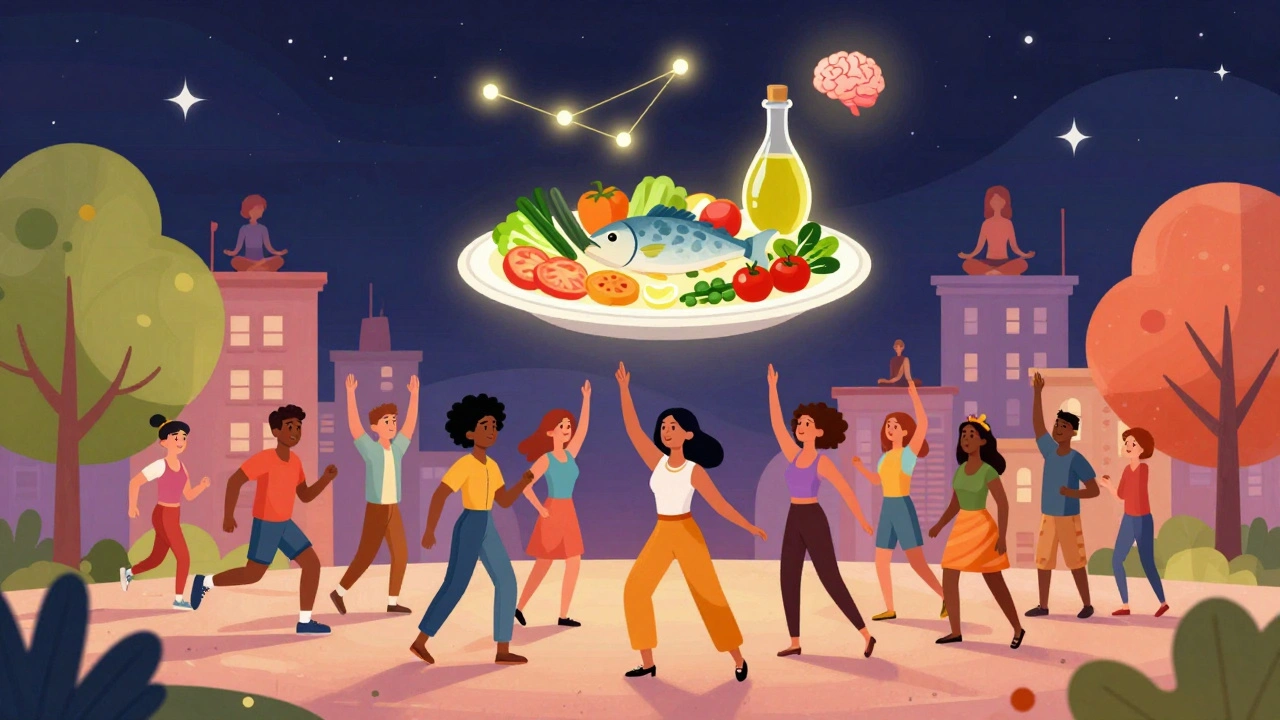
Exercise isn’t just for weight loss. Three to five sessions a week of brisk walking-30 to 45 minutes-can be as effective as medication for mild depression. A 2020 meta-analysis found it had a standardized effect size of -0.68. That’s strong. You don’t need a gym. Just move. Walk around the block. Take the stairs. Dance in your kitchen. Consistency matters more than intensity.
Sleep is non-negotiable. 75% of people with depression have trouble sleeping. But fixing sleep isn’t about taking more melatonin. It’s about structure. Go to bed and wake up at the same time, within 30 minutes, every day-even weekends. Don’t stay in bed unless you’re asleep. If you’re lying there for more than 20 minutes, get up. Read. Drink tea. Come back when you’re tired. Cut screens an hour before bed. Blue light kills melatonin. This alone can cut depression scores by 30 to 40%.
Diet matters more than most people think. The SMILES trial gave people with depression a 12-week Mediterranean diet-vegetables, fruits, whole grains, fish, olive oil, nuts. No processed food. No sugar. After 12 weeks, 32% went into remission. The control group? 8%. That’s not a fluke. Food affects inflammation, gut bacteria, and brain chemicals. You can’t eat your way out of depression, but you can eat your way toward stability.
Mindfulness, yoga, tai chi-these aren’t new age trends. They’re evidence-backed. Daily 10-minute mindfulness meditation, twice-daily progressive muscle relaxation, two to three yoga sessions a week-they all reduce symptoms with moderate effect sizes. You don’t need to meditate for an hour. Ten minutes, done regularly, rewires stress responses.
What Works Based on How Bad It Is
Depression isn’t one thing. It’s a spectrum. And treatment changes depending on where you are.
- Mild (PHQ-9 score 5-9): Don’t start with pills. Try structured exercise, guided self-help apps, or active monitoring. If you’re not improving in 4 weeks, then consider therapy or medication.
- Moderate (PHQ-9 score 10-14): Either CBT or an SSRI. Pick one. If you’re struggling at work or home, combine them. That boosts response rates to 55-60%.
- Severe (PHQ-9 score 15+): Start with both. Medication + therapy. The data is clear: combination therapy works better than either alone. Remission jumps from 40-50% to 60-70%.
- Psychotic depression (hallucinations, delusions): This is a medical emergency. Antidepressants alone won’t cut it. You need antipsychotics or ECT. ECT works in 70-80% of cases here.
- Chronic depression (lasting 2+ years): Try CBASP-a specialized form of therapy designed for long-term depression. Add medication. The 2000 Chronic Depression Study showed 48% improvement with both, versus 28% with meds alone.
There’s no one-size-fits-all. But there is a right path for you-if you’re willing to try, adjust, and persist.
Barriers and Real-World Challenges
Therapy is hard to access. In the U.S., over 6,000 areas are classified as mental health professional shortage zones. Even if you can find a therapist, waitlists are months long. That’s why digital tools are rising. FDA-cleared apps like reSET show a 47% response rate. They’re not perfect, but they’re better than nothing.
And yes, telehealth changed everything. In 2019, only 18% of therapists offered video sessions. By 2022, it was 68%. You can now see a psychiatrist from your couch. No commute. No stigma. Just connection.
Emerging treatments are on the horizon. Psilocybin-assisted therapy showed a 71% response rate in a 2021 trial. It’s not approved yet, but the data is strong. Digital phenotyping-using your phone to track speech, movement, and social activity-is already predicting depressive episodes 7 days in advance with 82% accuracy. This isn’t sci-fi. It’s happening.
But access isn’t equal. Depression rates are 50% higher in racial and ethnic minority groups in the U.S., yet they’re less likely to get treatment. This isn’t just a medical issue. It’s a systemic one. We need more culturally competent care. More community programs. More funding.
What to Do Next
Start small. Don’t try to overhaul your life tomorrow.
- Write down how you’ve been feeling for the past two weeks. Use the PHQ-9 scale if you can find it online. It’s free. It helps you track.
- Choose one thing: walk 20 minutes three times this week. Or go to bed 30 minutes earlier. Or try a 10-minute guided meditation on YouTube.
- If you’re thinking about meds, talk to your GP. Bring the NICE or ACP guidelines. Ask: “What’s the best first step for someone with my symptoms?”
- If therapy feels out of reach, try a digital CBT program like Beating the Blues or MoodGYM. They’re free in the UK through the NHS.
- Don’t give up after one try. Treatment is a process, not a single event. It’s okay to switch meds. It’s okay to change therapists. It’s okay to try exercise and come back to therapy later.
Depression doesn’t vanish because you want it to. But it can fade-slowly, steadily-if you use the tools we know work. You don’t need to be perfect. You just need to be consistent. And you’re not alone in this.
Can I manage depression without medication?
Yes, for mild to moderate depression, therapy and lifestyle changes can be just as effective as medication. CBT, exercise, sleep hygiene, and diet improvements have strong evidence backing them. But for severe depression, especially with suicidal thoughts or psychosis, medication is usually necessary. The goal isn’t to avoid meds at all costs-it’s to use the right tools for your level of illness.
How long does it take for antidepressants to work?
Most people start noticing small changes after 2 to 4 weeks, but full effects usually take 6 to 8 weeks. If you don’t feel better after 8 weeks at the right dose, it’s not you-it’s the medication. Talk to your doctor about switching or adjusting. Stopping early because it “didn’t work” is the most common reason people don’t get better.
Is therapy worth it if I can’t afford it?
Yes. Many countries, including the UK, offer free or low-cost CBT through public health services like the NHS. Online programs like MoodGYM and Beating the Blues are evidence-based and free. Community centers, universities, and nonprofits often run low-cost group therapy. You don’t need a private therapist to benefit. What matters is consistency, not cost.
Can exercise really replace antidepressants?
For mild depression, yes-studies show regular exercise can be as effective as SSRIs. But it’s not a replacement for severe depression. Exercise boosts mood through endorphins and reduces inflammation, but it doesn’t fix chemical imbalances alone. Think of it as a powerful support tool, not a cure-all. Combine it with therapy or meds if your symptoms are moderate to severe.
What if I’ve tried everything and still feel depressed?
You’re not alone. About 30% of people have treatment-resistant depression. That doesn’t mean hopeless. It means it’s time for advanced options: adding lithium or quetiapine, trying rTMS (a non-invasive brain stimulation), or considering ECT. The STAR*D trial showed 67% of people eventually reached remission after trying multiple steps. Keep going. Your next treatment might be the one that finally clicks.
Are natural remedies like St. John’s Wort helpful?
St. John’s Wort may help mild depression, but it’s risky. It interacts with birth control, blood thinners, HIV meds, and many antidepressants. It can cause dangerous spikes in serotonin. The NHS and FDA don’t recommend it because the risks outweigh the benefits. Stick to evidence-based options. Herbal supplements aren’t regulated like drugs. What’s on the label isn’t always what’s inside.
Final Thought
Depression isn’t a weakness. It’s a brain condition. And like any other chronic illness-diabetes, asthma, hypertension-it responds best to a mix of tools. Medication for the biology. Therapy for the thoughts. Lifestyle for the body. You don’t have to fix everything at once. Just start. One step. One day. One breath. That’s how recovery happens.
Oh wow, another 'just exercise and eat kale' miracle cure for depression. Because clearly, if you're not bouncing back from suicidal thoughts with a 20-minute walk and a smoothie, you're just not trying hard enough. 🙄
I cried reading this. I’ve been on 4 different SSRIs and finally tried MBCT last year. It didn’t fix me… but it gave me back the ability to breathe without feeling like my chest was made of concrete. 🫂
The pharmacokinetic profile of SSRIs demonstrates a delayed onset of therapeutic effect due to neuroadaptive changes in serotonergic neurotransmission, particularly downregulation of 5-HT1A autoreceptors. The 4-8 week latency is not a flaw-it’s a neurobiological imperative. Furthermore, the assertion that bupropion mitigates sexual dysfunction is empirically supported, though the seizure threshold risk necessitates careful dosing in patients with predisposing factors such as eating disorders or prior head trauma.
Regarding augmentation strategies, the NICE guidelines are underutilized in primary care. Lithium augmentation for TRD has a number needed to treat (NNT) of 4.3 for response, superior to most atypical antipsychotics. And yes-ECT remains the most robust intervention for treatment-refractory cases, with remission rates exceeding 70% in meta-analyses. The stigma persists because laypeople conflate it with 1950s electroshock. Modern ECT is administered under general anesthesia with muscle relaxants. It’s not barbaric. It’s bioengineering.
I mean… if you’re not doing CBT, meditation, and a keto diet while journaling in a Himalayan salt cave, are you even trying? Honestly, people who say they 'tried everything' just haven’t tried the right things. I read a study once-on the internet-where a guy cured his depression by standing on his head for 20 minutes a day. You’re welcome.
There’s something deeply human about the way we reduce suffering to a checklist. 'Do this, then that, then you’ll be fixed.' But depression doesn’t obey protocols. It doesn’t care if you exercised three times this week or took your pill. It lives in the silence between your thoughts, in the way you forget how to laugh even when you’re alone.
Maybe the real treatment isn’t in the guidelines or the studies-it’s in the quiet moments when someone says, 'I’m here,' without trying to fix you. I’ve tried every tool listed. Some helped. Most didn’t. But I’m still here. And that, maybe, is the only thing that ever really mattered.
bro i tried cbt and it was like talking to a robot who keeps saying 'reframe your thoughts' but my brain was like... bro i just wanna sleep for 3 days 😭 but then i started walking every day and it actually helped. not magic, just... less heavy.
Let me guess-you’re one of those people who thinks ECT is 'barbaric' because you watched it in a 70s movie. Meanwhile, your cousin’s brother’s roommate’s therapist is using psilocybin in a 'healing circle' and calling it 'spiritual'. The science is here. The stigma is outdated. But the real enemy? The wellness industrial complex selling you $400 'depression-curing' crystals. Wake up.
One step. One day. One breath. You got this.
I’ve been on sertraline for 6 months. The sex stuff sucked at first… but then I switched to bupropion and my libido came back. I started doing yoga 3x/week and honestly? I feel like I’m learning how to live again. Not perfect. Not cured. But not drowning either. 🙏