
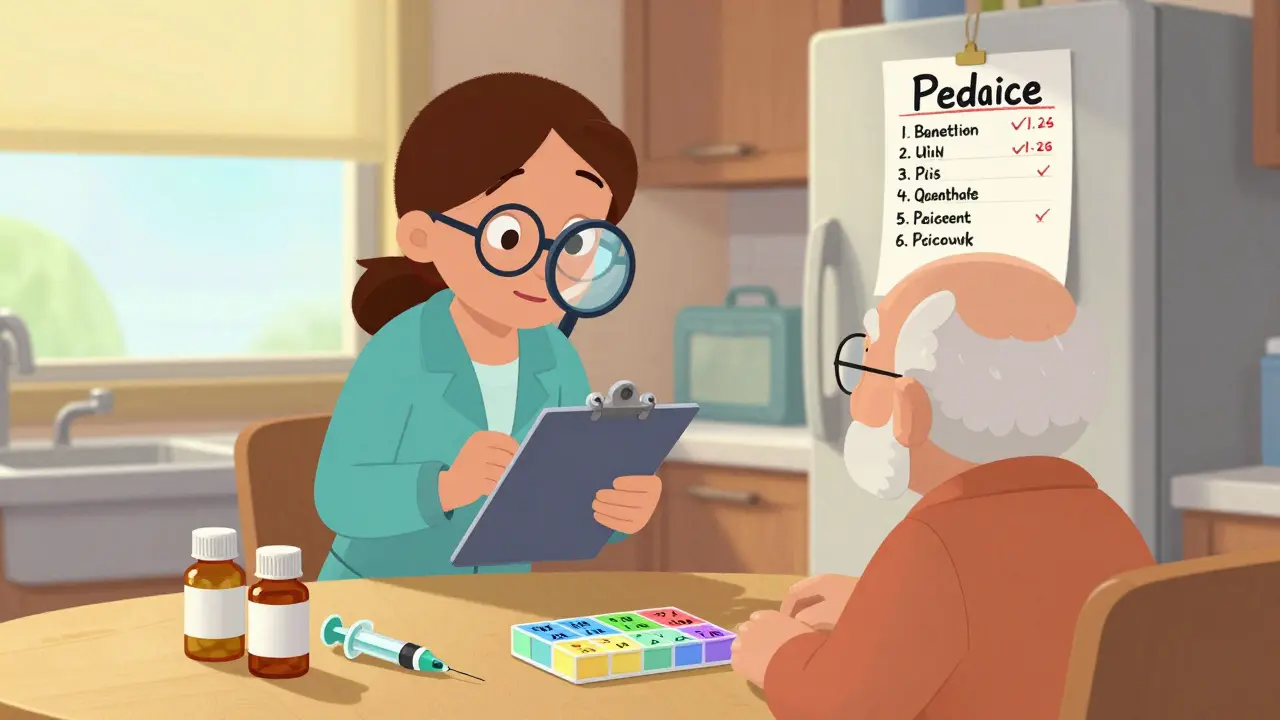
Every year, medication safety mistakes send over 1.5 million people in the U.S. to the hospital - and most of those errors happen at home, not in clinics. If you’re caring for an aging parent, a child with special needs, or someone with chronic illness, you’re likely managing multiple pills, liquids, patches, and injections. One wrong dose, one missed refill, one misunderstood instruction - and the consequences can be life-altering. But this isn’t about fear. It’s about control. With the right system, you can cut your risk of errors by more than half.
Start with a Complete Medication List
You can’t manage what you can’t see. Most caregivers start with a mental list - “Mom takes her blood pressure pill in the morning.” That’s not enough. A 2021 study in Mayo Clinic Proceedings found that caregivers who kept a written, updated medication list reduced errors by 52%. This isn’t just a note on a fridge. It needs details:- Brand name AND generic name (e.g., Lipitor vs. atorvastatin)
- Exact dosage (e.g., 10 mg tablet, not “one pill”)
- Time of day (e.g., “8:00 AM with breakfast,” “10:00 PM with water”)
- Purpose (e.g., “for cholesterol,” “for sleep,” “for pain”)
- Side effects you’ve noticed (e.g., “dizzy after lunch,” “constipated since last week”)
- Expiration dates
Know the High-Risk Medications
Not all pills are equal. Some are fine for a 40-year-old but risky for someone over 65. The Beers Criteria, updated annually by the American Geriatrics Society, lists 30 medications that should be avoided or used with extreme caution in older adults. Two of the most common culprits:- Benzodiazepines (like diazepam or lorazepam): These are often prescribed for anxiety or sleep, but they increase fall risk by 40% and can cause confusion or memory loss. Many seniors take them long after they’re needed.
- Proton pump inhibitors (like omeprazole): Used for heartburn, but taking them for more than a year raises the risk of bone fractures, kidney damage, and vitamin B12 deficiency.
Use the Right Tools - No Household Spoons
Measuring liquid medicine with a kitchen spoon is one of the most common mistakes. A 2021 JAMA Pediatrics study showed household spoons vary by 20-40% in volume. That’s not a small error - it’s dangerous. For children or elderly adults, always use:- An oral syringe (available free at most pharmacies)
- A dosing cup marked in milliliters (mL)
- A medicine dropper with clear markings
Watch for Look-Alike, Sound-Alike Drugs
HydroXYZINE (for anxiety) vs. hydroCORTISONE (for skin rashes). GlipizIDE (for diabetes) vs. glimepirIDE. These names look and sound almost identical - and mixing them up can be deadly. According to the Institute for Safe Medication Practices, these errors cause 15% of reported medication mistakes. To prevent this:- Always read the label before giving any pill - don’t rely on bottle shape or color.
- Ask your pharmacist to print the purpose on the label: “For high blood pressure” instead of just “5 mg.”
- Use a highlighter to mark the drug name and purpose on your medication list.

Coordinate With Your Pharmacist
Pharmacists are medication experts - not just pill dispensers. Yet most caregivers never ask for help. A 2022 study by the American Pharmacists Association found that in 35% of pharmacy visits where caregivers asked specific questions, the pharmacist found a problem: duplicate prescriptions, dangerous interactions, or expired meds. Schedule a medication therapy management (MTM) review. This is a free service offered by most pharmacies under Medicare Part D if the person takes eight or more medications. It takes 30-45 minutes. The pharmacist reviews every pill, checks for interactions, and gives you a written summary. One caregiver in Manchester told me: “I thought my mom’s fatigue was from aging. The pharmacist spotted three drugs that were making her sleepy - we stopped two, and she had more energy in a week.”Sync Your Refills
Juggling 5-10 different refill dates is a recipe for missed doses. CVS and Walgreens now offer free medication synchronization programs. You pick one day a week - say, Thursday - and all your prescriptions are ready then. No more scrambling to get a refill the day before a vacation. A University of Pittsburgh study in October 2023 found this reduced missed doses by 39%. Ask your pharmacist: “Can you sync all my prescriptions to one day?” If they say no, ask for a manager. This service is standard now.Check Expiration Dates - Every Week
The FDA says 90% of caregivers don’t regularly check expiration dates. Old pills lose potency. Some become toxic. Liquid antibiotics, insulin, and eye drops are especially risky after expiration. Set a weekly 10-minute reminder on your phone: “Check meds.” Look at every bottle. Toss anything expired. If you’re unsure, bring it to the pharmacy. They’ll dispose of it safely.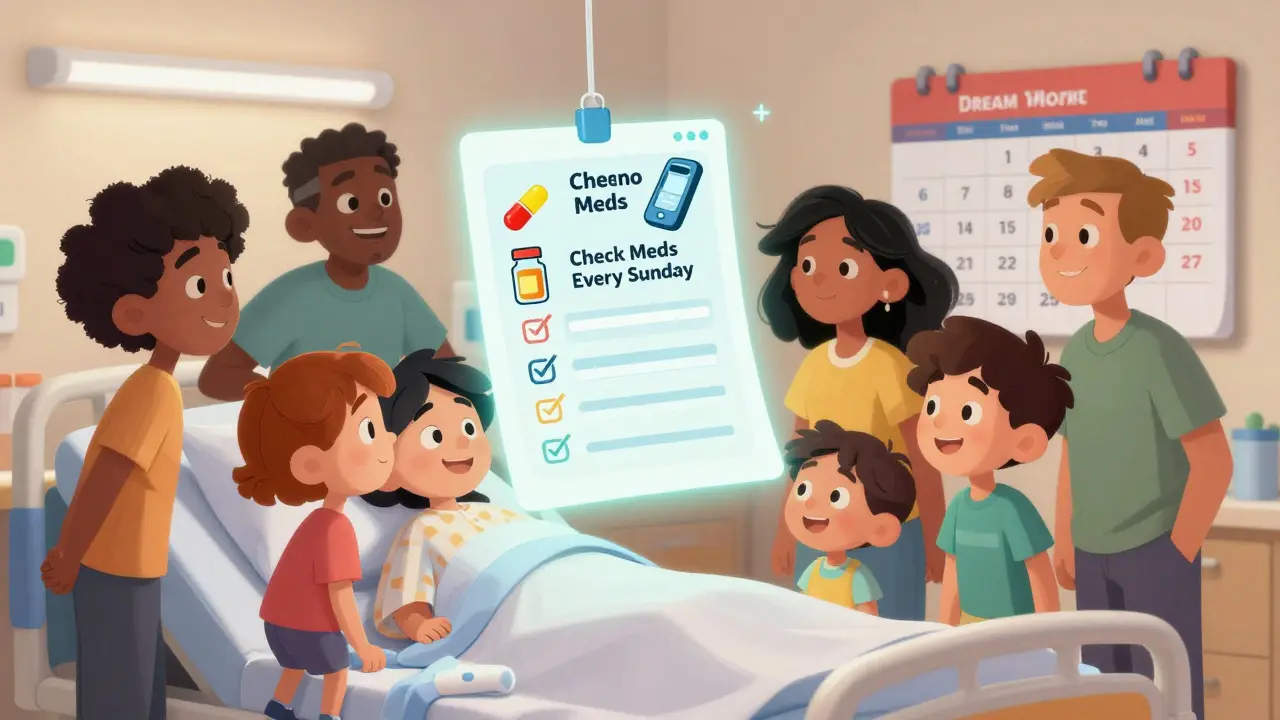
Prepare for Transitions
The biggest spike in errors happens when someone leaves the hospital. A 2022 study in the Journal of the American Medical Association found that 30% of hospital readmissions within 30 days are due to medication mistakes after discharge. The CARE Act - now law in 47 states - requires hospitals to give caregivers a clear handoff before discharge. But you can’t wait for them to do it right. Take these steps:- Before discharge, ask: “What changed? What was stopped? What’s new?”
- Get a written list of all medications - not just a verbal summary.
- Take the discharge papers to your pharmacist for a review.
- Call the doctor’s office if anything doesn’t make sense.
Use Technology - But Only If It Helps
Apps like Medisafe and CareZone send reminders, track doses, and alert you to interactions. A 2023 Caregiver Action Network survey found users reported 32% fewer missed doses. But if you’re over 65 or not tech-savvy, forcing an app can backfire. Twenty-seven percent of older caregivers in a National Institute on Aging focus group said apps made them more stressed. Use tech if it fits. If not, stick to paper lists, alarms on your phone, or pill organizers with built-in timers. Simpler is better.What to Do If You Suspect an Error
If your loved one seems confused, dizzy, unusually sleepy, or has a rash after a new medication:- Stop giving the medication.
- Call the pharmacist immediately - they’re trained to handle this.
- Don’t wait for the doctor’s office to open. Pharmacies are open evenings and weekends.
- Take the pill bottle with you to the ER if symptoms are severe.
Final Tip: Make This a Routine, Not a Chore
Medication safety isn’t a one-time task. It’s a daily habit. Block out 15 minutes every Sunday to:- Check expiration dates
- Refill prescriptions
- Update your medication list
- Call the pharmacy to sync refills
What’s the most common medication error caregivers make?
The most common error is giving the wrong dose - especially with liquid medicines using household spoons. A 2021 study found household spoons vary by 20-40% in volume. Always use an oral syringe or dosing cup marked in milliliters.
How often should I review my loved one’s medications?
Every six months, schedule a medication therapy management (MTM) review with a pharmacist. This free service catches dangerous interactions, duplicate prescriptions, and unnecessary drugs. Also review the list every time there’s a doctor’s visit or hospital discharge.
Can I just stop a medication if it seems to be causing side effects?
Never stop a prescription medication without talking to a doctor or pharmacist first. Some drugs, like blood pressure or seizure meds, can cause serious withdrawal effects. But if you notice new symptoms - dizziness, rash, confusion - stop giving it immediately and call the pharmacist. They can tell you if it’s safe to pause and what to do next.
Are pill organizers worth it for someone with dementia?
Yes - and they’re often essential. The Alzheimer’s Association recommends seven-day pill organizers with AM/PM compartments. Studies show caregivers using them report 63% better adherence. Look for ones with alarms or that lock to prevent overuse.
What should I do if my loved one takes over-the-counter meds or supplements?
Include every OTC pill, vitamin, or herbal supplement on your medication list. Many people don’t realize these can interact with prescriptions. For example, St. John’s Wort can make blood thinners or antidepressants ineffective. Even a daily aspirin or calcium supplement needs to be documented.
Is it safe to keep all medications in one place?
No. Store medications in a cool, dry place away from heat and moisture - not the bathroom. Keep them out of reach of children and pets. Some drugs, like insulin or liquid antibiotics, need refrigeration. Check labels. Never store pills in unmarked containers - always use original bottles with labels.
How do I know if a medication is no longer needed?
Ask your pharmacist or doctor during a medication review. Many older adults take drugs prescribed years ago for conditions that have changed. For example, a painkiller for an old injury or a sleep aid for temporary stress. The Beers Criteria identifies 30 medications that are often unnecessary or risky for seniors. Don’t assume they’re still helping.

My mom’s meds used to be a nightmare until I started using the pill organizer with alarms. She’s got dementia, and now she takes everything on time without me yelling at her every morning. Also, I print out the list and keep it in my purse - pharmacist at CVS noticed a duplicate prescription last month. Saved us a hospital trip.
Don’t underestimate the power of a simple system. It’s not glamorous, but it works.
This is one of the most comprehensive guides I’ve ever read on caregiver medication safety. As someone managing my father’s polypharmacy from across the world, I appreciate how you’ve broken down each risk with evidence-based solutions. The Beers Criteria reference alone is worth bookmarking.
I’ve started sharing this with my local caregiver support group in Bangalore. Many of us are flying blind - this changes that.
Ugh. So many people just wing it. I’ve seen grandmas using soup spoons for insulin. 😒
It’s not rocket science. If you can’t measure 5 mL correctly, you shouldn’t be in charge of meds. And yes - I’m talking to YOU, the one who thinks ‘a little bit’ is fine for blood pressure pills. Stop killing your loved ones with negligence.
Also - if you don’t check expiration dates, you’re basically playing Russian roulette with a bottle of lisinopril. 🤦♀️
While the foundational principles outlined herein are empirically sound, the operational implementation remains contingent upon adherence to standardized pharmacovigilance protocols. Notably, the integration of medication reconciliation workflows - as codified by the Joint Commission - significantly mitigates polypharmacy-related adverse drug events.
Moreover, the utilization of automated dispensing systems, coupled with electronic health record interoperability, reduces human error by an order of magnitude. The reliance on paper lists, while pragmatic, is an antiquated workaround that fails to scale within complex care ecosystems.
OMG YES. I just found out my aunt was taking melatonin AND benadryl every night for sleep - both are benzos in disguise for seniors 😳
We stopped it, she’s been way more alert, and now she’s actually remembering our birthdays again. 🥹
Also - pill organizers with alarms are LIFE. I got one with a lock because my uncle tried to take his whole week’s dose at once. Twice. 😅
Syncing refills was the single biggest game-changer for my family. We used to have chaos every third Thursday - someone missing a dose, someone over-dosing, someone panicking because they didn’t know what was supposed to be taken when.
Now, every Thursday at 3 PM, everything’s ready. No calls to the pharmacy. No last-minute runs. Just calm. I wish I’d done this three years ago.
bro this is so true. my dad was takin lisinopril and ibuprofen together and i didnt even know that was bad till i read this. now he only takes the blood pressure one. he says he feels less bloated too.
also i use the app now. even tho i hate tech, it reminds me. lol
Wow. A 1500-word essay on how to read a pill bottle. Groundbreaking. I’m sure the FDA will be issuing a press release any minute now.
Also, I’m sure everyone reading this wasn’t already doing all this. Let’s all pat ourselves on the back for not being complete idiots.
Finally, someone who gets it. America’s healthcare system is a joke - but at least we still have people who care enough to read labels. In other countries, they just hand out pills like candy. I’m glad we’re not that broken.
Also, if you’re using a kitchen spoon? You’re not a caregiver. You’re a liability.