

AUD Medication Selector
This tool helps identify which FDA-approved medication for Alcohol Use Disorder (AUD) may be most appropriate for your situation. Remember: medication works best when combined with counseling and support.
Your Situation
Important: This tool provides general guidance only. Always consult with a medical professional who can assess your individual health needs.
When someone is trying to quit drinking, the right medication can make all the difference. But for many, the path to recovery isn’t just about willpower-it’s about understanding how these drugs work, what they don’t do, and why skipping them-or mixing them with alcohol-can send someone right back to drinking.
How AUD Medications Actually Work
There are three FDA-approved medications for Alcohol Use Disorder (AUD): naltrexone, acamprosate, and disulfiram. Each works differently, and none is a cure. They’re tools-meant to be used alongside therapy, support groups, and lifestyle changes.Naltrexone blocks the brain’s opioid receptors. When you drink alcohol, it normally triggers a release of dopamine-the feeling of reward. Naltrexone dulls that rush. That doesn’t mean you won’t feel any pleasure from drinking, but it reduces the urge to keep going. It’s especially helpful for people who tend to binge drink. A daily 50 mg pill works for many, but there’s also a monthly injection (Vivitrol) for those who struggle with daily adherence.
Acamprosate doesn’t touch cravings. Instead, it helps stabilize brain chemistry after someone stops drinking. Alcohol disrupts the balance of GABA and glutamate-two key neurotransmitters. When you quit, your brain is thrown off-kilter, leading to anxiety, insomnia, and restlessness. Acamprosate helps bring that back into alignment. But it only works if you’ve already stopped drinking. You can’t start it while still drinking. Most people need to be alcohol-free for at least 3-5 days before beginning.
Disulfiram is the oldest of the three, approved in 1951. It works by making your body react badly to alcohol. If you drink while taking it, you get severe flushing, nausea, vomiting, and even a drop in blood pressure. It’s a deterrent-like putting a warning sign on your brain. But it only works if you take it consistently. And if you miss a dose? The risk is still there for days afterward, because disulfiram stays in your system for up to five days.
Why People Still Relapse-Even With Medication
You might think taking one of these pills means you’re protected. But the truth is, many people still relapse. Why?First, these medications don’t eliminate cravings. They reduce them. If you’re under stress, lonely, or triggered by a place or person, the urge can still hit hard. Naltrexone might stop you from drinking five beers, but it won’t stop you from having one. And one can be enough to restart the cycle.
Second, side effects matter. About 1 in 10 people on acamprosate quit because of diarrhea or nausea. Naltrexone can cause dizziness or nausea, especially early on. Disulfiram? People stop taking it because of the metallic taste, drowsiness, or just the fear of accidentally drinking something with alcohol-like mouthwash, cough syrup, or even certain foods.
Third, timing is everything. If you start naltrexone too soon after using opioids (even prescription painkillers), you can go into sudden withdrawal. If you start acamprosate before you’ve fully detoxed, it won’t work. And if you skip doses? The protection fades.
Real-world data shows only 35% of people stay on their AUD medication past three months. Cost is a big reason-acamprosate and naltrexone can run $200-$400 a month, even with generics. Disulfiram is cheap, but it’s hard to tolerate. And without regular check-ins with a doctor, people often just stop.
The Big Misconception: Medication = Cure
Many believe that once you start taking one of these drugs, you’re “cured.” That’s not true. These medications don’t fix the underlying reasons you drink-trauma, anxiety, boredom, social pressure. They just take the edge off the physical urge.That’s why combining medication with therapy works best. The COMBINE study, one of the largest AUD trials ever done, found that people who got naltrexone or acamprosate plus counseling had better outcomes than those who got meds alone. Counseling helps you build new habits, recognize triggers, and develop coping skills. Medication just makes it easier to stick with them.
And here’s something most don’t realize: taking these drugs while still drinking doesn’t make them more effective. In fact, it can be dangerous. Drinking while on disulfiram can land you in the ER. Drinking while on naltrexone might make you feel sick, but it won’t stop you from drinking again-it might just make you feel guilty afterward, which can deepen the cycle.
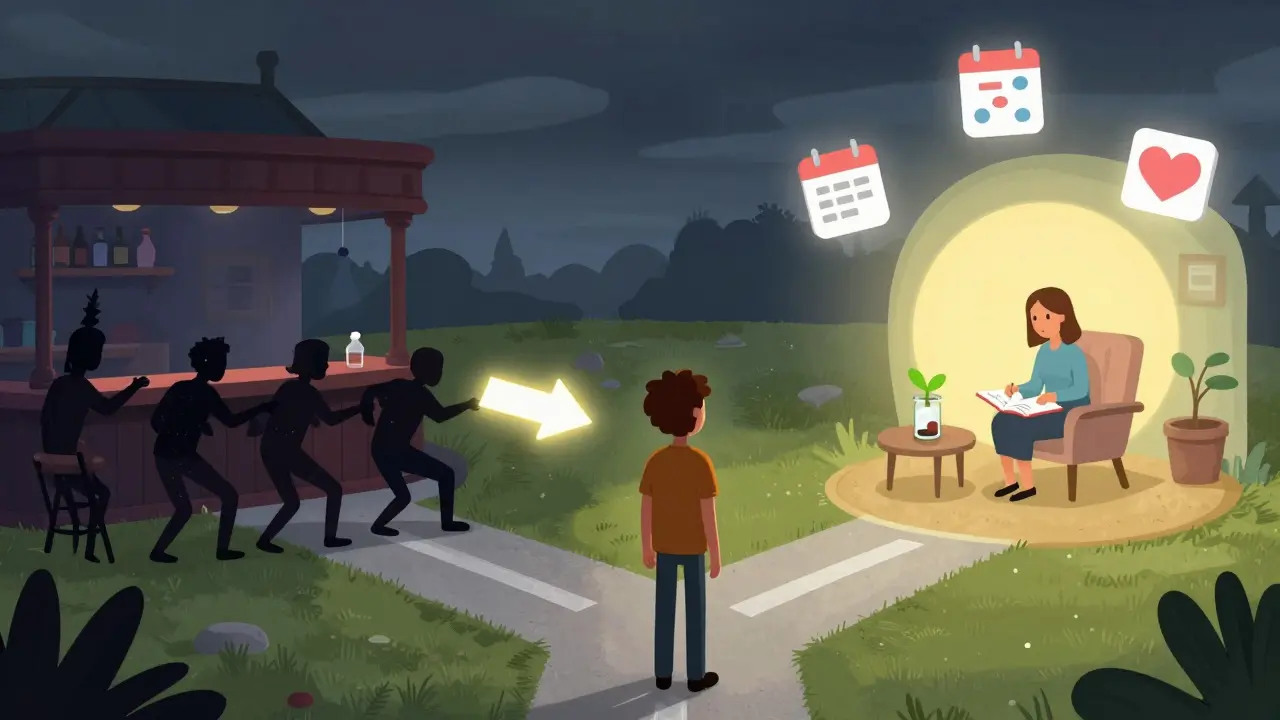
Who Gets the Best Results?
Not everyone responds the same way. The key is matching the right drug to the right person.If you’re trying to stop drinking completely-no exceptions-acamprosate might be your best bet. It’s designed for long-term abstinence. Studies show it helps people stay dry longer.
If you’re someone who drinks heavily on weekends or at parties but doesn’t drink every day, naltrexone is often more effective. It reduces the number of heavy drinking days, even if you don’t quit entirely.
And if you’ve had severe withdrawal symptoms in the past-seizures, hallucinations, delirium tremens-gabapentin is becoming a go-to alternative. It’s not FDA-approved for AUD, but research shows it’s especially helpful for people with a history of withdrawal. One 2020 trial found 45% of patients with high withdrawal symptoms stayed abstinent on gabapentin, compared to just 28% on placebo.
Even liver disease doesn’t rule out treatment. Gabapentin is cleared by the kidneys, not the liver, so it’s safer for people with cirrhosis. In fact, studies show patients with liver damage on gabapentin were 37% less likely to have their condition worsen.
What About Combining Medications?
You might think taking two drugs at once would double your chances. But the science says otherwise.The COMBINE study tested naltrexone and acamprosate together. The result? No added benefit. Taking both didn’t improve outcomes over taking either one alone.
But another study found that combining acamprosate and naltrexone did reduce relapse compared to placebo-or even acamprosate alone. So why the contradiction? It comes down to patient selection. In that study, participants had more severe AUD and were more motivated. Context matters.
Bottom line: Don’t assume more drugs = better results. Stick with one unless your doctor has a clear reason to add another. And never combine medications without supervision.

The Hidden Barriers to Success
Even if you have the right medication, barriers still stand in the way.One big one? Doctors don’t prescribe these drugs often. Only 28% of primary care physicians feel confident prescribing AUD medications. Most patients never hear about them from their GP. They’re stuck in the belief that recovery is only about meetings and willpower.
Another? Stigma. People feel ashamed to say they’re on a “drug” for alcoholism. They think it’s replacing one addiction with another. But naltrexone isn’t addictive. Acamprosate doesn’t cause dependence. Disulfiram isn’t a high. They’re just tools-like insulin for diabetes.
And then there’s access. In the UK, these drugs are available on the NHS, but wait times for addiction services can be months. Many people give up before they even get started.
What’s New in 2025?
The field is evolving fast. In 2022, the FDA approved a new, compacted form of acamprosate that cuts the daily dose from six pills to two. That’s a game-changer for adherence.Researchers are now testing 6-month naltrexone implants-tiny rods placed under the skin that slowly release the drug. Early trials show 78% adherence, compared to just 42% with monthly shots.
There’s also digital help. Apps that track cravings, send reminders to take medication, and connect users to peer support are cutting relapse risk by 33%. Combine that with medication, and the results are powerful.
And for the future? Scientists are using brain scans and genetic tests to predict who will respond to which drug. One study found that people with certain patterns in their frontal brain tissue were 68% more likely to benefit from acamprosate. Precision medicine is coming to AUD.
What Should You Do?
If you’re struggling with alcohol and thinking about medication:- Don’t wait until you’re “ready.” Medication can help you get ready.
- Ask your doctor about naltrexone or acamprosate first. They’re safer and better studied than disulfiram.
- If you’ve had withdrawal symptoms before, ask about gabapentin-even if it’s off-label.
- Don’t stop the medication because you feel fine. The goal is long-term stability, not just short-term abstinence.
- Pair medication with counseling. Even six sessions can make a difference.
- If cost is an issue, ask about generic options or patient assistance programs.
Recovery isn’t linear. Relapse isn’t failure. But if you’re not using the tools available, you’re making it harder than it needs to be.
Can I drink alcohol while taking naltrexone or acamprosate?
Yes, you can drink while on naltrexone or acamprosate, but it’s not recommended. Naltrexone reduces the pleasurable effects of alcohol, so drinking may feel less rewarding-but it won’t stop you from drinking. Acamprosate doesn’t react with alcohol, but it only works if you’ve stopped drinking entirely. Drinking while on either medication won’t cause dangerous side effects, but it reduces their effectiveness and increases relapse risk.
Is disulfiram safe for people with liver problems?
No, disulfiram is not safe for people with significant liver disease. It’s processed by the liver and can cause severe liver damage, especially with long-term use. Baseline and monthly liver function tests are required for anyone taking disulfiram. If you have cirrhosis or hepatitis, your doctor should avoid prescribing it and consider alternatives like gabapentin or naltrexone.
Why do some people relapse even when taking medication?
Medications reduce cravings and heavy drinking, but they don’t eliminate triggers like stress, social pressure, or emotional pain. Relapse often happens when people stop taking the medication, skip therapy, or don’t build new coping skills. Medication supports recovery-it doesn’t replace it. Adherence is key: only 35% of people stay on their AUD meds past three months.
How long should I take AUD medication?
Most guidelines recommend 6-12 months, but AUD is often a chronic condition. Many people benefit from longer-term use-sometimes years. Stopping too soon increases relapse risk. If you’ve been sober for over a year and feel stable, talk to your doctor about tapering. But don’t stop on your own.
Are these medications addictive?
No. Naltrexone, acamprosate, and disulfiram are not addictive. They don’t produce euphoria or physical dependence. Unlike benzodiazepines or opioids, you won’t need to increase the dose over time, and stopping them doesn’t cause withdrawal. They’re designed to support recovery, not replace one addiction with another.
Can I take these medications if I’m on other prescriptions?
It depends. Naltrexone can interact with opioid painkillers-don’t take it if you’re on them. Acamprosate is generally safe but needs dose adjustments if you have kidney issues. Disulfiram can interact with antidepressants, blood thinners, and some antibiotics. Always tell your doctor about every medication, supplement, or over-the-counter drug you take before starting any AUD treatment.
So basically we’re just swapping one chemical crutch for another and calling it recovery? My cousin did this and ended up on three meds and still drank on weekends. Just say no and get over it.
Interesting breakdown, but I’m curious about the neuropharmacokinetics of acamprosate’s GABA-glutamate modulation-especially in the context of prefrontal cortex dysregulation in chronic AUD. Also, has anyone looked at serum BDNF levels as a biomarker for treatment response? 🤔
This is so important. So many people think meds are a magic bullet. They’re not. They’re a bridge. And bridges need maintenance. You still gotta do the work. You still gotta show up for yourself.
Let’s be real-recovery isn’t about pills. It’s about showing up for your damn self. I’ve seen guys on naltrexone still drinking at parties like it’s a game. The real cure? Accountability. Community. Purpose. The meds? Just a sidekick.
Also, if you’re using mouthwash with alcohol and then panicking? Maybe don’t use mouthwash with alcohol. 🤷♂️
There’s a quiet tragedy in how we treat addiction-as if it’s a moral failure instead of a neurological condition. We prescribe insulin for diabetes without shame. Why do we whisper about naltrexone? We’re not fixing character. We’re fixing chemistry. And that’s okay. It’s not weakness-it’s wisdom.
Maybe the real question isn’t ‘Why do people relapse?’ but ‘Why don’t we treat this like we treat heart disease?’
One pill doesn’t fix trauma. But one pill might give you the space to finally face it.
And that’s worth more than we admit.
My sister started on gabapentin after her third detox. She said it was the first time she didn’t feel like her brain was screaming. She’s been sober 14 months now. 🥹
Doctors need to stop acting like these meds are ‘last resort.’ They’re first-line tools. We just need to stop being scared of them.
Man i been on naltrexone for 8 months now and it really helped me cut down from 5 beers a night to 1 or 2 on weekends. Not perfect but way better. The key? Taking it every day. Even when i dont feel like it. Also got a reminder app. Life saver.
Just wanted to say thank you for writing this. I’ve been scared to talk about my meds because people think I’m ‘replacing one addiction with another.’ But honestly? I feel like I finally have a fighting chance. No shame in needing help.
And if you’re reading this and struggling? You’re not broken. You’re just human. Keep going.
Why are we medicating away responsibility? In my day, you quit drinking because you were tired of being a mess-not because you got a prescription. This is weak. Culture is collapsing.
My uncle died of liver failure after 30 years of drinking. He refused meds. Said they were ‘American weakness.’ He was proud. He was wrong.