
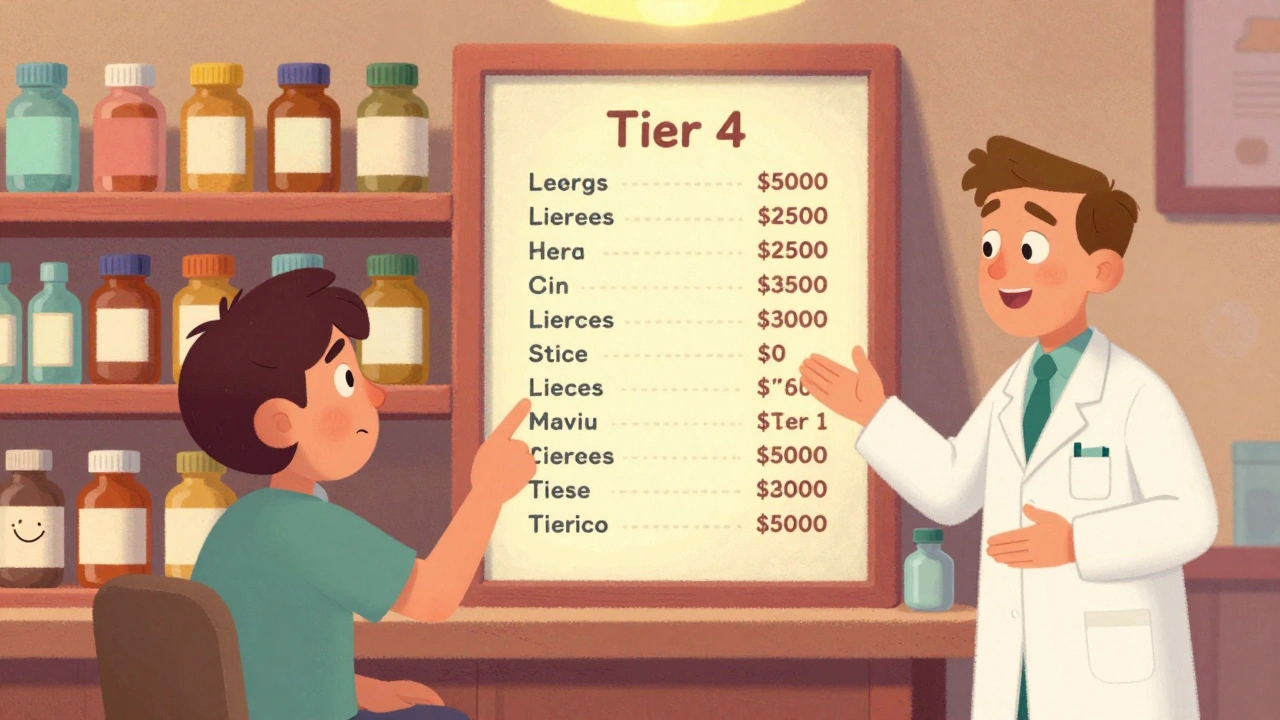
A drug formulary is a list of prescription medications that your health insurance plan agrees to cover. It’s not just a catalog-it’s a decision-making tool that determines which drugs you can get at a low cost, which ones will cost you more, and which ones might not be covered at all. If you’ve ever been surprised by a high pharmacy bill or told your doctor you can’t fill a prescription because it’s "not on the list," you’ve run into the real-world impact of a formulary.
How a Drug Formulary Works
Think of a formulary like a menu at a restaurant. Not every dish is available, and some are priced lower because they’re more common or cheaper to make. Health plans use formularies to balance two things: keeping your out-of-pocket costs down, and making sure you get medications that actually work. The list is created and updated by a team of doctors, pharmacists, and health experts called a Pharmacy and Therapeutics (P&T) committee. They look at clinical data, safety records, and cost-effectiveness before deciding which drugs to include.Almost every health plan in the U.S. uses a formulary-whether you’re on Medicare, Medicaid, or a private plan from your employer. By 2023, over 95% of Americans with prescription coverage were affected by one. These lists are updated regularly, sometimes even mid-year, so what’s covered today might change next month.
The Tier System: Why Your Copay Changes
Most formularies use a tier system to organize drugs by cost. The higher the tier, the more you pay. Here’s how it typically breaks down:- Tier 1: Generic Drugs - These are copies of brand-name drugs that have the same active ingredients, safety, and effectiveness. They’re the cheapest. You’ll usually pay $0 to $10 for a 30-day supply.
- Tier 2: Preferred Brand-Name Drugs - These are brand-name medications the plan prefers because they’ve proven effective and are priced reasonably. Your cost might be $25 to $50 per prescription.
- Tier 3: Non-Preferred Brand-Name Drugs - These are brand-name drugs that cost more and aren’t the plan’s top choice. Expect to pay $50 to $100 per fill.
- Tier 4: Specialty Drugs - These are high-cost medications for complex conditions like cancer, rheumatoid arthritis, or multiple sclerosis. You might pay 30-50% coinsurance, which can mean $100 or more per month.
- Tier 5 (if offered): Ultra-Specialty Drugs - Some plans have a fifth tier for the most expensive treatments, like gene therapies or rare disease drugs. Costs here can run into thousands per month.
Same drug, different price. A 2022 Kaiser Family Foundation study found that the same medication could cost you $15 in one plan and $150 in another-just because of how each plan ranked it on their formulary.
What Happens When Your Drug Isn’t on the List?
If your doctor prescribes a medication that’s not on your plan’s formulary, you’re looking at one of two things: either you pay full price (which could be hundreds or even thousands), or you get denied coverage entirely. This is called a "non-formulary" drug.Many patients face this problem. In a 2023 survey, 31% of insured adults said they’d been denied coverage for a prescribed drug because it wasn’t on their formulary. One Reddit user, "MedicareMom2023," shared how her diabetes drug moved from Tier 2 to Tier 3-her monthly cost jumped from $35 to $85. She had to switch to a different medication just to afford it.
But there’s a way out: a formulary exception. If your doctor believes the non-formulary drug is medically necessary, they can file a request with your insurance. You’ll need a letter explaining why alternatives won’t work for you. In 2023, 67% of these requests were approved for Medicare Part D plans. For urgent cases, like a life-threatening condition, you can ask for an expedited review-approval can come in as little as 24 hours.

Why Formularies Change (And Why You Should Check Every Year)
Formularies aren’t set in stone. They change all the time. A drug might drop from Tier 2 to Tier 3 because a cheaper generic just came out. A new, more expensive drug might get added to Tier 4. Or a drug might be removed entirely if safety concerns arise.Medicare Part D plans update their formularies every year, with changes taking effect on January 1. But other plans can change mid-year too-though federal rules require them to give you at least 60 days’ notice. That’s why checking your formulary during open enrollment (October 15 to December 7 for Medicare) isn’t just smart-it’s essential.
According to the Patient Advocate Foundation, 28% of formulary changes happen outside the annual enrollment period. That means even if you picked your plan last year, your meds might not be covered the same way this year.
How to Find Your Plan’s Formulary
You can’t guess what’s covered-you have to look it up. Here’s how:- Log in to your insurance plan’s website. Most have a "Formulary" or "Drug List" section.
- Use the Medicare Plan Finder tool to compare formularies across Part D plans.
- Call customer service and ask for a printed or emailed copy of the current formulary.
- Ask your pharmacist-they often have access to real-time formulary data when you’re filling a prescription.
Don’t wait until you’re at the pharmacy counter. Check your formulary before your doctor writes the prescription. That way, you can talk about alternatives ahead of time.
Restrictions You Might Not Know About
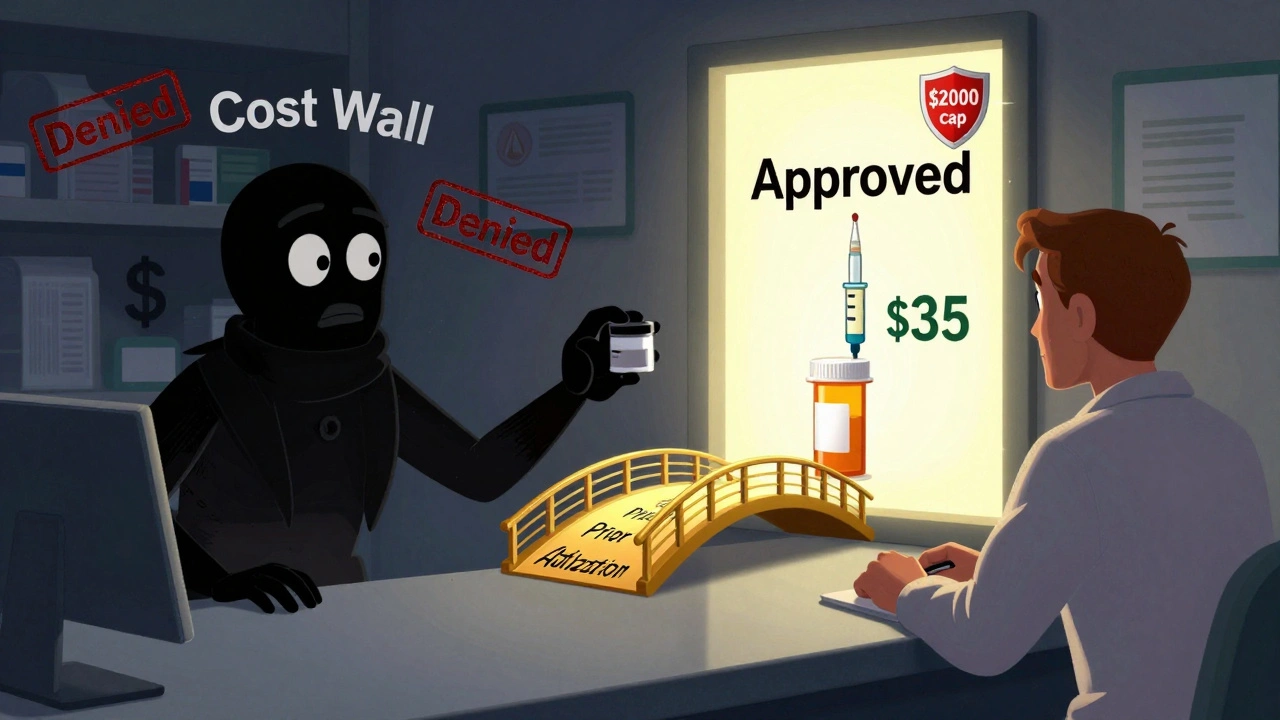
Even if a drug is on your formulary, you might still face extra hurdles:- Prior Authorization - Your doctor must get approval from the plan before you can get the drug. They’ll need to explain why it’s necessary.
- Step Therapy - You have to try one or more cheaper drugs first. Only if those fail will the plan cover the one your doctor originally prescribed.
- Quantity Limits - You can only get a certain amount per fill. For example, your plan might only cover 30 pills, even if your doctor ordered 90.
These rules are meant to prevent overuse and control costs. But they can delay treatment. One cancer patient, "CancerSurvivor87," shared on Facebook that her immunotherapy drug had prior authorization-but because it was on Tier 4, her out-of-pocket cost was only $95 instead of $5,000. She got her treatment and saved her life financially.
What’s New in 2024-2025
Recent laws are changing how formularies work:- Insulin Cap - Since 2023, Medicare Part D plans must cap insulin at $35 per month.
- Out-of-Pocket Cap - Starting in 2025, all Medicare Part D enrollees will have a $2,000 annual cap on out-of-pocket drug costs.
- Biosimilars - More affordable copies of biologic drugs are being approved. As of June 2024, the FDA has approved 43 biosimilars-up from 28 in 2022. These are being added to formularies to lower costs.
- AI in Formulary Management - By 2027, insurers may use AI to personalize formulary decisions based on your health history, helping match you with the best drug at the best price.
What Patients Say
Most people who understand their formulary feel more in control. A 2024 GoodRx report found that 73% of patients were satisfied when their meds were on Tier 1 or 2. But frustration runs high when changes happen without warning.One common complaint: "I didn’t know my drug was going off formulary until I got to the pharmacy." That’s why checking your formulary every year-even if you’re happy with your plan-is the single best thing you can do to avoid surprise bills.
Final Tips for Navigating Your Formulary
- Always ask your pharmacist: "Is this drug on my plan’s formulary?" before you pay.
- Keep a list of your medications and their tiers. Update it every January.
- If a drug is removed or moved to a higher tier, ask your doctor about alternatives on lower tiers.
- Don’t assume your current plan will cover the same drugs next year. Re-evaluate during open enrollment.
- If you’re denied coverage, file a formulary exception. Many approvals happen because patients ask.
Formularies aren’t perfect. They can be confusing, and sometimes they limit your choices. But when used well, they help keep drug prices down and ensure you get medications that work. The key is knowing how to use them-before you need them.
What is a drug formulary?
A drug formulary is a list of prescription medications that your health insurance plan covers, either fully or partially. It’s organized into tiers that determine how much you pay out of pocket. The list is created by a team of doctors and pharmacists who choose drugs based on safety, effectiveness, and cost.
Why does my insurance only cover some drugs?
Insurance plans use formularies to control costs and encourage the use of medications that have proven effective. By favoring generics and lower-cost brands, they can offer lower premiums and copays. Not every drug on the market is included-only those that meet clinical and financial standards.
Can I get a drug that’s not on my formulary?
Yes, but you’ll likely pay full price unless you request a formulary exception. Your doctor can submit a letter explaining why the non-formulary drug is medically necessary. About two-thirds of these requests are approved, especially for serious or chronic conditions.
How often do formularies change?
Medicare Part D plans update their formularies every year, effective January 1. Other plans can change at any time, but they must give you 60 days’ notice if a drug you’re taking is being removed or moved to a higher tier. About 28% of changes happen outside the annual enrollment period.
What’s the difference between Tier 1 and Tier 2 drugs?
Tier 1 drugs are generic medications that cost the least-usually $0 to $10 per prescription. Tier 2 drugs are brand-name medications that your plan considers preferred because they’re effective and reasonably priced. You’ll pay more for Tier 2-typically $25 to $50 per fill.
Are there limits on how much of a drug I can get?
Yes. Some plans limit the amount of a drug you can get per prescription-for example, only 30 pills instead of 90. This is called a quantity limit and is often used for drugs that can be misused or are expensive. If you need more, your doctor can request an exception.
Does the Inflation Reduction Act affect drug formularies?
Yes. Starting in 2023, Medicare Part D plans must cap insulin at $35 per month. Starting in 2025, there will be a $2,000 annual cap on out-of-pocket drug costs for all Medicare Part D enrollees. These changes are forcing insurers to adjust formularies to stay compliant.




so i just got hit with a $120 bill for my blood pressure med and i was like wtf?? turns out it got moved to tier 3 and now my plan acts like i’m asking for a damn yacht. why do they even make these lists if they’re just gonna switch stuff mid-year?? i’m literally choosing between food and meds now. 🤡
This is why you don’t trust insurance companies. They’re not here to help you-they’re here to profit. My aunt had to stop her arthritis drug because it ‘wasn’t cost-effective.’ Cost-effective?! She can’t walk. Who decides what’s ‘effective’? A bunch of suits who’ve never held a pill bottle.
Just wanted to add-always check your formulary during open enrollment, even if you’re happy with your plan. Last year I switched from Tier 3 to Tier 2 on my diabetes med just by switching plans. Saved me $60/month. Also, pharmacists know more than your doctor sometimes-ask them before you pay!
Let’s be real-formularies are just corporate greed dressed up as ‘clinical decision-making.’ The P&T committees? Mostly pharma shills with conflict-of-interest disclosures buried in footnotes. And don’t get me started on step therapy-‘try this $5 generic that doesn’t work before we give you the $1,200 drug that actually does?’ That’s not healthcare, that’s Russian roulette with your immune system. Also, AI formularies? Great. Now algorithms will decide if your life is worth the cost. Charming.
I had a guy at the pharmacy tell me my chemo drug was ‘non-formulary’ so I paid $4,200 out of pocket. Then I filed an exception. Got approved in 3 days. Now I’m just mad I didn’t do it sooner. Stop being passive. Fight. Write letters. Call. They’ll cave if you’re loud enough.
The systemic inefficiencies inherent in the U.S. pharmaceutical reimbursement model are exacerbated by opaque tier structures and inconsistent regulatory enforcement. Furthermore, the proliferation of biosimilars, while economically advantageous, introduces novel pharmacoeconomic complexities that may inadvertently compromise therapeutic continuity. 🤔💊📉
I know this sounds like a lot, but honestly? Just write down your meds and check your plan every January. I used to panic every time I went to the pharmacy. Now I have a little notebook. It’s not glamorous, but it saved me from a $200 surprise last month. You got this.
Formularies aren’t perfect, but they’re not the enemy either. They help keep premiums down so more people can afford coverage. The real issue is the lack of transparency and sudden changes. I’ve helped friends navigate this for years-call your insurer, ask for the formulary PDF, and keep a copy. Simple. Doesn’t take a PhD.