Prescription Drug Tiers: How Your Insurance Groups Meds and What It Costs You
When you pick up a prescription, the price you pay isn’t just about the drug—it’s shaped by your insurance’s prescription drug tiers, a system that groups medications by cost and coverage rules. Also known as formulary tiers, this structure decides whether you pay $5, $40, or $300 for the same pill, depending on how your plan labels it. It’s not random. Insurance companies sort drugs into tiers to control spending, and you’re the one feeling the impact at the pharmacy counter.
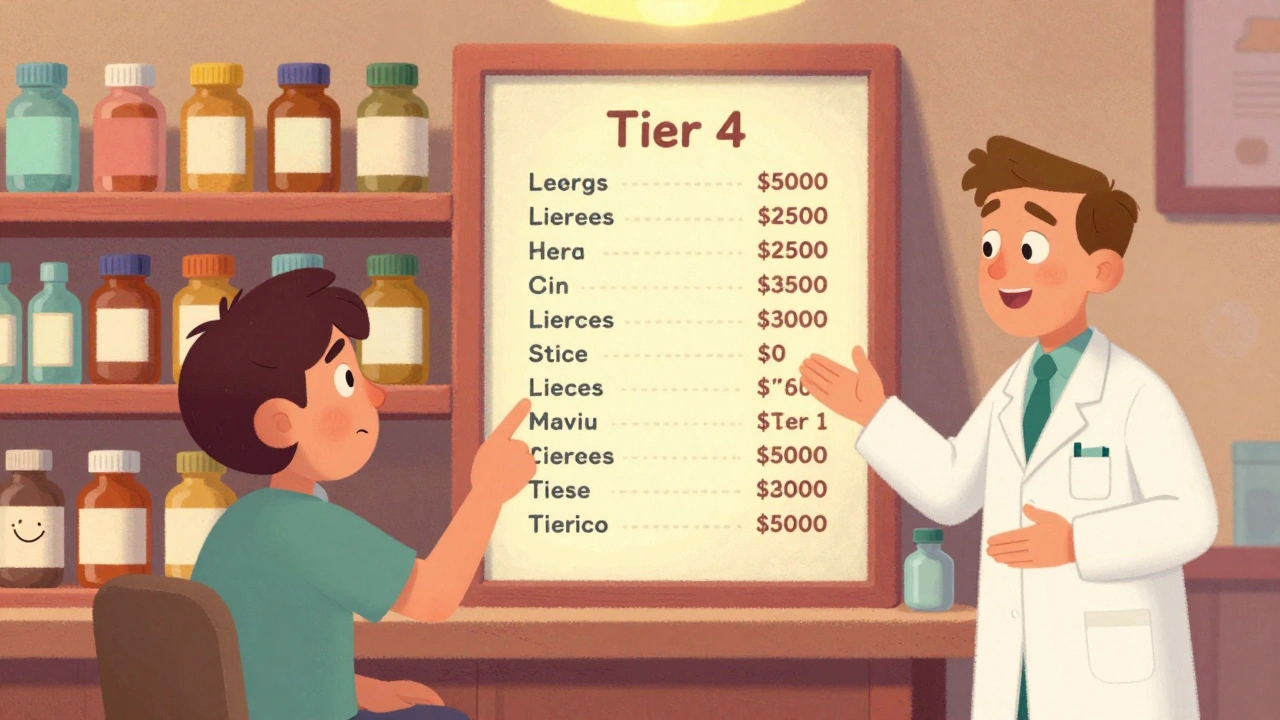
Most plans use four to five tiers. Tier 1 is usually generic drugs—low cost, high value. Tier 2 is preferred brand-name meds, often with better coverage. Tier 3 is non-preferred brands, meaning higher out-of-pocket costs. Tier 4 is specialty drugs—things like injectables for autoimmune diseases or cancer treatments. Some plans even have Tier 5 for the most expensive meds, where you might pay 30% or more of the full price. This isn’t about how well a drug works. It’s about what the insurer negotiated with manufacturers. A generic blood pressure pill might be on Tier 1, while a newer, same-effect brand is on Tier 3—even if they’re chemically identical. That’s why asking your pharmacist about authorized generics, brand-name drugs made by the same company but sold under a generic label can save you hundreds.
But tiers aren’t fixed. They change every year. Your insurer might move a drug from Tier 2 to Tier 3, or drop it entirely. That’s why checking your formulary before filling a script matters. You might find a cheaper alternative that works just as well—like switching from a brand-name statin to its generic version. Or maybe your doctor can prescribe a Tier 1 drug that treats the same condition. And if you’re on a high-cost drug? You might qualify for a patient assistance program. Many drugmakers offer discounts or free medication if you meet income rules. Don’t assume you’re stuck with the price on the label.
Some people think tiers are just about cost. But they’re also about access. Certain drugs, especially for conditions like multiple sclerosis or rheumatoid arthritis, require prior authorization before your plan will cover them. That means your doctor has to prove the drug is necessary—sometimes before you can even get it. Others need step therapy: you have to try cheaper options first. This isn’t bureaucracy for fun—it’s designed to keep costs down. But it can delay care. Knowing how your plan works helps you push back when needed.
And then there’s the hidden layer: how your tier affects your deductible and out-of-pocket max. Some plans count specialty drugs toward your max, others don’t. Some have separate deductibles for pharmacy vs. medical care. That’s why two people on the same plan can pay wildly different amounts for the same meds. It’s not about how sick you are. It’s about which tier your drugs fall into.
Below, you’ll find real-world guides that cut through the noise. Learn how to ask for generics, how to challenge a tier decision, how to time doses to avoid extra costs, and how to spot when your insurance is pushing you toward a more expensive option. These aren’t theory pieces—they’re from people who’ve been stuck at the pharmacy counter, confused and overcharged. They’ve figured out how to navigate the system. Now you can too.